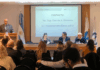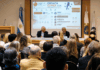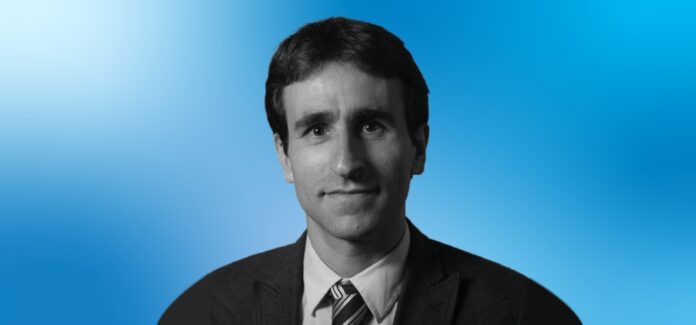
Less than a week after the inauguration of the new Argentine president, when the focus of analysis is on the viability and economic and social consequences of his first measures, Aduana News He proposed to international analyst Mariano Turzi to rethink global changes and the country's role in them.
His area of expertise is geopolitics and global trends. What kind of world does President Milei have in store for him?
– The core of the debate over the global crisis is whether geopolitical tensions are fracturing the world economy into rival blocs and reversing globalization. I believe that the international system has undoubtedly become more uncertain and turbulent. But the diagnosis of globalization is a bit overstated in light of the evidence available. That is why the new administration would do well to understand that although the public policy environment has become less conducive to globalization, the resilience of global flows advises against more drastic strategic changes based on the idea that markets will become substantially less globalized. In today's world you can cooperate and compete, agree and disagree.; in multiple forums and on overlapping topics, between the public and private sectors.
-And for companies?
-Switching my hat from globalization scholar to risk consultant, I tell companies that they should respond to rising geopolitical tensions with targeted adjustments to their global strategies and a good risk management. The COVID-19 pandemic disrupted global value chains. The Russo-Ukrainian war caused massive disruptions to the global energy and food supply. At the same time, governments and conscious consumers are trying to address global issues such as slavery or environmental standards, and putting pressure on companies to do the same. In this context, companies need to know what to expect and how to prepare. Totalizing conceptual frameworks or paradigms extrapolated from the past such as a new cold war will be a poor guide to action for the private sector.
You have written that globalization is both virtual and digital.
-And also technological threats. The increased digitalization and dependence on technology has led to an increased risk of theft Intellectual property and cyber attacks both governments and businesses. In 2017, AP Moller-Maersk, a Danish shipping company, suffered a cyberattack that temporarily halted the company’s operations and ended up costing it between $200 and $300 million. These threats exist and require effective countermeasures to protect against cyberthreats and, if necessary, continue operations in the midst of a cyberattack.
What is the role of Customs in this global context?
-Moving products across national borders has become more complex in recent years as international events and the regulatory environment have added numerous risks. Volatility has become the new normal for the global supply chain. There are multiple examples: closures of ports and manufacturing facilities during the pandemic, the resulting price volatility in transportation costs due to increased demand during the post-pandemic, inflationary pressures on inputs used in manufacturing, and the impact of extreme weather events on transportation delays. Customs can play a role in this. un fundamental role in helping stakeholders mitigate their risks in this complex business landscape.

Trade compliance is an essential component of any of my corporate clients’ risk management strategy, with operational, financial and reputational implications. Non-compliance or changes to customs regulations directly impact the supply chain.
Is Argentina prepared for the new world that you are analyzing?
-Mancur Olson developed a theory about collective action that I think perfectly explains the problem we have in Argentina. Social actors are more likely to participate in collective action when they perceive personal benefits from doing so. There are incentives not to participate in collective actions because they can benefit without contributing.The larger the group, the more difficult it is to achieve cooperation. Although individuals, companies or sectors may share common goals and interests, the ability to group together and act collectively to advance or defend those interests is not automatic. Demographics and economics are on Argentina's side: there is a growing population, which also demands more and more food, water and energy, all resources that the country has in abundance. There are multiple opportunities, but also new risks.
You argue that when analyzing global risks, the state of collective action is decisive.
-Yes, because international risks are processed by the internal political economy. I'll give you an example: we live in a world that increasingly demands food commodities, driven by the rise of the middle classes in the Indo-Pacific. That's why the production of agro-industrial products, which is generally subsidized in the world, is taxed in Argentina and remains internationally competitive. Although we can understand that this is counterproductive for inserting oneself in a global value chain, it reflects the political organization of a country. It is the state that creates those political conditions for collective action to emerge. or the distortions deepen. Countries with resources but no strategies often end up invaded or subjugated. You can have oil and be Nigeria or Norway, Iran or Venezuela.
Is there a way out of the distorted spiral?
-Yes. First let me clarify that these distortions can be economic (prices and quantities), political (corruption) and social. Collective action in the long term creates new values economic (positive externalities, productive chains), political (transparency, balance of powers) and social (associativity, solidarity) that redefine purely pragmatic short-term interests. This is equivalent to the process of buying credit at the kiosk in our neighborhood when we were children: the repeated interaction generated the confidence. to buy without money or leave extra. And that spilled over into the creation of personal relationships between merchant and customer.
Profile
Marinano Turzi holds a PhD in international studies (SAIS-Johns Hopkins University).
He works as a teacher (UCEMA-Austral) and as a national and international political risk consultant.

Aduana News foi o primeiro jornal aduaneiro da Argentina a lançar sua versão digital. Com mais de 20 anos de trajetória, suas publicações e iniciativas têm como objetivo oferecer o conhecimento mais relevante sobre temas aduaneiros, contribuindo para a promoção do comércio seguro e da facilitação do comércio na região.