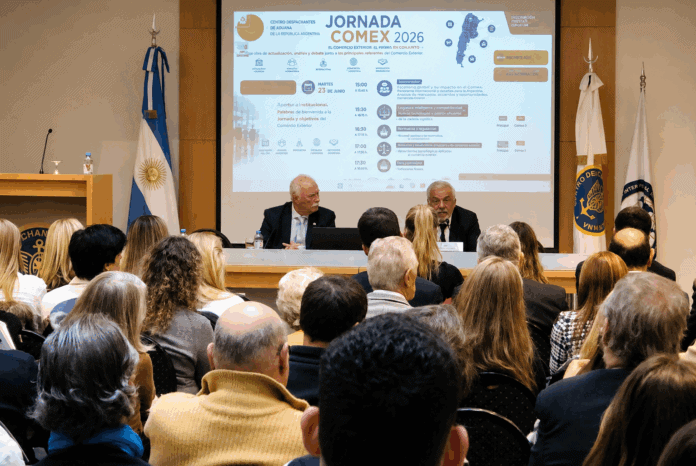
The Comex Conference, organized by the Customs Brokers Center (CDA), was officially inaugurated this Tuesday (June 23, 2026) with a series of announcements from the General Directorate of Customs related to the redefinition of the declarant's role and the courier regime. The event was attended by representatives from business chambers and public agencies, and brought together approximately 70 participants in person and 100 virtually.
On the first day of the three-day event, the CDA president, Rubén PérezHe highlighted the importance of foreign trade as a historical component of state revenue. He emphasized the significance of international exchange and quoted Juan Bautista Alberdi to stress that public wealth should be based on trade. In this regard, he maintained that the Foreign Trade Conference aims to "connect analysis, the exchange of ideas, and training" within a context of profound transformation in the sector.
DGA: Redefinition of the declarant and changes in courier
It was when the Director General of the General Directorate of Customs, José Andrés Veliz, He began his presentation with announcements that would have an impact on customs operations, including the distinction between customs brokers and declarants.
In that regard, he pointed out that the current regulations “has relativized the role of the customs brokerThis creates confusion in the process. He indicated that he will take steps with the relevant Ministry to more precisely define the roles of declarant and customs broker, with the aim of unequivocally identifying who makes each declaration in a customs procedure.
Changes to the courier regime and data control
Veliz anticipated modifications to the courier system aimed at simplifying and reorganizing it, with the goal of correcting distortions and strengthening control mechanisms.
In that context, he explained that the goal is to find strengthen information sharing To prevent the misuse of tax identification numbers, such as the CUIT (tax identification number), and to prevent fraud or inconsistencies in the databases. He also noted that work is underway to update the information linking CUITs and tax addresses to improve the traceability of transactions.
One of the most important announcements was the Launch of a pilot test with Amazon scheduled for this week in June. The goal is to move towards a scheme in which the platforms of e-commerce businesses can collect taxes in advance, incorporating prior information on operations to improve predictability and the customs risk matrix.
Veliz argued that the lack of advance information limits the ability to control in real time and pointed out that improvements in data systems will allow for a reduction in operating times in processes linked to the courier within a scheme of digital modernization.
Regional integration and strengthening of the OAS
At the regional level, the head of the DGA indicated that works with the customs authorities of Uruguay and Paraguay in cooperation mechanisms to carry out coordinated controls and share non-intrusive inspection technologies, such as the use of scanners, with the aim of avoiding duplication of verifications in foreign trade operations.
In that context, he highlighted the strengthening of the Authorized Economic Operator program (OEAand argued that the current system imposes high standards on certified companies without equivalent compensation. Along those lines, he raised the need for grant concrete benefits, especially through greater ease of access and the reduction of redundant controls.
Observations on logistics operations
Finally, Veliz warned about operational problems related to terminal scheduling and logistics costs considered excessive or inconsistent. He noted that there is an initiative to make scheduling more transparent, with the aim of moving towards a system of direct appointments, and warned that these practices create distortions in the logistics chain, so they will be reviewed to prevent operators from becoming “hostages of the terminals.”
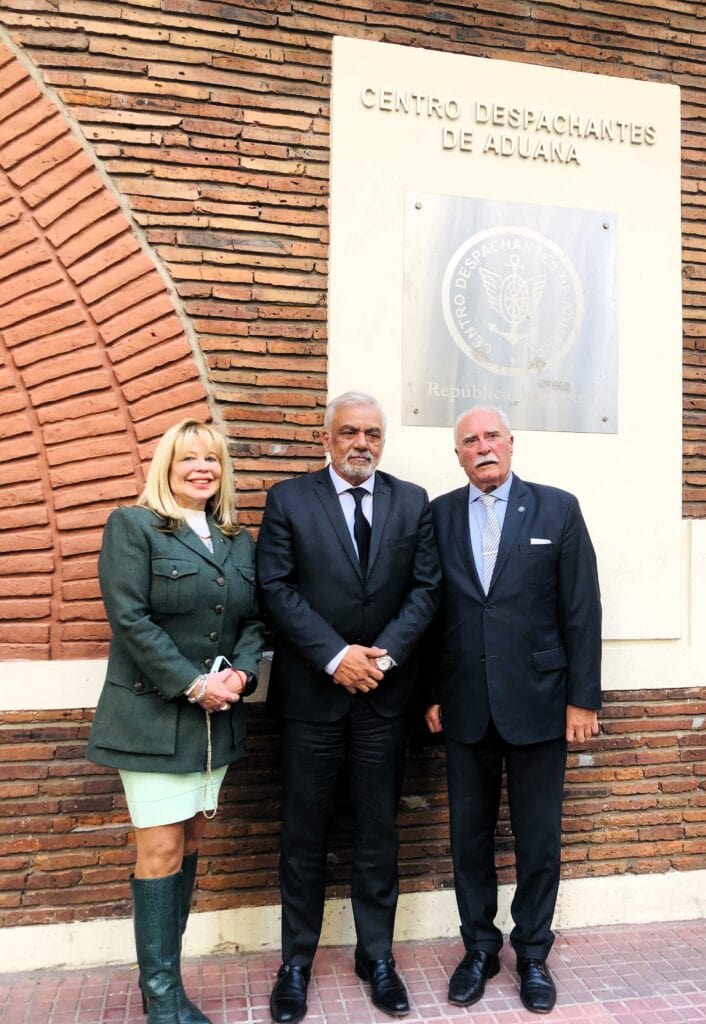
VUCEA: towards real interoperability of foreign trade
In that context, the day was geared towards showcasing tools to improve trade through facilitation, an approach that contributes to the competitiveness of economies and businesses, while reducing trade costs, as set out in the World Trade Organization's Trade Facilitation Agreement.
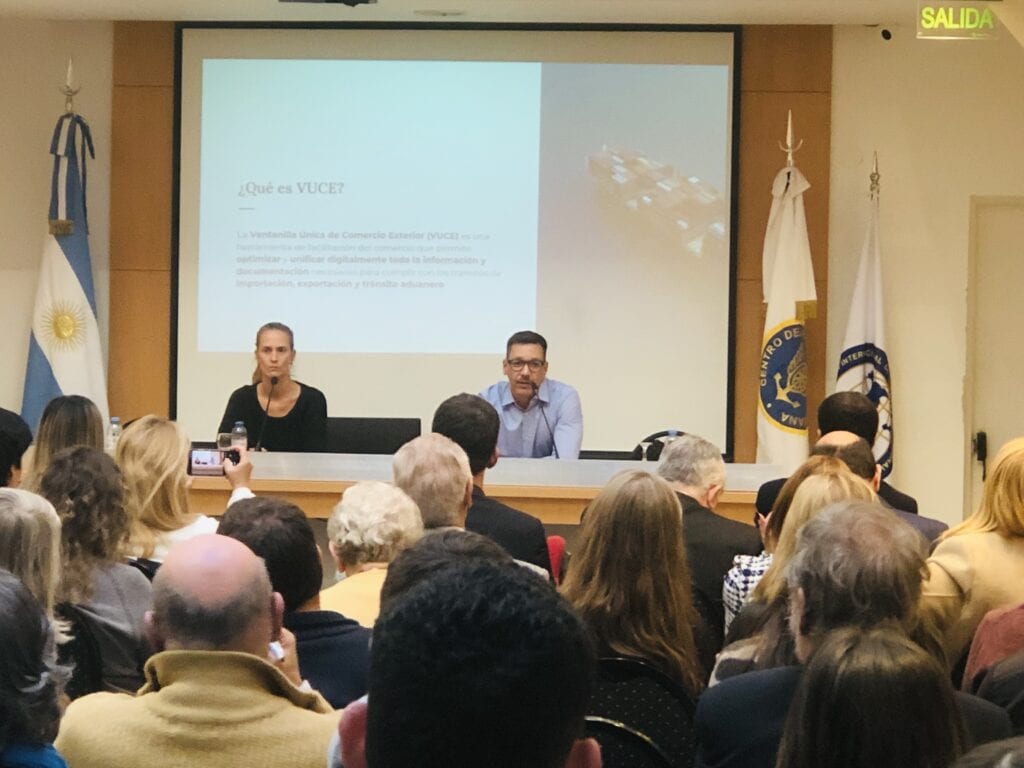
Within this framework, the Special Temporary Executive Unit for Foreign Trade Regime (VUCEA) spoke through Belén Pessagno and Emanuel Venice, who explained the tool as a system of permanent updates aimed at streamlining border procedures and concentrating the interaction of operators with the different agencies in a single portal.
The focus was on the transition from document digitization to interoperability between agencies, so that the same data can be used without the need for multiple uploads or submissions.
Following the presentation of the tool and the call to actively use it by the attendees, the following topics were addressed: main upcoming developments to its implementation.:
- VUMA (maritime): comprehensive digitization of port operations and coordination between Customs, ports and control agencies.
- VUA (air): extension of the one-stop shop model to air transport.
- Digital Customs Declaration: progress towards a fully electronic system.
- Digital Folder: centralization of operator documentation.
- IPM: a new system for special regimes such as temporary import, drawback and free zones.
Navigation Center: boosting eBL and port digitization
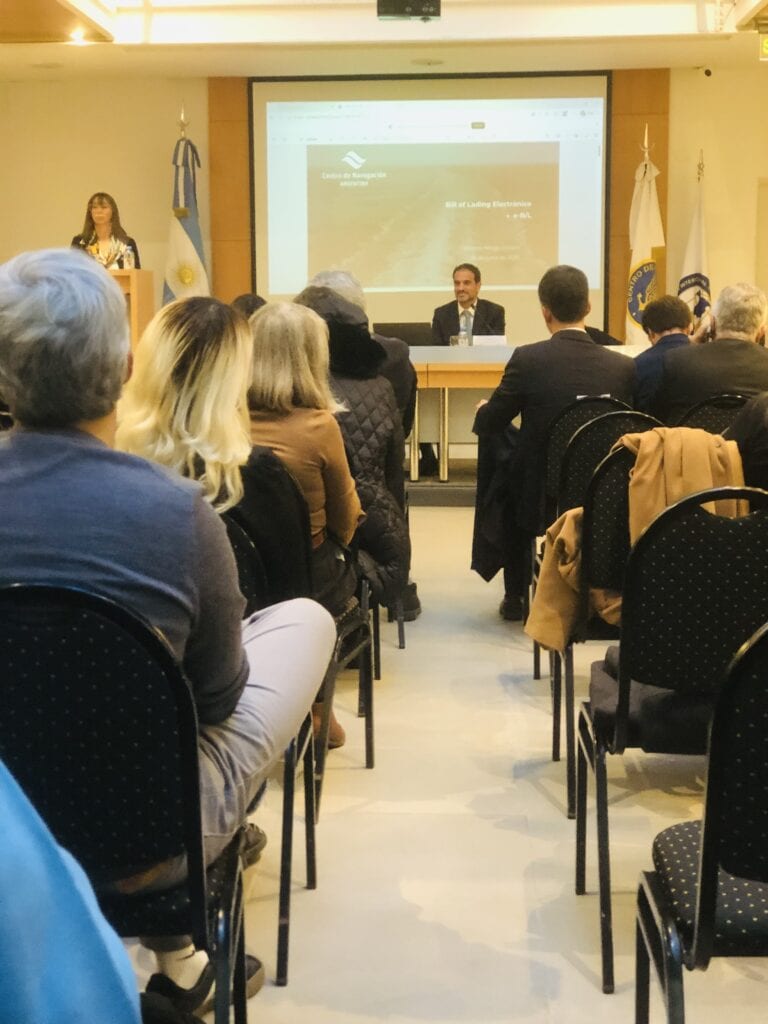
The Argentine Navigation Center, founded in 1900 by Alfonso Jozami, highlighted the progress towards the digitization of the port system, focusing on the adoption of the electronic bill of lading (eBL) and interoperability between the different actors in the logistics chain.
In that regard, the manager indicated that It works alongside the Customs Collection and Control Agency (ARCA), the General Directorate of Customs (DGA), and the VUCE. in the implementation of eBL, and argued that the current regulatory framework already allows its use through digital signature, without the need for legal reforms.
He also mentioned the development of the "Mercuria" platform, which is geared towards managing customs procedures, submitting manifests, and coordinating with immigration authorities.
Jozami warned that the global shipping industry is moving towards total digitalization, with the goal of achieving 100% electronic bills of lading by 2030, and stressed that Argentina must keep up with this process in order not to lose competitiveness.
IAEA and ICC Argentina: advance rulings and Incoterms
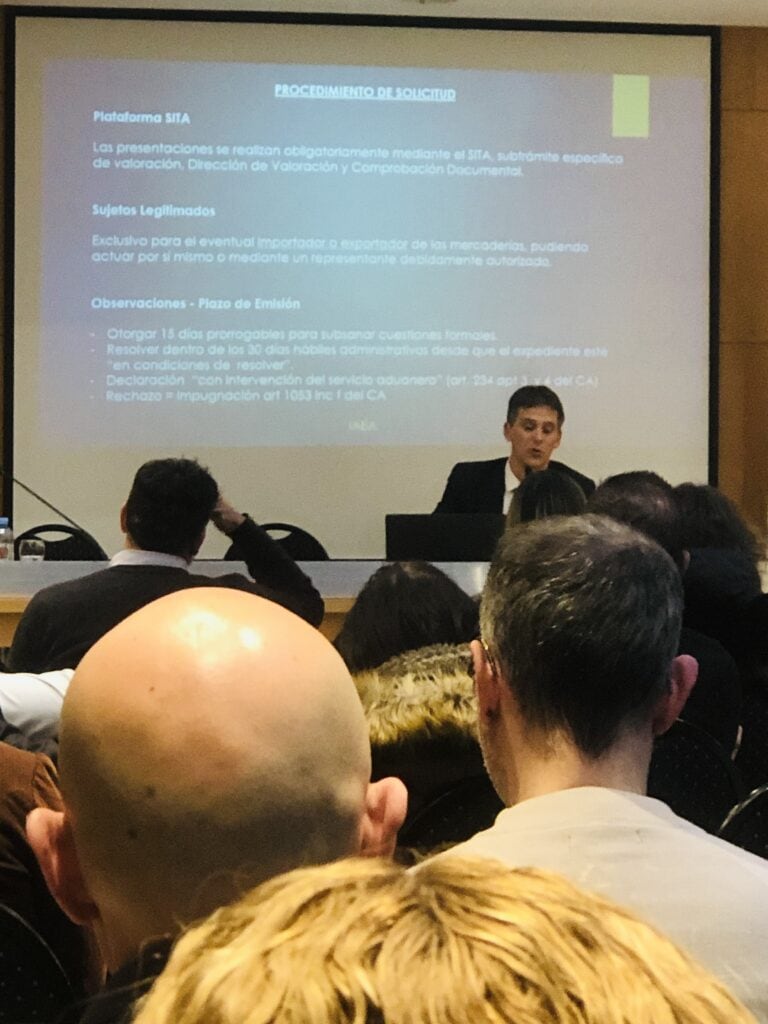
The intervention of Rufino V. Beccar Varela, representing the Argentine Institute of Customs Studies (IAEA), founded in 1970, focused on advance rulings as a key tool for facilitating foreign trade, in line with the provisions of the World Trade Organization's Trade Facilitation Agreement and its incorporation into the national legal system.
He argued that facilitation does not imply a loss of customs control, but quite the opposite, since "it not only doesn't cause a loss of control, but it makes it smarter and more predictable." Along these lines, he pointed out that oversight is more efficient when the treatment of an operation is defined beforehand, allowing for a risk-based approach that leverages the operator's knowledge.
He framed this approach within the trends promoted by the World Trade Organization, where predictability, cost reduction, and process simplification are central pillars. He also highlighted that more advanced systems, such as those in the United States, Mexico, and the European Union, operate with more sophisticated controls, supported by information sharing.
Regarding advance rulings, he noted that their main contribution is to provide “public certainty” and “commercial certainty” by reducing uncertainty and allowing for more informed decisions by operators. He explained that these are official and binding pronouncements made prior to the transaction.
However, he cautioned that the system still faces delays, bureaucracy, and limited use. In that regard, he proposed simplifying procedures and expanding consultation channels, especially in complex customs valuation cases.
In closing, he emphasized that the main challenge is cultural, both in the public and private sectors, where resistance to its implementation persists. Even so, he maintained that the trend is clear: moving towards a more predictable, agile, and less conflict-ridden foreign trade system.
The IAEA's intervention was complemented by the contribution of the International Chamber of Commerce Argentina (ICC Argentina), which addressed aspects related to Incoterms and the operation of international trade.
Thus, the first day of the Comex Conference concluded with a large number of attendees and announcements from Customs, with an agenda focused on the modernization of foreign trade and the facilitation of exchange, leaving open the debates and new definitions for the following days, which will take place on Wednesday and Thursday.

Aduana News foi o primeiro jornal aduaneiro da Argentina a lançar sua versão digital. Com mais de 20 anos de trajetória, suas publicações e iniciativas têm como objetivo oferecer o conhecimento mais relevante sobre temas aduaneiros, contribuindo para a promoção do comércio seguro e da facilitação do comércio na região.