In the Information Society, Customs Administrations, particularly those that are merged with internal tax collection agencies, have a capacity and aptitude of which they are often unaware: the power of information.
All data related to the country's merchandise income and expenditure pass through its computer systems, and are then fed - in a deferred and segmented manner - to other national organizations for the development of their economic policies and the presentation of statistical information on National Foreign Trade.
In many countries, this circumstance influences the Customs Administrations to be called and perform an additional function to the ones they normally perform: that of “Government Advisors”, that is, technicians specialized in carrying out the analysis of foreign trade data and in the implementation of economic policies linked to them.
Customs have the information, they are deployed throughout the national territory and they also have the knowledge and experience of the “trench” (they know the viable strategies). What better advisor and ally when evaluating and implementing an economic policy.
Although, on many occasions, career customs officials have performed very competently in important positions within the Ministries of Economy, we cannot fail to mention here Don Cristóbal Aguirre, author of the famous Customs Ordinances that governed national foreign trade for more than 100 years and who, likewise, later served as Minister of Finance for Presidents Mitre and Sarmiento.
And if we travel to the old continent, we cannot overlook that one of the fathers of Economic Sciences, the philosopher Adam Smith, was Director of the Danish Customs.
But here we are not referring to assuming the main role in making economic policy decisions, but rather to the Customs Administration, through its representatives, being summoned as a SPECIALIZED TECHNICAL ENTITY in FOREIGN TRADE to participate as an advisor in decision-making related to its "metier": the international flow of goods.
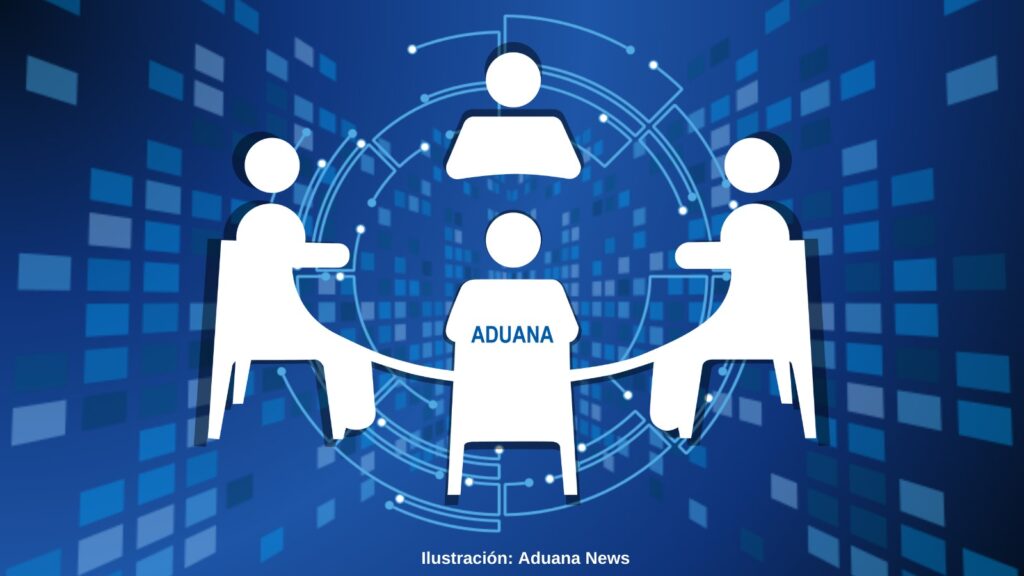
Perhaps the time has come to add another chair to the table of “political decision-makers” and invite those who, in addition to the data, have experience in day-to-day operations to participate.
I cannot think of a better parallel than the relationship between the doctor and the biochemist, who may work separately and not even know each other, but how different the results are when they work as a team, as is often the case in large specialized health centers, where the doctor describes the problem (the patient's illness), puts forward the hypotheses, and it is the technicians who tell him, through their empirical analyses, which of his hypotheses is the appropriate one or at least the most probable.
Science works in the same way today. There is no longer (or only very rarely) the enlightened genius who discovers the solution to problems on his own. Today we work in teams, where roles are clearly distributed and benefits are shared. A simple reading of the specialized natural science journals (Nature or Science) shows that there are no longer “Archimedes” who, while bathing, discover a method to determine the volume of objects, or “Newtons” who see an apple fall and deduce the law of gravity. Today we work in multidisciplinary teams, where each professional makes his contribution. Thomas Kuhn has brilliantly described this in his work “The Structure of Scientific Revolutions” when talking about scientific communities.
But returning to the reality of foreign trade, it is unacceptable that Customs is not part of what we usually call the “inner circle” of international economic policy decisions.
At the international level, multilateralism is the instrument that has allowed harmonious and cooperative coexistence between countries, without the need to resort to armed conflicts to resolve their disputes. In this sense, in terms of multilateral cooperation, Customs, through the entity that groups and represents them, the World Customs Organization, has made enormous contributions through the multitude of fluid contacts it maintains with other international organizations such as the WTO, the UN, the World Bank, the IMF, the OECD, to name just a few, whose points of view are vital when evaluating a decision with international impact.

In this regard, we can recall the leading role played by the WCO in defining and identifying precursors and drugs at the International Narcotics Control Board (INCB), or the relevant work carried out with the International Atomic Energy Agency (IAEA) in regulating the transport of nuclear and radioactive materials, or the work and standards agreed with the International Postal Union (UPU) regarding Cross-Border Electronic Commerce, or the actions carried out with the Secretariat of the Convention on International Trade in Endangered Species of Wild Fauna and Flora (CITES) for the protection of endangered species, or with the Red Cross for the determination of action protocols in the event of natural disasters, just to recall some of the many interventions where customs are summoned and listened to.
Returning to the local level, would it not be advisable to consult with Argentine Customs before making a decision on the tariff treatment of goods, or the determination and application of any restriction on the entry or exit of goods, or the adoption and implementation of any trade facilitation measure?
Precisely, this last question reminds us of an exceptional case where the Argentine Customs was incorporated into the decision-making table, but was never summoned: the National Trade Facilitation Committee (NTFC), created by Decree No. 535/2019 under the jurisdiction of the Chief of Staff, but to date, four years after its creation, they have not yet met (1).
However, customs must be prepared to process information appropriately in order to effectively assume their role as strategic advisors to the government and not limit their actions to being mere executors (sometimes reluctantly) of decisions that are made in their absence and that affect their daily operations.
Customs know in “real time” what is being imported and exported, who the operators involved are, and all the details of each operation, an inconceivable amount of information that remains largely underused for decision-making.
Furthermore, with new advances and technologies, customs will know all the details of the operation before arrival (in many cases, it has already taken place), in order to proceed with its control, but also to incorporate it into the database that might be required to avoid, for example, a flood of products that could affect some branch of production.
For all the above reasons, I believe that the time has come to add a new function to customs administrations: that of “Government Advisors”, and to do so, they must be prepared and stretching.
- On this topic, we suggest reading the following article: https://www.academia.edu/29836543/La_necesidad_de_un_enfoque_sist%C3%A9mico_para_el_Comercio_Exterior_Argentino

The author is a Member (Judge) of the National Tax Court. University Professor. Specialized in Higher Education Teaching (UCC). Professor at the National University of Córdoba (UNC), Blas Pascal University (UBP), Austral University and Universidad del Rosario (Colombia). Professor and member of the Academic Committee of the Specialization in Customs Law at the National University of La Plata (UNLP). Member of the Drafting Group of the MERCOSUR Customs Code. Author of the book: "The World Customs Organization. Past, present and future.". Tirant Lo Blanch Publishing House, Valencia City, Spain. Year 2021 - Email: [email protected]