




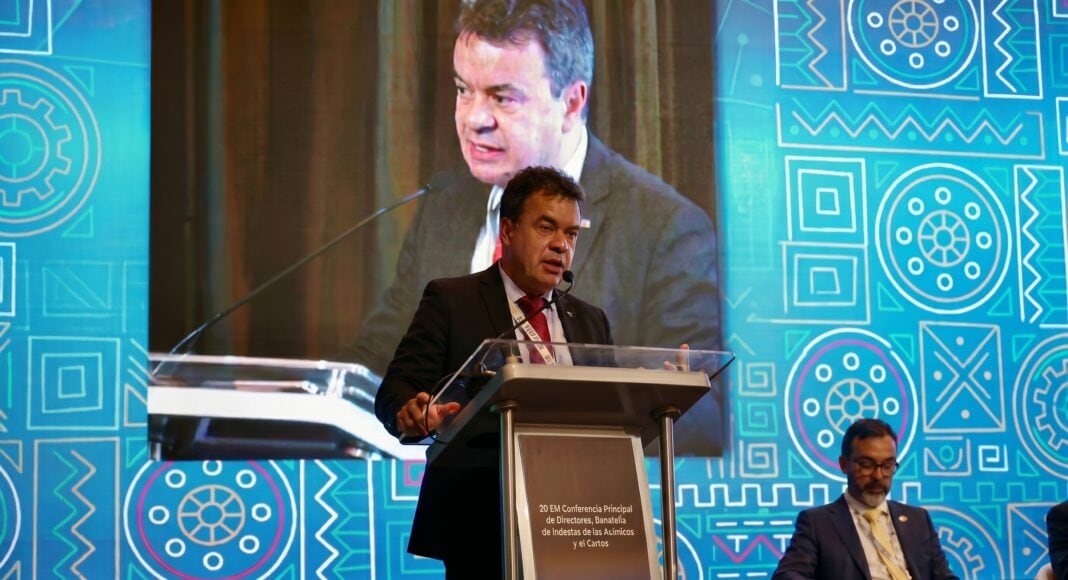

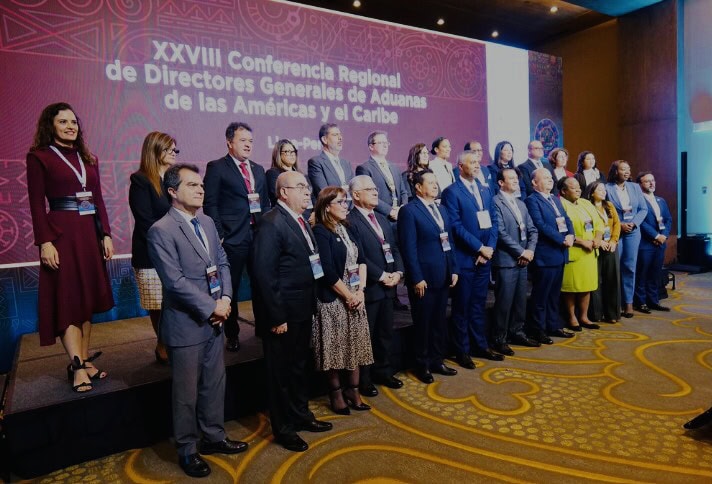
On April 21, 2026, Brazil was elected to serve as the Regional Vice-President of the World Customs Organization (WCO) for the Americas and the Caribbean for the period 2026–2028, during the XXVIII Regional Conference of Customs Directors held in Lima, Peru. The region comprises 34 Member States, representing approximately 17% of the total number of WCO member countries.
The WCO organizes its membership into six regions, each represented by a Regional Vice Presidency.
In this context, and in light of the challenges and priorities that will mark this new stage, Fabiano Coelho (1), Undersecretary of Customs Administration of the Brazilian Federal Revenue Service, kindly agreed to speak with Aduana News (2).
1. New cycle in the Americas
Customs News: Brazil will assume the WCO Regional Vice Presidency for the Americas and the Caribbean between 2026 and 2028. What does this appointment represent for the Federal Revenue Service and for the country?
Fabiano Coelho: Brazil's appointment as Regional Vice-President of the WCO represents a great responsibility and a valuable opportunity for the Brazilian Federal Revenue Service (Receita Federal) to serve the 34 countries of the region. We accept this designation with commitment, aware of the importance of working collaboratively with the customs administrations of the Americas and the Caribbean. For Brazil, this strengthens its international standing and expands its capacity to engage in dialogue on strategic foreign trade issues, in accordance with the common interests of customs administrations.
AN: Based on recent experiences in the region, what do you consider to be the main lessons from previous periods and what will be the strategic priorities for the 2026-2028 term?
FC: Based on recent experiences in the region, I would like to highlight the excellent work carried out by the Peruvian Customs Service (SUNAT) over the past four years. Its management has established a very solid foundation, marked by an intensive agenda of knowledge exchange among the customs administrations of the Americas and the Caribbean.
One of the main lessons is that regional cooperation produces concrete results when it is built continuously, practically, and participatively. Peru led numerous seminars, many with broad participation—in some cases close to a thousand people—demonstrating the region's strong interest in sharing experiences and strengthening capacities.
Brazil intends to continue these initiatives and build upon the achievements already made. Among our priorities will certainly be promoting training and strengthening cooperation, including for joint operations.
2. Customs modernization and trade facilitation
AN: Brazil has promoted structural reforms such as the DUIMP (Single Import Declaration) and the Single Window for Foreign Trade. From the Brazilian experience, what best practices do you think could be shared with the Americas and the Caribbean to accelerate regional customs modernization?
FC:We will gladly share our experience with the implementation of the DUIMP and the Single Window for Foreign Trade, as well as the intensive use of technology for risk management, the Compliant Remittance Program, the restructuring of the Brazilian AEO Program and other initiatives that are of interest to the region.
AN: In that same sense, how can the Regional Vice Presidency contribute to greater harmonization of customs processes in a scenario marked by the need to deepen digitalization, advance interoperability and respond to new logistical demands?
FC: The Regional Vice Presidency can act as a catalyst for harmonization initiatives, promoting the dissemination of standards and instruments developed by the World Customs Organization, such as the SAFE Framework of Standards, the Revised Kyoto Convention and the Harmonized System.
Harmonization does not mean absolute uniformity, as each country has its own legal framework and institutional particularities. Rather, it implies progress in implementing WCO instruments that facilitate trade, increase predictability for operators, and allow for more efficient controls.
3. Security and the fight against crime
AN: Brazil has a consolidated track record in the Authorized Economic Operator (AEO) Program, recently strengthened in its regulatory framework and with more than a decade of implementation, in line with international standards. What role will AEO programs play in this new regional stage?
FC:Authorized Economic Operator (AEO) programs will remain essential, as they allow for the identification of reliable operators and the concentration of control efforts on higher-risk operations. Furthermore, they strengthen the security of the logistics chain and promote trade facilitation.
In the case of Brazil, the recent restructuring of the Program resulted in the creation of different levels within the Authorized Economic Operator (AEO) Compliance modality, allowing benefits to be granted proportionally to each operator's level of compliance. Furthermore, it is important to note that the highest level reflects compliance not only with customs requirements but also with tax administration regulations. This constitutes a significant incentive for taxpayers to achieve higher standards of compliance in both areas.
AN: In the context of the MERCOSUR-European Union Agreement, how does Brazil plan to promote the harmonization of AEO programs so that the region's customs authorities can meet the demands of this type of global agreement?
FC: In general, Authorized Economic Operator (AEO) programs are linked through Mutual Recognition Agreements (MRAs). To initiate MRA negotiations, there must be interest from two or more countries. Then, an assessment is typically made to determine whether each country's rules and procedures are compatible with the WCO's SAFE Framework of Standards.
As Vice-President of the WCO, Brazil will seek to strengthen the implementation of the existing regional MRA, with the aim of advancing the granting of concrete benefits to certified operators. Furthermore, Brazil will encourage the establishment of new MRAs, whether with the European Union or with other strategic partners, contributing to greater integration, predictability, and security in international trade.
AN: In parallel, in the face of the growth of transnational organized crime, what importance will the Regional Intelligence Liaison Offices (RILO) have?
FCRILOs will become increasingly relevant in combating transnational organized crime (such as drug and arms trafficking), as they enable information exchange and strengthen operational cooperation between customs agencies.
4. Coordinated border management
AN: The outgoing administration of SUNAT in Peru has left a very valuable roadmap through the 2024-2026 Regional Strategic Plan, outlining crucial long-term goals such as Coordinated Border Management. How does Brazil plan to build upon these foundations, and what contribution would it like to make to further advance the operational integration of our customs systems?
FCWe intend to build on the progress achieved, promoting greater integration between border crossings. Our goal is to move towards more coordinated, efficient, and risk-based border management, with increasingly intensive use of technology.
In Brazil, for example, we have a system called SIVANAThis system monitors vehicles in areas near land borders using images captured by traffic surveillance cameras. It allows customs officials to analyze the historical routes of vehicles of interest and receive real-time information about their location, facilitating a faster response to potential threats, particularly drug trafficking and the trade in counterfeit goods.
5. Artificial Intelligence and Data Analysis
AN:The French Federal Revenue Service (Receita Federal) is a regional leader in the use of AI and data analytics for risk management. What cooperation mechanisms does it envision for sharing these best practices and supporting the technological modernization of other customs administrations in the Americas and the Caribbean?
FCI envision mechanisms such as training programs, technical cooperation, and the exchange of experiences to disseminate knowledge and solutions in the use of artificial intelligence and data analytics applied to risk management. Our region has very valuable experience in this area, developed by various customs administrations, which can serve as a reference and inspiration to strengthen the technological modernization of customs in the Americas and the Caribbean.
6. Development of regional capacities
AN: Considering that Brazil will have a WCO Regional Training Office, where will it be located and what programs will it offer?
FC: With the Memorandum of Understanding signed on the sidelines of the Regional Conference of Directors General of Customs, in Lima, Peru, the Brazilian Customs becomes the headquarters of the Regional Capacity Building Office for the region.
Its main objectives include planning training programs, exchanging knowledge and supporting institutional development, in accordance with the WCO Strategic Plan.
Training activities may be conducted in both virtual and in-person formats. For in-person courses, the facilities of various operational units in Brazil, as well as in other countries in the region, particularly Peru and the Dominican Republic, which are WCO Regional Training Centers, are expected to be used.
7. Public-private relationship
AN: In the context of the recent Conference in Lima, the immense value of dialogue within the Joint Forum between Customs and the Regional Private Sector Group (GRSP) was reaffirmed. What will be the strategic priorities for further consolidating this alliance, ensuring that the private sector maintains an active and constructive role in facilitating regional trade?
FCThe private sector plays a fundamental role in identifying bottlenecks and proposing improvements. We will continue to strengthen dialogue with operators, promoting spaces for exchange and cooperation. We consider it essential to guarantee the active, constructive, and ongoing participation of the private sector in the search for solutions that contribute to greater trade facilitation.
8. Governance and institutional sustainability
AN: It is public knowledge that the Regional Vice-Presidencies do not have an operating budget allocated by the WCO, with the entire financial and logistical burden falling on the host country's administration. Faced with this structural challenge, what strategies does Brazil have planned to obtain the necessary funding to, among other actions, reactivate and maintain an active regional website, thus ensuring transparency, visibility of management, and fluid communication among all customs administrations in the Americas and the Caribbean?
FCBrazil will seek to establish partnerships with international organizations to ensure the sustainability of regional initiatives. In particular, it will be important to secure financial support to cover, among other things, the travel and living expenses of customs officials participating in in-person training activities.
9. Closing
AN: What message do you wish to convey to the customs administrations of the region as you begin this new cycle of Brazilian leadership?
FCFirst, I would like to express our gratitude to the customs authorities of the region for the trust they have placed in Brazil to assume this new role as Regional Vice-Presidency. Second, I wish to emphasize that our aim will be to deepen collaboration. We begin this new cycle with the conviction that the current challenges facing customs require coordinated responses and an increasingly integrated approach.
We will act as facilitators of regional dialogue, promoting initiatives that generate value for all and contribute to the development of more resilient, innovative and connected customs.
ANThank you very much, Mr. Undersecretary of Customs Administration of the Brazilian Federal Revenue Service, for speaking with Aduana News.
(1) Fabiano Coelho assumed the position of Undersecretary of Customs Administration of the Brazilian Federal Revenue Service in December 2024, becoming the highest authority in Brazilian Customs. He is a specialist accredited by the World Customs Organization (WCO) in Time Release Study and led the first study of import clearance times conducted in Brazil.
(2) This interview was conducted by María Elsa Coronel for Aduana News.

Aduana News foi o primeiro jornal aduaneiro da Argentina a lançar sua versão digital. Com mais de 20 anos de trajetória, suas publicações e iniciativas têm como objetivo oferecer o conhecimento mais relevante sobre temas aduaneiros, contribuindo para a promoção do comércio seguro e da facilitação do comércio na região.