Summary: 1.- Introduction. 2.- Historical background. 3.- Institutional structure. 4.- Its legal instruments. 5.- The role of the private sector. 6.- Current challenges. 7.- The Agenda for the Future. 8.- Final words.
1.- Introduction
In 1952, the Customs Cooperation Council (CCC) began to operate, an independent intergovernmental body with exclusive jurisdiction over customs matters and which today, under the name of the World Customs Organization (WCO), brings together almost all of the world's customs authorities.
In order to visualize this global representativeness, it is enough to mention that the number of States Parties that comprise it (184) exceeds the number of States Parties that make up the World Trade Organization (164) and is only 9 countries away from reaching the representativeness that the United Nations Organization has (193).
Since its birth until today, international trade in goods has multiplied 266 times, going from 83.820 billion dollars in 1953 to 22.283.819 billion dollars in 2021.[1].
Today, the WCO represents more than 98% of this global trade and its permanent and intermittent light, like a beacon in the wilderness, guides the world's customs on the paths to follow.
Seneca, in his Letters to Lucilius (Letter LXXI), taught us: “Good winds never blow for those who do not know where they are going.".
In this sense, the World Customs Organization is the compass that tells the international customs community what its possible destinations are (control, collection and facilitation of trade) and what is the best way to reach them.
It is the body that provides the Customs of the world with a space for meeting, dialogue and exchange of experiences and that offers them a menu of instruments and tools carefully developed and seasoned in international practice.
More than 137 customs instruments have been developed in this period of time, among which the following stand out for their importance: the Harmonized System of Description and Coding of Goods, the Revised Kyoto Convention, the Convention on Temporary Admission of Goods, the SAFE Regulatory Framework, to name just a few.
For its proper implementation, it offers its members technical assistance services (mainly for less developed countries) and to this end it has more than 700 accredited experts in the various areas of its competence (Organizational Evaluation, Modernization, Management, Leadership, Technical and Operational).
One of the most important functions of the WCO - unfortunately, very little known - is its performance as the sole and exclusive representative of Customs before other International Organizations and Private Entities, as a result of which, it has signed more than 150 Memoranda of Understanding, within the framework of which, products have been developed, which then directly impact daily customs work (think of the CN22 and CN23 forms - Postal Customs Declaration - agreed with the Universal Postal Union, or the Incoterms agreed with the ICC, or the standards on Advance Passenger Information agreed with IATA and ICAO, or the list of chemical precursors with the INCB, or the global procedures against customs offenses coordinated with INTERPOL, among many others).
Below we will provide a brief historical overview, some highlights of its main milestones, an overview of its institutional structure, and then focus on its legacy and its important current and future challenges.

2.- A little history
As a result of the massive damage caused by World War II, the possibility of forming a Customs Union began to be evaluated as part of the reconstruction efforts for those affected.
To this end, in a joint declaration made in Paris on 12 September 1947, 13 European countries, which years earlier had been immersed in the war, kicked off the establishment of a study group in Brussels for the formation of a European Customs Union.
In 1948 the Study Group set up a Customs Committee with the task of making a comparative analysis of customs techniques in various countries, with the aim of their standardisation, stressing the need for a common nomenclature and the adoption of a common definition of value, giving rise to the three Conventions signed in Brussels on 15 December 1950, one of which was the Convention creating the Customs Cooperation Council (the other two were the Convention on the Customs Value of Goods - entered into force on 28 July 1953 - and the Convention on the Nomenclature for the Classification of Goods for the Purposes of Customs Tariffs - entered into force on 11 September 1959).
Article XVII (a) of the Convention establishing the Customs Cooperation Council (currently in force) states: “When seven of the signatory Governments have deposited their instruments of ratification, this Convention will come into force between them.. "
Thus, on November 4, 1952, the date on which the instrument of ratification was deposited by the Federal Republic of Germany, the seventh signatory country, the Customs Cooperation Council, today called the World Customs Organization, was officially born.[2], whose inaugural session took place on January 26, 1953[3] with 17 Members, and extended from that date until Thursday, February 3, 1953.
It was chaired by the Belgian Minister of Foreign Trade, who after opening the event, detailed the founding countries: Austria, Belgium, Denmark, France, Germany, Greece, Ireland, Italy, Luxembourg, the Netherlands, Norway, Portugal, Spain, Sweden, Switzerland, Turkey and the United Kingdom.
The WCO was undoubtedly born with a strong “European” imprint. Fortunately, the open character of the Organization and the drive of its founders made its global development possible. On November 16, 1955, Pakistan submitted its ratification of the Convention and became the first non-European member. On October 26, 1956, Egypt, from Africa, also joined the Customs Cooperation Council. The first member from the Americas was Haiti, which submitted its instrument of ratification on January 31, 1958. The first member from Oceania was Australia, which submitted its corresponding letter on January 5, 1961. At that time, the Customs Cooperation Council already had 26 members spread across all continents.
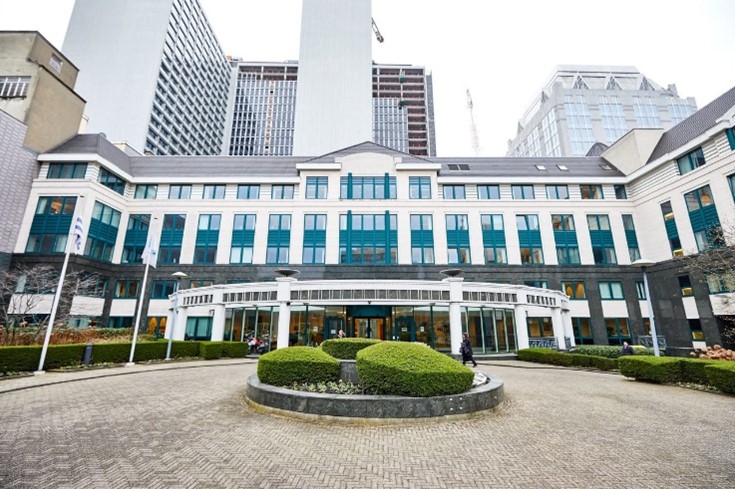
In 1997, after much effort, the WCO succeeded in building its headquarters, the “House of Customs in the World”, a large, comfortable and modern building in the heart of Brussels, capital of the Kingdom of Belgium.
The establishment of the Customs Cooperation Council is a milestone in the world history of customs. It is the first international organization to represent them in a direct and specialized manner, projecting its national actions to a global level, imbued with collaboration and becoming a powerhouse of best customs practices.
3.- Its institutional structure
Its institutional structure is very simple and dynamic. It has a superior body, "The Council", which is the highest authority of the organization, made up of the Customs of all the Member States, which meet once a year - usually in June - and democratically, by majority of the votes present, decide on the major issues submitted for consideration, evaluate the management carried out and establish the next guidelines to follow.
This higher body is supported by the “WCO Secretariat”, which is a “permanent” body, based in the building mentioned above in Brussels, Kingdom of Belgium (the headquarters of the Organization), and is responsible for managing and directing the daily operations of the Institution, providing technical and logistical support to its work teams. Together with the Committees, it implements the objectives of its Strategic Plan approved by the Council.
The Secretariat is headed by a Secretary General (currently, Dr. Kunio Mikuriya) and a Deputy Secretary General (currently, Mgter. Ricardo Treviño Chapa), who are in charge of the general direction and management of the Secretariat.
With a modest budget (approximately 17 million Euros per year) and excellent human resources management, the Secretariat carries out its titanic task with only 222 employees, of 67 nationalities, including 49 technical officers, and more than 40 Technical Attachés who have been generously supported by the Member States at their expense.
Furthermore, and to improve their work, the Member States have been divided into 6 Regions: (1) Middle East and North Africa, (2) West and Central Africa, (3) South and East Africa, (4) South America, North America, Central America and the Caribbean (with 31 Members representing 17% of WCO members), (5) Europe and, (6) Far East, South and South-East Asia, Australasia and the Pacific Islands.
4.- Its legal instruments
The WCO works with six (6) legal instruments:
International Agreements: These are International Treaties that are governed by Public International Law.
Recommendations: These are suggestions made by various areas of the WCO, in particular by the Permanent Technical Committee, and approved by the Council, which commit Member States, without being obligatory, to comply with them in order to achieve a greater degree of harmonization.
Resolutions: These are rules issued for specific situations and which commit the adhering Member States to make their best efforts to implement them.
Declarations: These are expressions of principles (positions) related to certain phenomena that justify them, and which are issued for the knowledge of the Member States and the international community.
Opinions: These are opinions issued to provide criteria and clarify certain doubts, providing guidelines on technical issues.
Memoranda of Understanding: These are bilateral or multilateral cooperation agreements with other entities to undertake common lines of action.
5.- The Role of the Private Sector
In 2005, and in line with the paradigm shift that marked the institution's steps, the Private Sector Advisory Group (PSCG) was created, an important and innovative institutional structure unit created with the purpose of informing and advising the Secretary General of the WCO, the Policy Commission, and the Members from the perspective of the private sector.
It currently has 27 members, who are renewed periodically, and who include importers/exporters, Customs Brokers/Customs Agents, Transport Agents, manufacturers, and other people who participate in international trade chains.
Their contribution has been and is very valuable for the entity. Their institutional reflection has been a real success. Before then, the private sector was always consulted “informally” regarding the measures to be adopted, but now there is a formal consultation structure unit.
Although they do not have voting rights or are authorized to participate in all meetings (particularly those related to customs control issues), they have a very strong role in the institution and, without a doubt, their formalization has allowed a clear improvement in the management of the entity and a demonstration of coherence with what is preached (SAFE Regulatory Framework: Public Sector – Private Sector Alliance).
6.- Current Challenges
In June 2022, the WCO Council approved its Strategic Plan for the three-year period 2022/2025. Its reading and analysis reveal the challenges and key points to be addressed.
First, the central objectives of customs are defined and grouped into four major categories: (i) Trade Facilitation, (ii) Revenue Collection, (iii) Protection of Society (customs control) and (iv) Organizational Development (this last point has been recently incorporated and is due to the need to strengthen the internal organization of customs, emphasize its visibility and highlight its leading role in the management of foreign trade data and its necessary participation as an advisor in economic policy decision-making -who better than customs to know in advance the viability of an initiative or the best way to carry it out-).
These objectives are supported by five interrelated processes that aim to:
(i) Develop, maintain, update and implement the instruments already developed (remember that we mentioned more than 137 instruments already developed, many of them pending full implementation);
(ii) Promote customs cooperation both among Customs and between them and other government agencies and the private sector, supporting the exchange of information and the carrying out of joint operations.
(iii) Strengthen capacities and provide technical assistance to members.
(iv) Conduct research with scientific rigor. In the opinion of the undersigned, this constitutes the acceptance of one of the main steps taken by the Agency in recent years: moving from a vision of best practices to a more rigorous, scientific and academic vision, based on solid data from reality, extracted through appropriate field studies.
(v) Communication. This is an area that requires a renewed approach by the WCO and its member Customs. The aim is to reach a wider audience and raise awareness in society about the important work that Customs perform at local, regional and global levels.
To comply with these processes, the OMA will focus internally on the following three aspects:
a) Technology and innovation: Efforts will be made to incorporate new technologies, reduce the digital divide between Members and initiate concrete steps towards the complete digitalisation of procedures, the use of data analysis and the exchange of information in dematerialised form.
b) Green customs. Endeavour to adopt measures that preserve the environment.
c) Governance and transparency. The WCO, as an international organisation, must be held to high standards, which implies full transparency and accountability in its activities and the appropriate participation of Members in its decision-making process.
7.- The Agenda of the Future
Since its creation, the World Customs Organization has sought to anticipate the potential impacts that new industrial, commercial or technological developments could produce, and in accordance with this, in 2015 it created a Virtual Working Group on the Future of Customs (“Virtual Working Group on the Future of Customs”), made up of representatives of Customs Administrations, Universities, and the Private Sector linked to Foreign Trade, who have been working together on the development of a document called THE FUTURE OF CUSTOMS, which later gave rise to a broader report called REPORT OF THE STUDY ON DISRUPTIVE TECHNOLOGIES.
The objective of the Study is to inform and help customs administrations to better understand what these technological advances are about, and how they could be used in the coming years, so that they are prepared and can take appropriate measures for their proper and sustainable reception and management, making the most of the opportunities they offer, neutralizing or reducing any potential adverse effects that may occur.
The disruptive technologies selected and analyzed for their potential to affect foreign trade management in general and customs in particular are the following:
– “Blockchain” or “Block Chain”: With a strong impact on the secure transfer of data, transparency and decentralization of information. With high application throughout the entire supply chain of goods, enabling their complete “traceability”.
– Artificial Intelligence: Of significant use in the management and administration of customs risks. It allows the detection of various types of fraud by identifying “atypical points” helping officials to identify potential suspicious transactions. It also has a potential impact on: (i) the tariff classification of goods, (ii) the analysis of images taken with X-ray scanners, (iii) the monitoring and logistics control in customs warehouses and cargo consolidation areas, (iv) the identification of passenger and vehicle risk, (v) the improvement of tax collection services through the development of mobile applications, etc.
– The “Internet of Things”: A key tool in inventory management, cargo robotization, smart containers (with various sensors and real-time GPS location), etc.
– Biometrics: It is widely used to facilitate (i) the identification of people who make shipments, (ii) control access to restricted areas (primary zones), (iii) ensure approval levels in the processing of processes, (iv) identify subjects who have made use of the franchises in special regimes (luggage, border transit, etc.), (v) replace the vulnerability of security keys and token equipment with fingerprint readers or iris readers (as cell phones currently enable), among others.
– Drones: From a customs perspective, this issue is analyzed from two points of view: (i) as a new means of transport (remote-controlled aircraft), which, as well as transporting merchandise legally, can transport drugs, prohibited merchandise, or other contraband items, and (ii) also as a new instrument of control at the borders.
From the first point of view, a number of questions arise that are still unanswered: What kind of control measures should Customs develop to monitor the cross-border movement of drones? Who will be responsible for the landing of drones carrying cargo? Will it be done at traditional customs stations, at air cargo terminals? And how to ensure that? How and who will send the data, including advance cargo information, to Customs? Who will be responsible for surpluses or shortages of cargo? How to regulate these new supply chain operators, drone operators/owners? There is still a lot of work to be done.
From the perspective of border control with drones, customs in the United States, Spain, Ecuador, among others, have already been using this control instrument with excellent results, since it facilitates surveillance in places of difficult access, as well as the detection of nocturnal movements by capturing high-resolution infrared images.
– 3D: 3D printing is a process of manufacturing three-dimensional solid objects from a digital file, using a 3D printing machine that uses various raw materials such as plastic, metal, nylon, or others.
These are products (houses, cars, weapons, etc.) whose designs are sent over the Internet and printed in another country, without “physically” passing through any customs. An industrial piece made in Germany could be “printed” in Argentina immediately after the plans for it are received. This creates challenges regarding the generation of import taxes, and even regarding intellectual property, since the work could be printed indefinitely.

8.- Final words
International organizations emerged as a necessary platform to reconcile the interests of both sovereign States and the world community, through various instruments that establish legal obligations and mechanisms that promote general welfare.
Looking at the performance of the World Customs Organization, we can say that, in this regard, the mission has been fully accomplished, since through reciprocal cooperation it has achieved a synergy and synchronization of efforts that have made it possible to accompany the rapid growth of world trade to which we referred.
Cooperation, effectiveness and efficiency are the three terms that best define the actions of the WCO. An agile and dynamic organization, with a small budget and limited staff (compared to other international organizations), it has managed to unite wills and undertake unimaginable projects (securing the logistics chain, creating reliable operators with a permanent green channel, creating an information exchange network, implementing risk management systems, etc.).
By reducing downtime in the logistics chain, delivery times for products and raw materials are optimized, boosting confidence and the possibility of placing perishable products on the international market that were not previously sold.
Distances are shrinking, times are shortening and commercial markets are expanding.
Around the year 470 BC, the Greek philosopher Heraclitus told us: “The only constant is change"Today, in the field of foreign trade and customs, we can say that we are in a constant, dynamic, almost exponential change, where new technologies, called disruptive, or an unexpected event, such as a pandemic, or a war, or a geopolitical conflict, can change our way of trading and living very quickly.
The dynamics of foreign trade pose a constant challenge for the Customs of the World. Fortunately, a specialized organization - and the group of experts that make up and direct it - has been working on this for 70 years and can now look back with pride at the work carried out and forward with great optimism at its proven suitability.
[1] Source: World Trade Organization. Link: https://stats.wto.org/
[2] The official name of the Organization is the Customs Cooperation Council, but as of January 1994, XNUMX, following in the footsteps of the World Trade Organization, and to give an image of the global character of the entity, informally (as a kind of "pseudonym"), it was renamed the World Customs Organization.
[3] January 26 is the date on which “International Customs Day” is celebrated annually, in commemoration of the inaugural session of the WCO.

The author is a Member (Judge) of the National Tax Court. University Professor. Specialized in Higher Education Teaching (UCC). Professor at the National University of Córdoba (UNC), Blas Pascal University (UBP), Austral University and Universidad del Rosario (Colombia). Professor and member of the Academic Committee of the Specialization in Customs Law at the National University of La Plata (UNLP). Member of the Drafting Group of the MERCOSUR Customs Code. Author of the book: "The World Customs Organization. Past, present and future.". Tirant Lo Blanch Publishing House, Valencia City, Spain. Year 2021 - Email: [email protected]