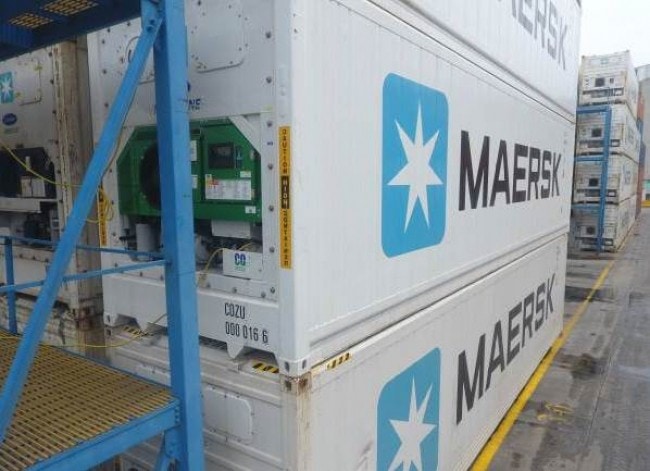
The port of Santa Marta, Colombia, was selected by the Danish shipping company Maersk as the first terminal worldwide to test 100 40-foot refrigerated containers with the new Natural Line technology.
This technology replaces synthetic refrigerant gas with a natural carbon dioxide (CO2) refrigerant., which is produced by reusing outside air through absorption compressors, thus eliminating the production of greenhouse gases.
“The above is given by Maerskline for meet sustainability goals and stay ahead of new European Union legislation, carefully evaluating all alternatives to current synthetic refrigerants (…) it is an advanced technology with interesting potential for reefers, so we have chosen it after laboratory tests of the unit’s performance with perishable and frozen products and we look forward to gaining further operational experience with the system,” said Ingrid Uppelschoten-Snelderwaard, head of global equipment at Maersk Line.
For the Colombian port of Santa Marta, Maersk's decision to select it as the pilot terminal for the The launch of this technology is a recognition of the relevance that the port currently has. in the handling of refrigerated cargo.
This is mainly in agricultural products, as well as meats and other edible cargo that the country exports and imports and its commitment to environmental protection.
With a fleet of 260.000 refrigerated containers, Natural Line technology is developed for Maersk by the US-based company Carrier Transicold, which has more than 100 years of experience in the production of refrigeration and air conditioning systems.

Aduana News foi o primeiro jornal aduaneiro da Argentina a lançar sua versão digital. Com mais de 20 anos de trajetória, suas publicações e iniciativas têm como objetivo oferecer o conhecimento mais relevante sobre temas aduaneiros, contribuindo para a promoção do comércio seguro e da facilitação do comércio na região.