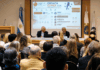
Brussels, BelgiumFrom 26 to 28 June, the World Customs Organization (WCO) held a new session of its Council, the highest decision-making body that brings together the heads of the 186 member administrations, at its headquarters. General Secretary, Ian Saunders, defined the meeting as “the most important meeting of the year”, which adopts key decisions to guide the Organization's work and define the strategic priorities of the international customs community.
The session was marked by a high-level agenda and active participation from its members. In Mr. Saunders' words, Council 2025 reflected the "spirit of shared mission and cooperation" that distinguishes the WCO as a global solutions platform in a dynamic and challenging trading environment.
🟦Renewed cooperation with the WTO
In this context, the WCO reaffirmed its commitment to the World Trade Organization (WTO), strengthening strategic collaboration in addressing the challenges of the multilateral system.
La WTO Director-General Ngozi Okonjo-Iweala Nigerian economist, was received with honors by the customs community and, in her speech to the Council, emphasized that “Policies designed to ensure that trade flows smoothly, safely, and predictably are only effective to the extent that customs and border agencies implement them.He also called for deepening bilateral cooperation in critical areas such as combating illicit trade, illegal financial flows, and the incorporation of emerging technologies—such as artificial intelligence—with special attention to developing countries.

El Secretary General of the WCO agreed that “One of the real expressions of trade policy is often the requirements and procedures found at the borders.", and praised the achievements made with the WTO in terms of predictability, coherence, and efficiency.
El Outgoing President of the Council, South African Edward Kieswetter, who is ending her term after two years in office, thanked Okonjo-Iweala for “clarify the purpose of the WTO and the WCO, as well as the impact they have on people's lives".
Both international organizations share fundamental responsibilities in areas such as the Harmonized System, rules of origin, customs valuation, trade facilitation—particularly through the implementation of the Trade Facilitation Agreement—technical cooperation, and trade security. In this regard, the Cooperation Agreement, renewed on January 21, 2025, establishes the purpose of "promoting cooperation and the exchange of information on matters of common interest," according to an official WCO statement.
🟦Modernization of the Harmonized System
In line with this vision of modernization, the Council approved a strategic project called “Improving the Harmonized System FrameworkThis project aims to conduct a thorough review of the Harmonized System (HS), the universal nomenclature used to identify and code goods in international trade. Used by more than 210 economies, the HS is fundamental for tariff classification, the collection of trade statistics, and other customs measures.
It is worth remembering that this system was conceived by Dr. Juan Alberto Sortheix, an Argentine jurist recognized as the “architect of the world tariff nomenclature” (https://aduananews.com/juan-jose-alberto-sortheix-el-arquitecto-del-sistema-armonizado/ ), whose technical and conceptual contribution laid the foundations for the common language of global trade.
Although the HS is updated regularly, this initiative seeks to implement new tools and procedures to improve its clarity and ease of use, adapting it to technological changes and new business dynamics. This process will be carried out in three phases, between 2025 and 2028, and will incorporate innovative mechanisms such as digital public consultations, the use of artificial intelligence for classification analysis, and the potential creation of modular substructures according to economic sectors. It will lay the groundwork for the planned HS review in 2033, thus ensuring that this system remains effective and relevant in the future.
🟦Renewal of authorities
Among the main announcements, the election of Bashir Adewale Adeniyi, Director-General of the Nigerian Customs Service, as the new President of the WCO Council, taking office on 1 July 2025Upon being elected, he stated:“I am deeply grateful for my election. I look forward to continuing the progress made in developing the 2025–2028 Strategic Plan and working with the Secretariat and the Regional Vice Presidents on its implementation and the modernization of the organization.”
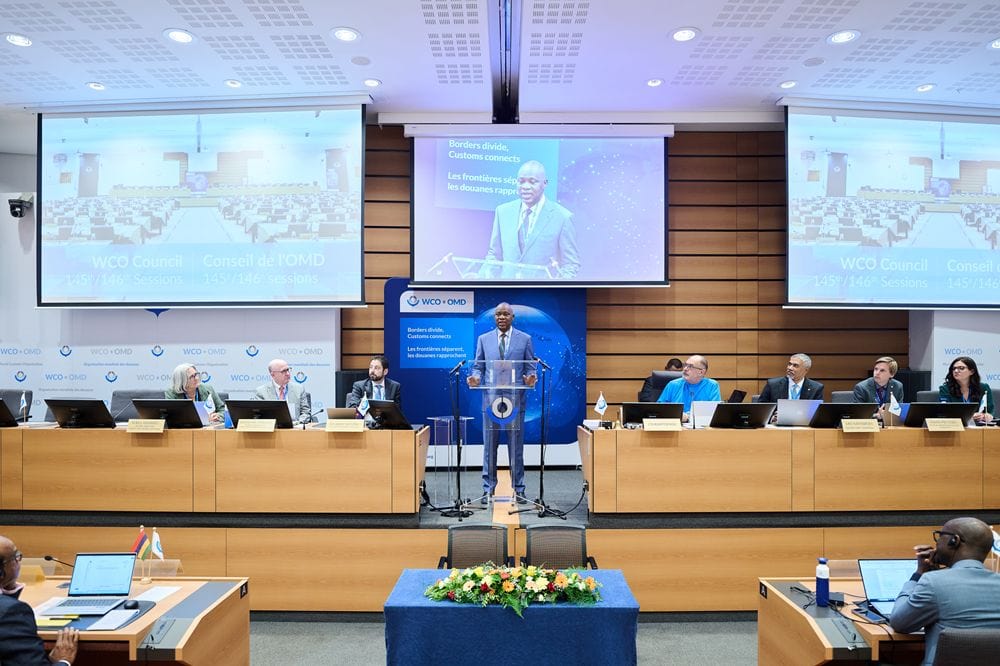
Mr. Saunders congratulated Adeniyi and thanked Kieswetter for her leadership, noting that “under his direction, the WCO modernization plan moved from the conceptual stage to operational implementation.”
The new ones were also announced regional vice presidents: the United Kingdom for the European Region and South Africa for Eastern and Southern Africa.
🟦Strategic decisions
The sessions concluded with the approval of key initiatives for the organization's immediate future:
(I.e.Approval of the 2025–2028 Implementation Plan, promotes a focus on measurable results in key areas such as supply chain security, e-commerce, sustainability, and digital cooperation. This instrument represents a shift toward more evidence-based and impact-oriented governance.
(I.e. SAFE Framework UpdateSAFE Framework of Standards for Securing and Facilitating Global Trade. This update incorporates important innovations, such as:
-
- Ethical guidelines for Authorized Economic Operators (AEOs), with an emphasis on codes of conduct and prevention of insider threats.
- Inclusion of free trade zone and e-commerce players in the AEO model.
- Integration of environmental and sustainability considerations into customs management.
- Strengthening resilience to emerging risks such as cybersecurity, digital fraud, and biological threats.
(I.e.New tools for e-commerce. New guidelines were approved to expand the AEO concept to cross-border e-commerce, recognizing the need to adapt the model to new players such as digital platforms, freight consolidators, and postal operators.
(I.e.Inclusion of micro, small and medium-sized enterprises (MSMEs) to AEO programs, a key measure to democratize access to the benefits of safe and formal trade.
(I.e.Strategies for sustainability, integrated into customs operationsstrategies for sustainability, integrated into customs operations.
"A great week at the WCO. We presented the results of the 2022–2025 Strategic Plan and the progress of the modernization plan. A new cycle begins with the approval of the 2025–2028 Strategic Plan, focused on what really matters: supporting data-driven Customs in an interconnected world.", he summarized Ricardo Treviño Chapa, Deputy Secretary General.
🟦Participation of the Americas and the Caribbean
Prior to the Council sessions, Customs Argentina He was an active member of the Policy Commission, which brings together representatives of the region together with their peers from Chile, Peru, Mexico, Canada and the United States. This was reported by the National Superintendency of Customs and Tax Administration (SUNAT) of Peru, under the leadership of the WCO Regional Vice-Presidency for the Americas and the Caribbean (Americaribe). The participation of the region's administrations in the Policy Commission was key to informing the technical debate and contributing to the definition of strategic priorities that would later be addressed by the Council.
During the Council sessions, SUNAT officially announced its recognition by customs authorities as a WCO Regional Training Center for the Americas and the Caribbean, thus consolidating its leadership in capacity building in the region.
🟦Regional alliances and technical cooperation
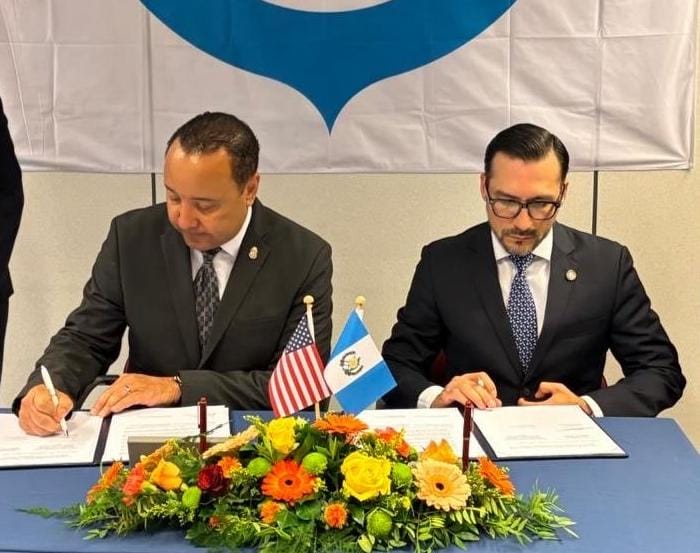
During the sessions, the delegates witnessed the consolidation of a strategic alliance between the Department of Homeland Security of the United States —through its Customs and Border Protection Office (CBP)— and SUNAT of the Peru, aimed at strengthening the operational and technological capabilities of the SAT of Guatemala.
Likewise, it was officially announced that Guatemala will host the next meeting of the Policy Commission, following the signing of a Memorandum of Understanding between its SAT and U.S. authorities, in a further sign of regional commitment to integration and customs cooperation.
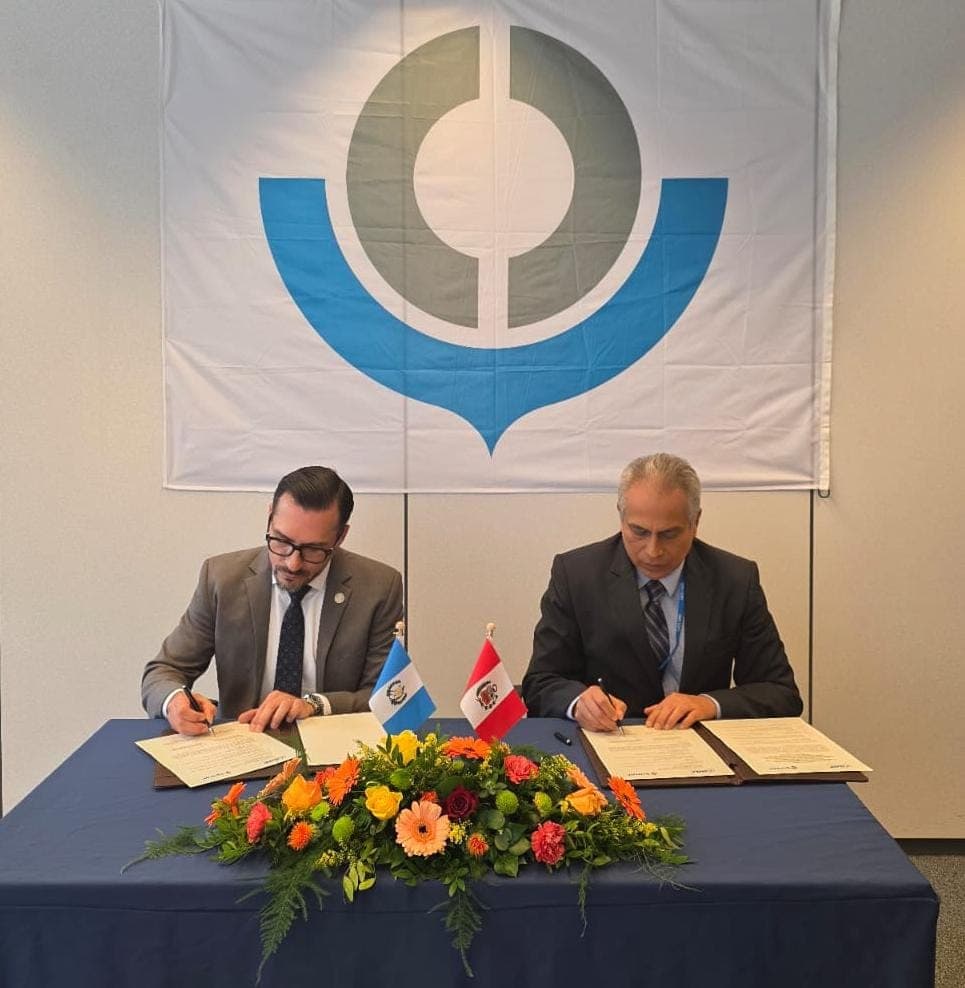
Photo: SAT-G
🟦Institutional recognition
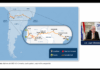
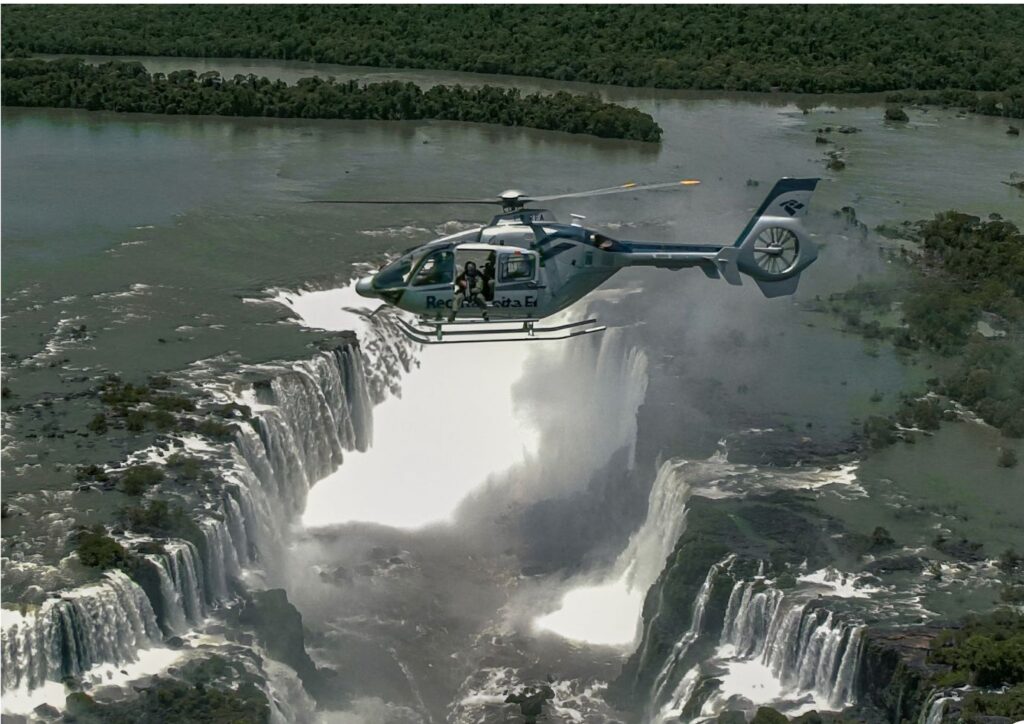
La Federal Revenue of Brazil was awarded first prize in the WCO Annual Photography Contest 2025, thanks to an image depicting an aerial customs surveillance operation at Iguazu Falls, on the border between Brazil and Argentina, as part of the operation “Armored Border"against smuggling and transnational crime. According to the WCO, this regional operation resulted in the seizure of illicit goods valued at approximately $3.200 billion, as well as 253,40 tons of drugs. These results reflect the concrete and sustained impact of the coordinated work between the participating customs administrations.
This event seeks to highlight the daily work of customs administrations around the world. The WCO Secretariat congratulated Brazil and thanked all member countries for their active participation.
🟦Renewal in the private sector
In parallel with the meetings of WCO members, and within the framework of institutional strengthening and public-private cooperation, the Private Sector Consultative Group also renewed its leadership. Erik Moncayo, President of World BASC Organization, assumed leadership of the Regional Private Sector Group for the Americas and the Caribbean.
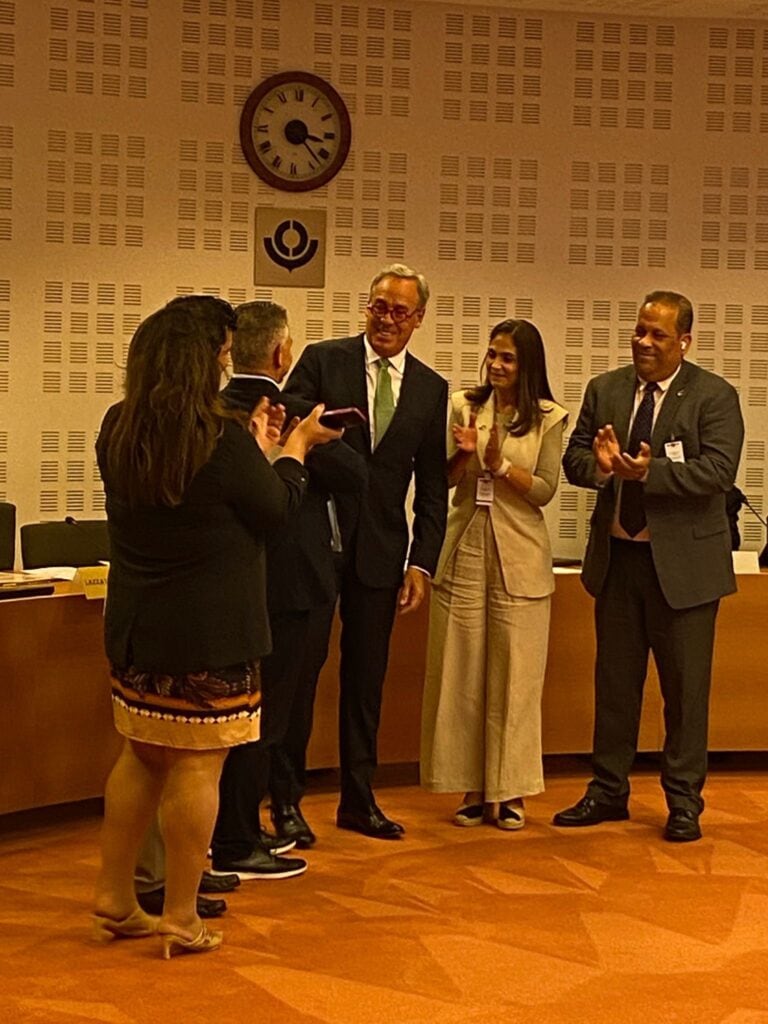
During the ceremony, the World BASC Organization announced that special recognition was given to Mexican Alfonso Rojas for his six years of leadership at the group, highlighting his commitment to strengthening safe, ethical, and collaborative trade in the region.
🟦Looking to the future
Council 2025 made it clear that the WCO is moving toward a modern vision of the Customs function: transparent, ethical, collaborative, and with a strong technological component. The next steps will be guided by a more agile, results-based governance model supported by cooperation between Customs, the private sector, international organizations, and new digital platforms.
🟦Closing
As stated by the WCO Secretary-General, this Customs Week confirmed that only through international cooperation and joint leadership can Customs be a real source of efficiency, security, and prosperity. Founded in 1952, the WCO continues to demonstrate its relevance and strength as an essential pillar for secure and resilient global trade in an increasingly interconnected world.
*Aduana News thanks Dr. Héctor Juárez Allende, author of the book "The World Customs Organization: Past, Present, and Future," for his collaboration in the preparation of this press release..
(**) The photo used in the podcast was taken from the public LinkedIn profile of WCO Secretary-General Ian Saunders.
Fonts
https://www.wcoomd.org/en/about-us/photo-competition.aspx

Aduana News foi o primeiro jornal aduaneiro da Argentina a lançar sua versão digital. Com mais de 20 anos de trajetória, suas publicações e iniciativas têm como objetivo oferecer o conhecimento mais relevante sobre temas aduaneiros, contribuindo para a promoção do comércio seguro e da facilitação do comércio na região.