With the aim of strengthening the country's competitiveness and modernizing its customs system, the Superintendency of Tax Administration (SAT) of Guatemala officially launched the Second edition of the Dispatch Time Study (ETD), this time focusing on operations exporting .
The initiative, which began this Monday (16.06.2025), seeks to accurately measure the time taken by customs processes in the main port terminals in the country: MPONAC-Santo Tomás de Castilla Customs, CHIQUITA-Puerto Barrios Customs, QUETZAL PORT COMPANY-Puerto Quetzal Customs and APM Terminal Quetzal-Puerto Quetzal Customs.
Maritime exports: the focus of the study
Maritime transport accounts for the largest volume of Guatemalan foreign trade. According to data from SAT-G, 2024% of the FOB value of exports was transported by sea in 54.
In this context, this new ETD constitutes a strategic tool for Identify bottlenecks, optimize processes and facilitate exports, with real data collected in the field using the World Customs Organization (WCO) methodology, aligned with the commitments of the WTO Trade Facilitation Agreement.
Institutional commitment
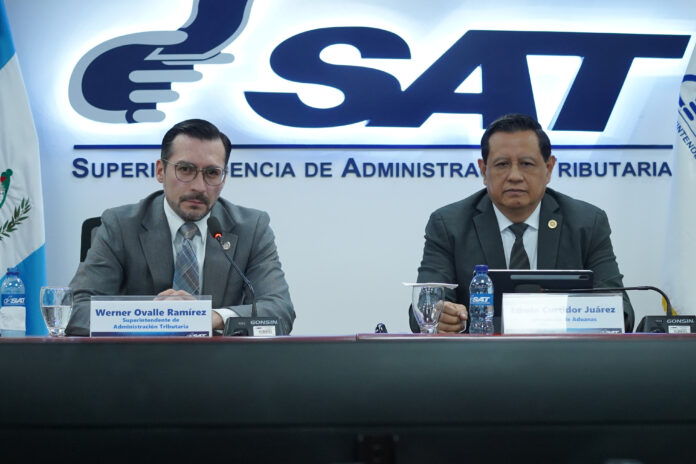
"The study is a transformation tool that reflects our commitment to a more agile, efficient and transparent customs system.", the Superintendent highlighted Werner Ovalle Ramirez during the opening ceremony, broadcast live on social media.
Ovalle also stressed the importance of the public-private dialogue and cooperation table, which has allowed for building consensus, assuming shared responsibilities and outlining a common roadmap to improve Guatemalan foreign trade: “It should be facilitated, not hindered"I affirm.
In turn, the Customs Superintendent Edwin Curtidor Juarez He specified that the study will cover containerized cargo operations (general and perishable), as well as definitive, simplified, complementary, and provisional import declarations.
Technical execution
The data collection operation will include the participation of 98 technicians (55 men and 43 women) from the SAT and from institutions that make up the Public-Private Dialogue Table. In total, 39 measuring points at port terminals, where key data on the export process will be collected.
As announced, the ETD schedule is as follows:
- June: Data collection (16 to 22).
- July August: Tabulation and analysis.
- September: Preparation of the report.
- October: Publication of results and presentation of the Action Plan.
This plan will identify logistical gaps and will propose concrete actions for improvement, such as the improvement of procedures, advances in interoperability, IT developments and strengthening traceability.
In addition, a monitoring and evaluation of the National Plan across 2025 and 2027, in order to ensure its effective implementation and monitor compliance with the commitments made.
Continuity and international cooperation
The SAT-G I had already applied this methodology to evaluate dispatch times in the definitive imports between 2020 and 2023. In this new edition, the measurement once again includes the technical support from the WCO, which guarantees the correct application of the methodology. In addition, it is supported by other public and private sector institutions, strengthening the collaborative and comprehensive approach of the study.
With this focus, and in preparation for the launch, 25 outreach sessions were held with business chambers and foreign trade stakeholders, within the framework of a National Communications Plan aimed at ensuring transparency and active participation of the productive sector.

Aduana News foi o primeiro jornal aduaneiro da Argentina a lançar sua versão digital. Com mais de 20 anos de trajetória, suas publicações e iniciativas têm como objetivo oferecer o conhecimento mais relevante sobre temas aduaneiros, contribuindo para a promoção do comércio seguro e da facilitação do comércio na região.