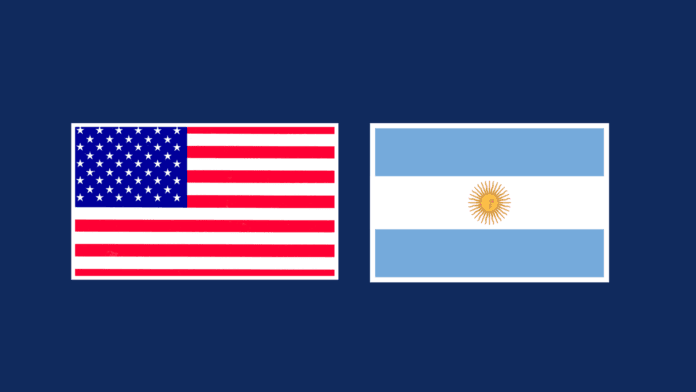
“The United States and Argentina agreed on Thursday to deepen their bilateral cooperation in trade and investment,” according to a joint statement released by the White House. The understanding is part of the strategic relationship between U.S. President Donald J. Trump and Argentine President Javier Milei, based onshared democratic values, free enterprise, private initiative and open markets.”
The announcement includes the creation of a “Framework for a Reciprocal Trade and Investment Agreement,” whose objective is “ito promote long-term economic growth, expand business opportunities and establish clear and predictable rules for bilateral trade."
The US administration highlighted that the progress reflects "the shared ambition and values of both countries," acknowledging the reforms made by Argentina to modernize its trade and investment regime.
Key points of the agreement
- Duty
The countries will “open their markets to each other for key products.”
Argentina will grant preferential access to US exports, while the United States will "eliminate reciprocal tariffs" on natural resources and non-patented pharmaceuticals.
Both governments pledged to "improve market access conditions for beef trade."
- Elimination of non-tariff barriers
Argentina has dismantled numerous restrictions and pledged to "not require consular formalities" for US exports, in addition to phasing out the statistical fee.
- Standards and conformity assessment
Argentina will allow the entry of North American products that comply with "applicable U.S. or international standards," without requiring additional evaluations.
- Intellectual Property
Argentina will strengthen the fight against “counterfeit and pirated goods,” and will work to align its legislation with “international intellectual property standards.”
- Access to the agricultural market
The country has opened its market to live American cattle and will allow the entry of poultry meat within a year, in addition to "not restricting terms related to cheeses and meats."
- Work
Argentina reaffirms its commitment to labor rights and will adopt a ban on importing goods produced through "forced or compulsory labor."
- Environment
Buenos Aires is committed to combating illegal logging, improving resource efficiency and fully implementing the WTO Agreement on Fisheries Subsidies.
- Seconomic security
Both governments will cooperate to address “non-market-oriented policies and practices” and strengthen controls related to exports, investments, and tariff evasion.
- business opportunities
The countries will coordinate to promote investments in critical minerals and stabilize the global soybean trade.
- State-owned enterprises and subsidies
Argentina will review industrial subsidies and “distorting actions” of state-owned companies.
- Digital commerce
Argentina will recognize the United States as an “adequate jurisdiction” for data transfers and will not discriminate against US “digital services or products”.
Next steps
Both governments will work “with speed to finalize the text of the agreement for its signature,” Following this, they will proceed with the internal procedures for its implementation. Furthermore, “They will review the implementation of the Agreement and continue close coordination.” in the area of trade and investment

Aduana News foi o primeiro jornal aduaneiro da Argentina a lançar sua versão digital. Com mais de 20 anos de trajetória, suas publicações e iniciativas têm como objetivo oferecer o conhecimento mais relevante sobre temas aduaneiros, contribuindo para a promoção do comércio seguro e da facilitação do comércio na região.