





Amazonia as a forum and test
Holding COP30 in the Amazon is not an aesthetic gesture or a mere geographical tribute. It is a political decision with historical, legal, and symbolic weight: it shifts the center of gravity of climate negotiations to a territory where the tension between conservation, development, and inequality becomes starkly visible. By choosing Belém as the official venue and designating Manaus as one of the epicenters of the parallel events, the Brazilian Presidency is moving the focus of climate negotiations from European conference halls to the heart of the rainforest, also exposing the internal contradictions of its own development model and the demands of fulfilling its obligations.
international.
The Amazonian frontier is not a cartographic line. It is a space where Indigenous territories, protected areas, zones of legal and illegal mining, twin cities, agricultural lands, and routes for the illicit trafficking of timber, wildlife, minerals, pesticides, hazardous waste, and mercury overlap. From a climate perspective, it is also the place where the fight against deforestation, the pressure for new logistical infrastructure, international demand for critical minerals, and the expectation that Brazil will become a provider of bioeconomy solutions intersect. In practice, it is a laboratory of tensions between narratives of rainforest protection, climate obligations, and transnational private interests.
In this context, Brazilian customs ceases to be a mere technical body for classification and taxation, becoming a border institution in the fullest sense: an actor that, by applying or not applying controls, decides what enters and what leaves, what is formalized and what is tolerated, what becomes visible and what remains in the gray area of environmental illicit activities. Each container inspected or released, each risky operation selected or discarded, becomes a micro-stage where it is decided whether Brazil intends to fulfill its stated commitments. It is precisely at this intersection of climate promises and border control that COP30 in Manaus transforms the Amazonian border into a visible laboratory of coherence.
between discourse and practice.
The Ten Charters of COP30: political contract, evolutionary style and authorship
The Ten Letters of the COP30 Presidency, signed by the President of the Republic, are not merely preparatory documents or pieces of institutional communication. They function as a “political contract” with the international community and with Brazilian society itself.
Unlike many final declarations that emerge at the close of Conferences of the Parties, these Charters are published ex ante, in a sequence that accompanies the event preparation schedule and organizes priorities, language, and ethical tone of the conference.
The first letters adopt a historical call to action style, alluding to Rio-92, the Paris Agreement, the symbolic role of the Amazon, and the urgency of halting climate collapse. Subsequent letters delve deeper into topics such as just transition, financing, adaptation, and Indigenous peoples.
indigenous peoples and local economies, as well as incorporating references to decisions of the International Court of Justice and erga omnes obligations in environmental matters. Taken together, the Ten Charters constitute a framework that allows for the evaluation of the coherence between what
Brazil promises and actually implements what it does: it creates verifiable discursive parameters, with which policies, administrative decisions and omissions can be confronted.
From the perspective of economic public law and the Brazilian institutional framework, the Charters also indicate a stylistic shift: from climate policy treated as government policy to a state policy that extends beyond specific mandates.
The insistence on the Amazon as a “common good of humanity” and on climate justice as a criterion of legitimacy adds weight. By adopting this rhetoric and endorsing it at the highest level, Brazil exposes itself legally and submits to a scrutiny that is no longer just environmental, but
also of institutional integrity and coherence between economic policy and climate obligations.
SBCE: regulated carbon market and border reflections
The enactment of Law No. 15.042/2024, which establishes the Brazilian Greenhouse Gas Emissions Trading System (SBCE), cannot be interpreted solely as a sectoral advance in climate policy. It represents a reorganization of national economic public law. The SBCE establishes a regulated carbon market that compels emissions-intensive sectors to internalize environmental costs, under rules defined by the competent authority, creating assets (credits) and liabilities (obligations) with direct effects on contracts, investments, financing, and foreign trade.
The credits generated in Brazil can operate as environmental assets in the global economy, provided their integrity is recognized within the international climate architecture. In parallel with mechanisms such as the European Carbon Border Adjustment Mechanism (CBAM), the SBCE tends to become an internal parameter of climate integrity, putting pressure on emissions-intensive supply chains.
This arrangement projects clear trends regarding customs action at the border:
– Customs now operates in an environment where goods, services and carbon credits are intertwined;
– increases the requirement for traceability of the carbon footprint and environmental integrity of exported and imported products;
– Credit and certificate flows enter the radar for fraud, double accounting, re-washing and simulations;
– the need for cooperation between customs, environmental, financial and criminal authorities in risk management is reinforced.
In other words, the SBCE transforms the role of customs: it is no longer just about verifying tariff classification and customs value, but about integrating environmental and climate parameters into its decisions. In the language of Public Economic Law, the border becomes a point of convergence between climate regimes, financial regulation, industrial policy, and the tax system.
ICJ Advisory Opinion and erga omnes climate obligations
The International Court of Justice's Advisory Opinion on States' obligations in relation to climate change reinforces this shift. By stating that States can be held internationally responsible for climate damage resulting from omissions or insufficient action, the ICJ raises the standard of due diligence required and broadens the notion of damage: it is no longer limited to one-off catastrophes, but encompasses emissions trajectories incompatible with temperature targets and the rights of present and future generations.
From a domestic governance perspective, this means that bodies like customs administration cease to be “neutral actors” and become key players in the fulfillment—or non-fulfillment—of international obligations. When they fail to enforce controls, relax regulations without technical justification, or remain silent in environmental risk scenarios, they indirectly contribute to climate damage. Conversely, when they implement smart controls, facilitate clean supply chains, and prioritize flows compatible with the green transition, they act as guarantors of the State's climate good faith.
AMUMAs, Green Customs, participating organizations and Single Portal: the Brazilian climate interface
The network of Multilateral Environmental Agreements (MEAs)—Basel on hazardous waste, Rotterdam on chemicals, Stockholm on persistent organic pollutants, Minamata on mercury, and CITES on fauna and flora—forms a complex set of border control obligations. The Green Customs Initiative, led by the United Nations Environment Programme (UNEP), along with instruments from the World Customs Organization (WCO), such as the SAFE Framework, aims to provide a common language, guidelines, and tools for customs administrations to integrate these obligations into their daily procedures.
In Brazil, this interface is specifically provided through the Single Foreign Trade Portal, the DUIMP (Single Import and Export Registry), and the electronic LPCOs (Limited Liability Transaction Processing Centers), through which authorizing bodies such as IBAMA (Brazilian Institute of Environment and Renewable Natural Resources), MAPA (Ministry of Agriculture, Livestock and Fisheries), Anvisa (Brazilian Health Regulatory Agency), the Federal Police, and others issue rulings on sensitive transactions. In practice, it is at this point of contact where the decision is made.
– what goods subject to AMUMAs can enter or leave the country;
– what conditions they must meet;
– which flows will be subject to enhanced monitoring;
– what data will be consolidated to feed risk analysis and environmental statistics.
The Green Customs agenda at COP30, by placing systems integration, environmental risks, scientific evidence, and international cooperation on the agenda, engages directly with this framework. From this point forward, a border omission ceases to be a merely administrative problem and becomes a legal vulnerability exposed in the new international context.
Manaus 2025: the Green Customs event as an ongoing institutional framework
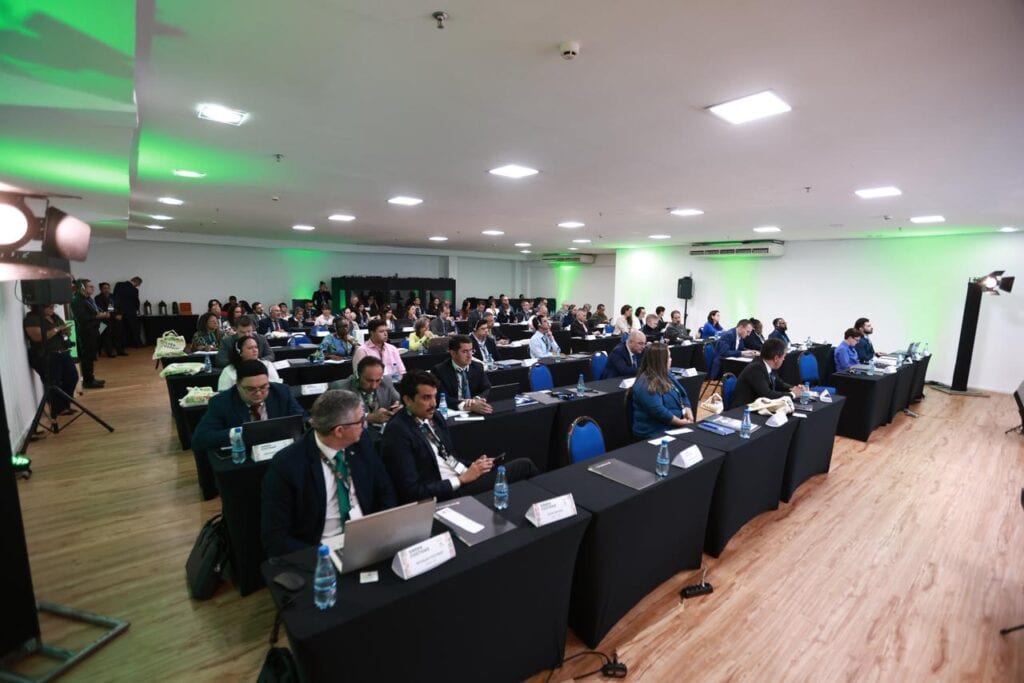
Between November 12 and 14, 2025, at the Intercity Manaus Hotel, the "Green Customs" event will be held as an official parallel activity to COP30. It is an initiative that brings together the Brazilian Federal Revenue Service, IBAMA, the Federal Police, international organizations such as the WCO and the Green Customs Initiative, multilateral organizations, customs representatives from other continents, and entities from the private sector and civil society.
More than a series of technical panels, the event functions as a kind of "open institutional rehearsal," in which the Brazilian customs administration publicly presents its diagnoses, projects, vulnerabilities, and proposals regarding environmental crimes, climate change, and sustainable trade. From the opening cocktail reception to the discussions on the 14th, what emerges is the development of a new framework for the allocation of seized goods, risk management, and collaboration among stakeholders.
(I.e.From the opening cocktail to a new grammar of the destination of seizures
The opening cocktail party, “From Waste to Innovation: Transforming Learned Markets into Positive Impact,” held on the evening of November 12, was more than just a social event. Organized by the Brazilian Federal Revenue Service (Receita Federal do Brasil), in collaboration with the IDRO Institute, the Yattó company, the Recicla+Ação project, and local partners such as the Caxiri restaurant, chef Deborah Shornik, and entrepreneur Paulo Caimbro, it served a much deeper purpose than simply “breaking the ice” between delegations.
In practice, the cocktail event functioned as a living laboratory for innovative uses of seized goods: alcoholic beverages diverted from regular consumption transformed into high-quality jams; fabrics from counterfeit clothing converted into symbolic coins that make the cost of piracy visible; specialty coffee produced using technological processes that salvage compromised batches; and personal hygiene products repurposed as raw materials for fragrances. Each food station incorporated a story of seizure, reprocessing, and reinterpretation, demonstrating that disposal is not the only possible fate for illicit products.
(I.e.Inaugural Conference: From Rio-92 to COP30, Customs as a “Climate Guardian”
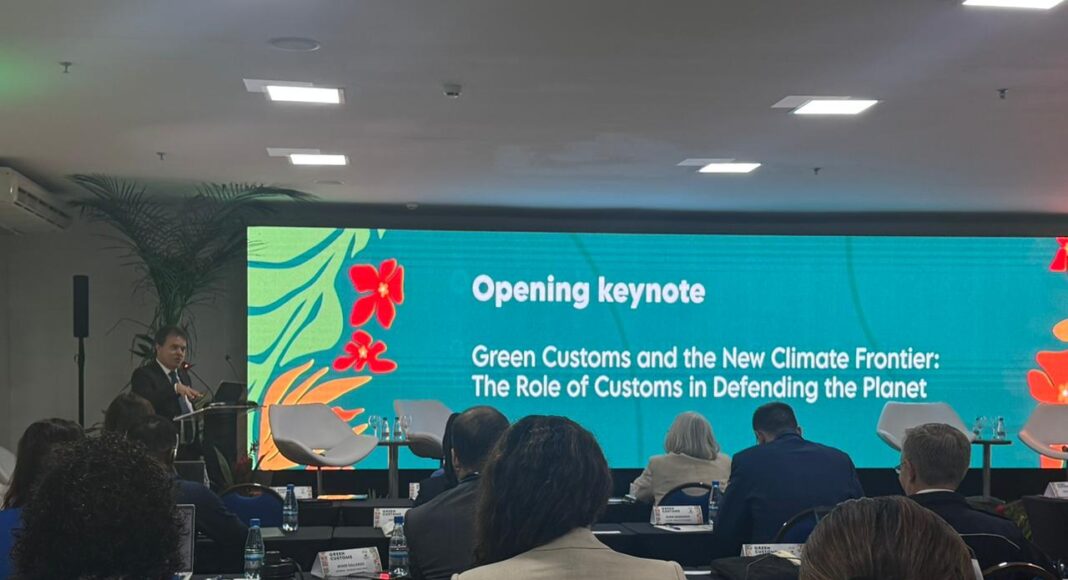
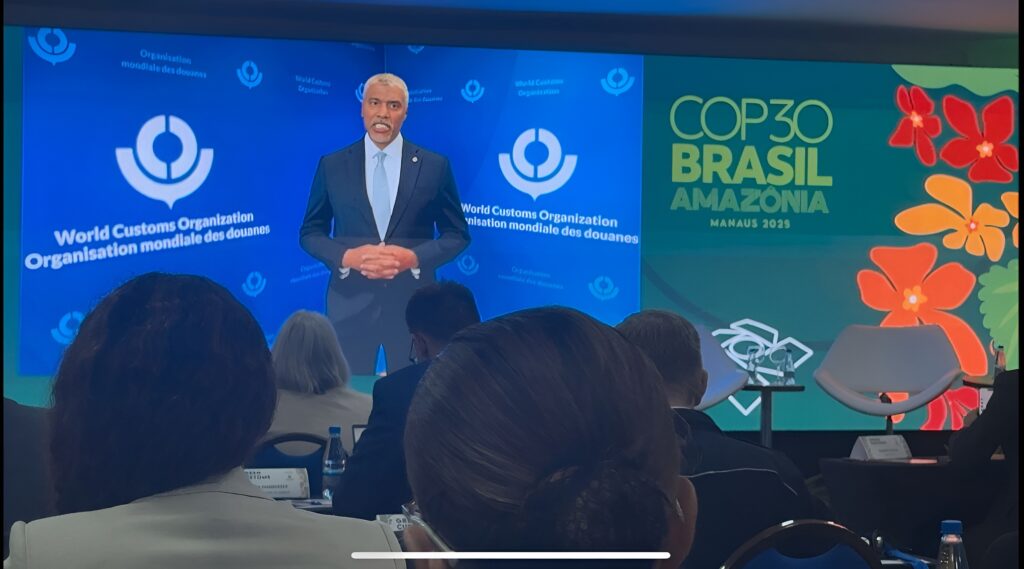
The opening session featured the conference “Green Customs and the New Climate Frontier”, led by Fabiano Coelho (Special Secretary of the Brazilian Federal Revenue Service), Lourdes Maria Carvalho Tavares (Superintendent of the RFB in the 2nd Fiscal Region) and with the remote participation of Ian
Saunders (WCO Secretary General) and de Gael Grooby (WCO Director of Policy and Standards) drew an arc connecting three decades of history.
Fabiano Coelho picked up the historical thread connecting Rio-92 with COP30, highlighting how decisions about trade, taxation, and customs control have always been present—though often invisible—in climate debates. He emphasized the Amazon as an epicenter of biodiversity and also as a frontier of economic disputes, underscoring that Brazil's position on the climate stage depends as much on its capacity to reduce emissions as on its credibility in enforcing environmental regulations at its borders.
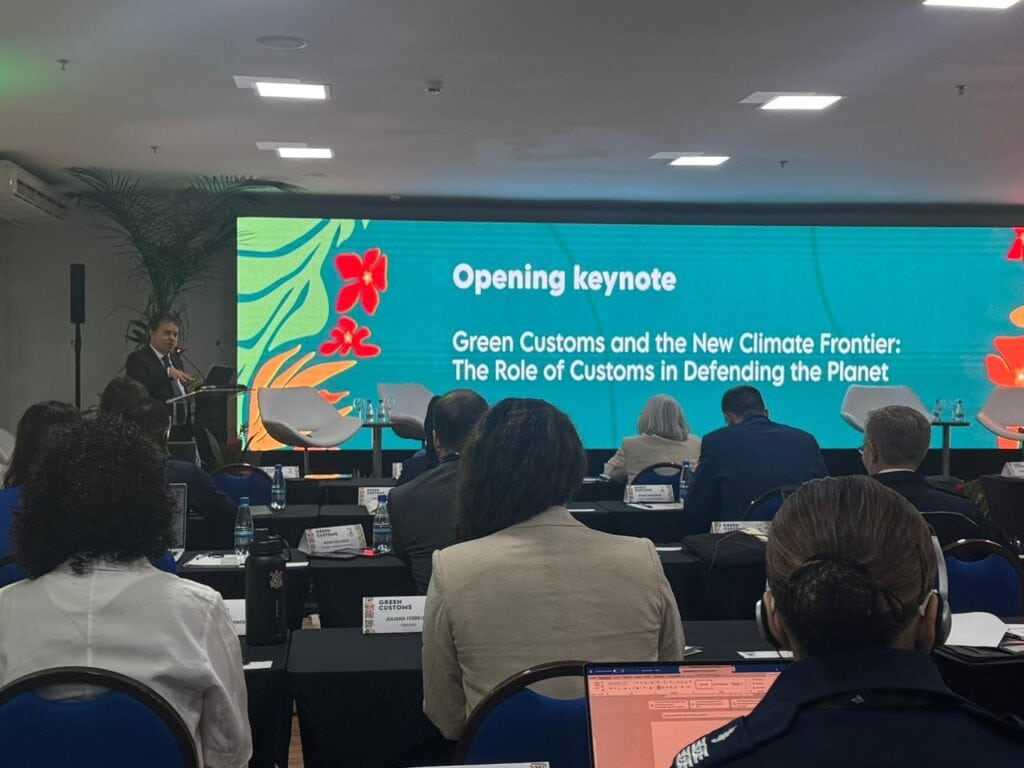
Lourdes Tavares He provided concrete examples of environmental operations by the Federal Revenue Service in the Amazon region, from seizures of illegally mined manganese to containers of waste and mercury, illustrating how customs is forced to simultaneously contend with organized crime, the economic exploitation of social vulnerability, and international pressure for results. In his words, there is no such thing as “possible neutrality” at the border: every omission reinforces illicit networks that erode the country's environmental and fiscal foundation.
Next, the Secretary General of the World Customs Organization, Ian Saunders, He presented the central argument: Green Customs is not a parallel program or an add-on to the climate agenda, but rather a cornerstone of the multilateral regime's credibility. He emphasized that customs efficiency and risk management are prerequisites for Multilateral Agreements on Customs (MACs) to produce real results, and that the active participation of administrations like Brazil's is fundamental to preventing borders from becoming "back doors" for illegal waste, chemicals, and wildlife. His message made it clear that Green Customs will become a criterion for the legitimacy of 21st-century customs.
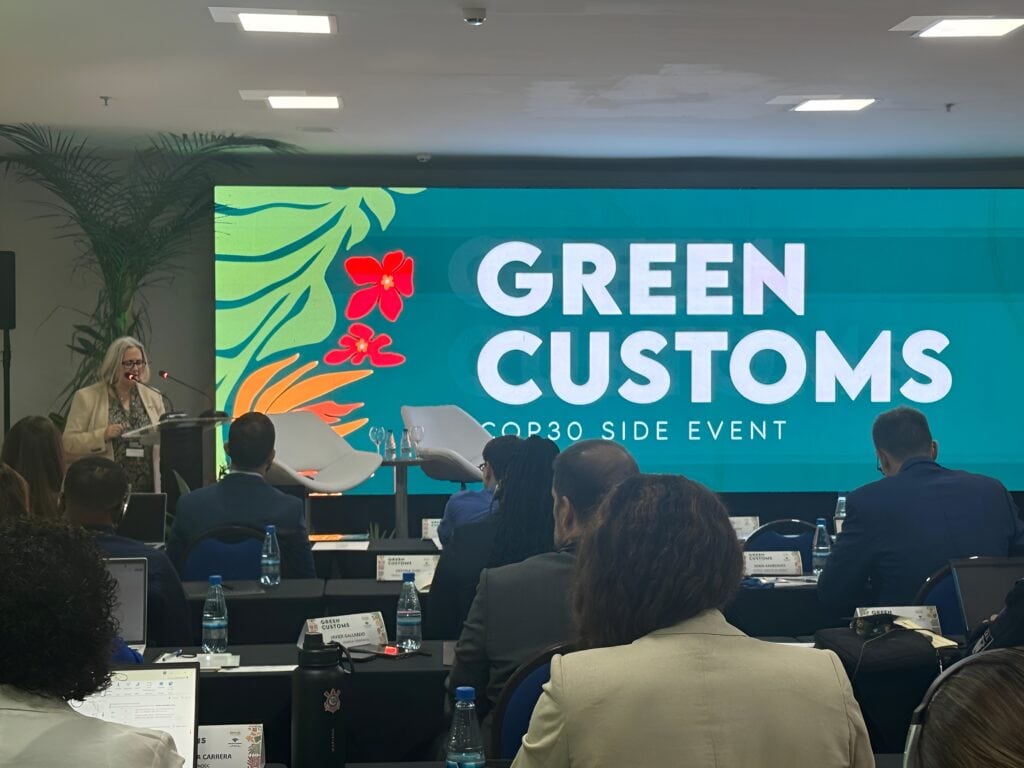
The Ag. Director of the WCO's Directorate of Tariffs and Trade Affairs, Gael Grooby She brought the debate to a technical and institutional level and presented the WCO's work agenda on Green Customs, green self-assessment tools, environmental performance metrics for customs administrations, and new online training modules for border officials. She emphasized that, in light of decisions such as the ICJ Advisory Opinion and the evolution of climate law, customs administrations will be subject to the international climate regime, whether they like it or not.
✔November 13: BEING and DOING with names, figures and stories
While the opening session established the conceptual foundations, the panels on November 13 fleshed out the agenda with voices, data, and concrete experiences. Two pillars—BEING and DOING—emerged strongly, enriched by a cross-cutting communication theme that encouraged viewing the allocation of seized goods as a public policy, not as a residual issue.
(I.e.Panel 1 – Internal sustainable practices and the SER pillar
Moderated by Thales Freitas Alves, president of Sindireceita, Panel 1 – “Sustainable Internal Practices in Customs Administrations“ – brought together Marina Aiello Sartor (RFB Tax Auditor and Green Customs Project Manager), Ana Vanessa Ricardo Acosta (General Directorate of Customs of Paraguay), Fausto Manuel Calix Márquez (Customs Administration of Honduras) and Ana Cristina Trovão (Authoridad Tributária e Aduaneira de Portugal) to discuss how customs can become more consistent with the climate agenda internally, in their internal management, infrastructure and organizational culture.
Marina Aiello Sartor presented the Green Customs project as a platform that organizes the RFB's actions around three pillars – BEING, DOING, and INNOVATING – enriched by a cross-cutting communication strategy. Speaking about BEING, he emphasized that it's not just about gathering isolated best practices, but about incorporating environmental criteria into tenders, public procurement, waste management, energy consumption, and the use of physical infrastructure, as well as reviewing internal work protocols to reduce the institution's environmental footprint.
Marina then described the “impact economy” that can arise from well-managed seizures: instead of viewing confiscated goods as a logistical problem, the project links them to reuse initiatives, support for local businesses, and the strengthening of social innovation networks. The opening cocktail party was cited as an example of how culinary culture, design, and the circular economy can interact with customs procedures.
The specific examples reported included:
– a jam produced from seized beverages, rigorously reprocessed and transformed into safe food;
– a coin made from fabrics of counterfeit garments, transforming the residue of piracy into an educational reminder of responsible consumption;
– a specialty coffee obtained through technology that treats cigarette butts and waste, reprocesses materials and generates a value-added product;
– an air freshener made from counterfeit products, redefining the very logic of the seizure.
In mentioning the work of the IDRO Institute and partners such as the Recicla+Ação Project and Yattó, Marina stressed that Green Customs are not simply an effort of the RFB, but depend on the ability to articulate academia, the private sector and the popular economy in value chains consistent with the green transition.
Ana Vanessa Ricardo Acosta, The Director of Customs of Paraguay presented experiences from his administration in sustainable public procurement, energy efficiency programs and waste management, highlighting how small administrative decisions – such as the substitution of inputs, the digitization of processes or the redesign of facilities – can reduce the environmental footprint of the institution and serve as an example for other State bodies.
FAusto Manuel Calix MárquezThe Minister Director of the Honduran Customs Administration recounted the transition from a customs service focused almost exclusively on revenue collection to an administration that incorporates environmental criteria into risk management, in agreements of
cooperation and the allocation of seized goods. He stressed the importance of the green agenda being embraced by senior management, with clear goals, indicators, and accountability mechanisms.
Ana Cristina TrovãoThe Deputy Director General of the Portuguese Tax and Customs Authority explained how the decarbonization agenda, the European Green Deal, and future carbon border adjustment mechanisms have led European customs to review their operating procedures. She highlighted initiatives related to energy efficiency, paper reduction, modernization of physical infrastructure, and sustainable mobility projects for servers, emphasizing that internal consistency is essential for demanding environmental commitments from the private sector.
While maintaining a practical tone, the panel delivered a clear message: a customs agency that aims to lead the green agenda needs, first and foremost, to review its own routines, its institutional culture, and its internal environmental footprint. The SER pillar is not just rhetoric, but a set of daily decisions about how the institution relates to its resources, its buildings, its purchases, and its personnel.
(I.e.Panel 2 – Climate change, contingency and the DO pillar
The second panel, “Climate Change and Contingency Planning in Customs: Lessons Learned from Disaster-Affected Areas”, moderated by Mark Tollemache (World Bank), brought together Giulia Donnici (United Nations Office on Drugs and Crime – UNODC), representatives of the Brazilian Federal Revenue Service and authorities from other countries that experienced extreme events of floods, droughts and landslides.
Giulia DonniciThe representative of the United Nations Office on Drugs and Crime introduced the perspective of transnational organized crime, noting that climate disasters create opportunities for illicit networks that exploit institutional chaos, community vulnerability, and weak controls. She emphasized that environmental crimes, waste trafficking, and illegal mining tend to intensify during times of crisis, when state capacity is overwhelmed.
From there, the discussion delved into two emblematic cases from recent Brazilian experience. The first, the floods in Rio Grande do Sul, highlighted the need for contingency protocols to ensure the continuity of customs control, the security of personnel, and the protection of goods, even when terminals, warehouses, and physical structures are compromised. The second, the extreme droughts in the Amazon, demonstrated how the drastic drop in river levels disrupts transportation routes, puts pressure on land borders, and increases the vulnerability of riverside communities.
Representatives from the Federal Revenue Service (Receita Federal) described how, in Rio Grande do Sul, it was necessary to combine emergency measures—such as the temporary relocation of equipment, the prioritization of critical flows, and coordination with other agencies—with sensitive decisions regarding the handling of damaged goods, including hazardous waste. In the Amazon, they highlighted the impact of the drought on waterways and the need to strengthen surveillance in areas previously considered secondary, where organized crime is seeking new opportunities.
In all cases, the DOING pillar emerged as the ability to translate climate diagnoses into concrete action protocols: contingency plans, risk matrices adapted to extreme events, inter-institutional coordination and specific training of border teams.
(I.e.Panel 3 – Environmental crimes and the border as a front line
Moderated by Dihego Antônio Santana de OliveiraPanel 3 brought together Anna Kobylecka (Green Customs Initiative/UNEP), Valbert Campos Barbosa (Brazilian Federal Police), Narciso Kuanda (Zambia Tax Authority), Yvonnes Ngoli (Tanzania Tax Authority), Emmanuel Dime (Senegal Directorate General of Customs), Patrice Nzongola (Democratic Republic of Congo Directorate General of Customs and Indirect Taxes), Valery Sergeyevich Shcherbakov (Russian Federation), and PI Udaya (Sri Lanka) to address “Environmental Crimes, Illicit Trade, and Risks Associated with Border Use.” Although the title does not explicitly mention one of the pillars, this panel was
It is clearly embedded in the DOING, by showing the daily action on the front line where the decision is made between legality and environmental crime.
Anna Kobylecka He presented the overall picture: wildlife trafficking, illegal timber exports, the trade in hazardous waste, and the diversion of controlled chemicals are now among the main sources of funding for organized crime. He emphasized that the networks
Criminals exploit regulatory differences between countries, deficiencies in the implementation of AMUMAs and technological gaps in customs, underscoring the importance of instruments such as Green Customs in harmonizing procedures and training teams.
Valbert Campos BarbosaRepresentatives from the Federal Police and African customs authorities illustrated how illicit routes are rapidly reconfigured in response to enforcement operations, shifting departure points, using shell companies, and exploiting gaps in information systems. They recounted cases of timber shipments declared as other types of cargo, hazardous waste containers disguised as legitimate goods, and the use of falsified documents to evade controls.
In this panel, the border appeared as a front line, not only physical but also informational: the difference between a seizure or a successful shipment often lies in the quality of the data, in international cooperation and in the ability to cross-reference information between customs, police, environmental agencies and international organizations.
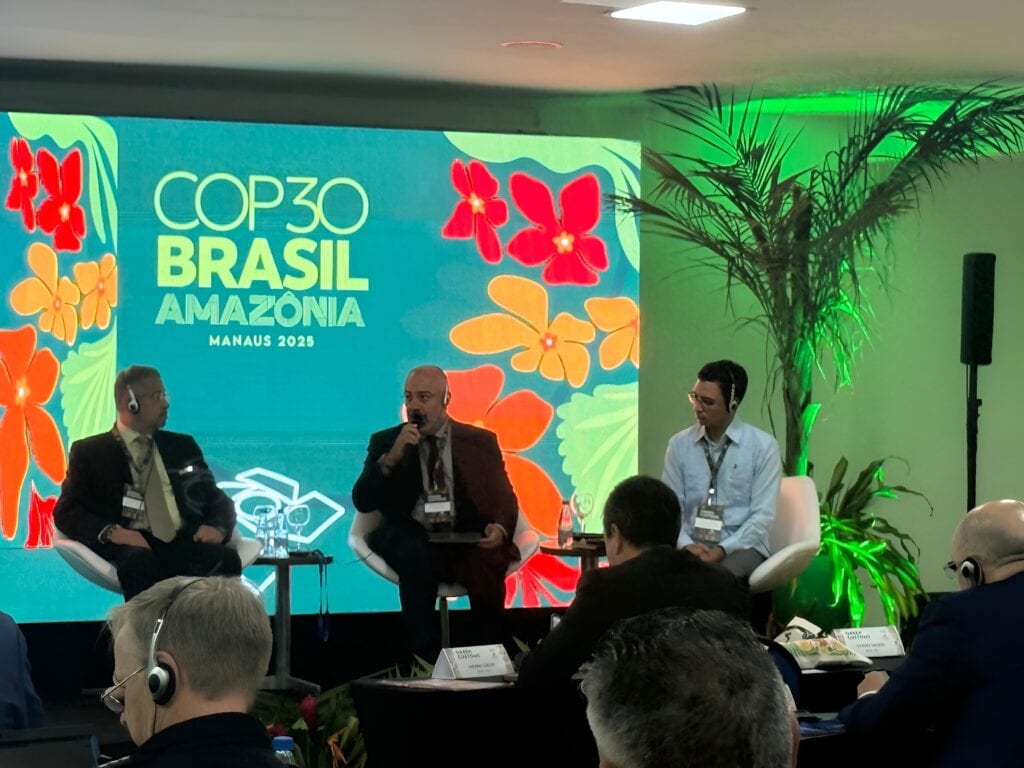
(I.e.Panel 4 – Sustainable foreign trade, CBAM and regulatory innovation
The fourth panel, dedicated to “Sustainable Foreign Trade, CBAM, and Regulatory Innovation,” addressed the relationship between international trade instruments, domestic environmental taxes, and carbon border adjustment mechanisms. Participants included representatives from European administrations, the European Commission, and the WCO, as well as specialists in green economic taxation.
Robin Damberger She presented the Austrian experience with the emissions monitoring and reporting system in export sectors, demonstrating how product lifecycle data, certificates of origin, and customs documentation can be integrated into platforms that allow companies to meet requirements such as those of the European CBAM. She emphasized that, while the CBAM has been perceived by many countries as a trade barrier, it can also serve as an incentive to modernize production chains and improve environmental transparency.
When discussing the combination of domestic carbon taxes, green tax incentives, and border adjustment mechanisms, the panelists highlighted that countries that are ahead in domestic regulation—such as Brazil with the SBCE—tend to have a greater capacity to influence
international standards and protecting the competitiveness of exposed sectors. For customs, regulatory innovation means incorporating new parameters into its risk systems, training teams to read environmental documentation, and establishing channels of cooperation with tax and environmental authorities.
✔November 14: INNOVATING with alliances, data and a new customs governance
Today, November 14, 2025, as this article is published in the morning as part of the official COP30 program, the focus of the agenda shifts to the INNOVATION pillar. What happens in today's panels will further shape the future of...
Manaus as a living laboratory of the institutional future for Green Customs.
◼The 5 Panel – “Innovative Ideas Aimed at Excellence in Sustainability” – will be moderated by Felipe Passeto Leite Ribeiro (National Tax and Customs Authority of Colombia) and will bring together Omar David Flórez Isaza (Colombia's National Directorate of Taxes and Customs), representatives from Jamaica, Andrea Mazzella (Italy's Agency for Customs and Monopolies), and Douglas Fonseca de Souza (Brazil's Federal Revenue Service). The panelists are expected to explore how artificial intelligence, big data, advanced analytics, digital product passports, and environmental labels can be incorporated into customs management to identify clean supply chains and those incompatible with climate commitments. The expectation is
that the panel shows concrete ways for administrations, universities, research centers and international organizations to translate data into more refined risk decisions, credible certifications and the ability to differentiate, on a technical basis, between supply chains
clean and supply chains incompatible with climate commitments.
Next, Panel 6 – “Strategic Alliances for Environmental Protection of Borders” – will take place. Beyond its title, this panel represents an experiment in network governance by placing collaborative networks at the heart of the INNOVATE pillar. The session will be moderated.
The event will be led by Marcelo de Castro Ferreira, in his capacity as marketing and planning advisor for ASAPRA, and will include the participation of Adriana Campos de Brito Duarte, environmental analyst and federal agent with IBAMA; Juliana Machado Ferreira, executive director of Freeland Brasil, a civil society organization specializing in combating wildlife trafficking and environmental crimes; Elson Ferreira Isayama, president of SINDASP – the São Paulo Customs Brokers Union; and two representatives of the Federal Police: João Paulo Garrido Pimentel, Regional Superintendent for the State of Amazonas, and Paulo Henrique Oliveira, Coordinator of the Amazon International Police Cooperation Center. It is expected that
This panel will discuss how to structure cooperation mechanisms between customs, environmental agencies, police, prosecutors, subnational authorities, regulated companies and specialized civil society organizations, so that the fight against environmental crimes and climate protection in international trade cease to depend on isolated initiatives and instead rely on network governance, equipped with formal channels for information exchange, joint operations and shared training agendas.
The joint presence of ASAPRA and SINDASP on this panel symbolizes the connection between regional networks of customs brokers and the global Green Customs agenda.
By the end of this day, the very configuration of the panels will have solidified a clear message: innovating in Green Customs doesn't simply mean adding new technologies or creating new rules; it primarily involves new ways of working together, in which data, partnerships, and
Environmental standards are being integrated. On this day, November 14, 2025, when this article is published, at [time of the]
Tomorrow, as part of the official COP30 program, the focus of the agenda shifts to the INNOVATION pillar. What happens in the panels on this day will further solidify Manaus's position as a living laboratory for the future of Green Customs institutions.
(I.e. Panel 6 – "Strategic alliances for the environmental protection of borders“s” – which, beyond its title, represents a network governance experiment by placing collaborative networks at the heart of the INNOVATE pillar. The session will be moderated by Marcelo de Castro Ferreira, in his capacity as marketing and planning advisor for ASAPRA, and will feature the participation of Adriana Campos de Brito Duarte, environmental analyst and federal agent of IBAMA; Juliana Machado Ferreira, executive director of Freeland Brasil, a civil society organization specializing in combating wildlife trafficking and environmental crimes; Elson Ferreira Isayama, president of SINDASP – Sindicato dos Despachantes Aduaneiros de São Paulo; and two representatives of the Federal Police: João Paulo Garrido Pimentel, Regional Superintendent of the State of Amazonas, and Paulo Henrique Oliveira, Coordinator of the International Police Cooperation Center of the Amazon. This panel is expected to discuss how to structure cooperation mechanisms among customs, environmental agencies, police, public prosecutors, subnational authorities, regulated companies, and specialized civil society organizations, so that the fight against environmental crime and the climate protection of international trade move beyond isolated initiatives and toward a networked governance model, equipped with formal channels for information exchange, joint operations, and shared training agendas. The joint participation of ASAPRA and SINDASP on this panel symbolizes the connection between regional networks of customs brokers and the global Green Customs agenda.
By the end of this day, the very configuration of the panels will have solidified a clear message: innovating in Green Customs doesn't simply mean adding new technologies or creating new rules; it primarily involves new ways of working together, in which data, partnerships, and
Environmental standards will be integrated. Today, November 14, 2025, as this article is published in the morning as part of the official COP30 program, the focus of the agenda shifts to the INNOVATION pillar. What happens in today's panels will further solidify Manaus's position as a living laboratory for the future of Green Customs institutions.
What can be expected in practice from this point forward?
In very concrete terms, what opens up from Manaus is an implementation agenda with three immediate fronts: within the Brazilian Federal Revenue Service, in the national cooperation network, and in the international community.
(I.e.Inside the Federal Revenue of Brazil
– The consolidation of an operational plan for climate disasters and emergencies that incorporates the lessons learned from Rio Grande do Sul and the extreme droughts in the Amazon, with clear protocols for business continuity, server protection, and environmental management
appropriate for affected goods.
– The progressive incorporation of environmental indicators into risk management systems, so that cargo selection takes into account not only value and taxation, but also the environmental footprint and ecological sensitivity of the goods.
– The expansion of specialized training in environmental crimes, AMUMAs, Green Customs, SBCE and mechanisms such as CBAM, with emphasis on the most sensitive Amazonian and port regions.
(I.e.In the national cooperation network
– More stable mechanisms for joint work between RFB, IBAMA, Federal Police, sectoral ministries, state and municipal governments, including permanent operations to control critical flows (timber, minerals, fauna, waste, chemicals).
– Using the Manaus experience to design pilot projects for the innovative allocation of seized goods, linking customs, environmental agencies, the private sector, and social organizations in green value chains, with verifiable commitments to climate integrity and
traceability.
(I.e.In the international community
– The projection of Manaus as a practical reference: manuals, case studies, metrics and protocols resulting from the “Green Customs” event can feed the agenda of the WCO, the Green Customs Initiative and multilateral organizations, helping to translate principles
in operational standards.
– The consolidation of an Amazonian and international cooperation network on environmental crimes, climate change and sustainable trade, capable of bringing together customs, police, prosecutors, environmental authorities and specialized organizations for joint operations,
exchange of information and training.
To close, What is expected after Manaus is not a new discourse, but the concrete demonstration that every seizure, every destination of merchandise, every risk analysis and every decision to release or stop a shipment leaves a real mark on the country's climate trajectory.
The Green Customs agenda will only be consolidated when the border is recognized —inside and outside of Brazil— as a space where climate justice is built in daily work, and not as a rhetorical resource in the institutional agenda.
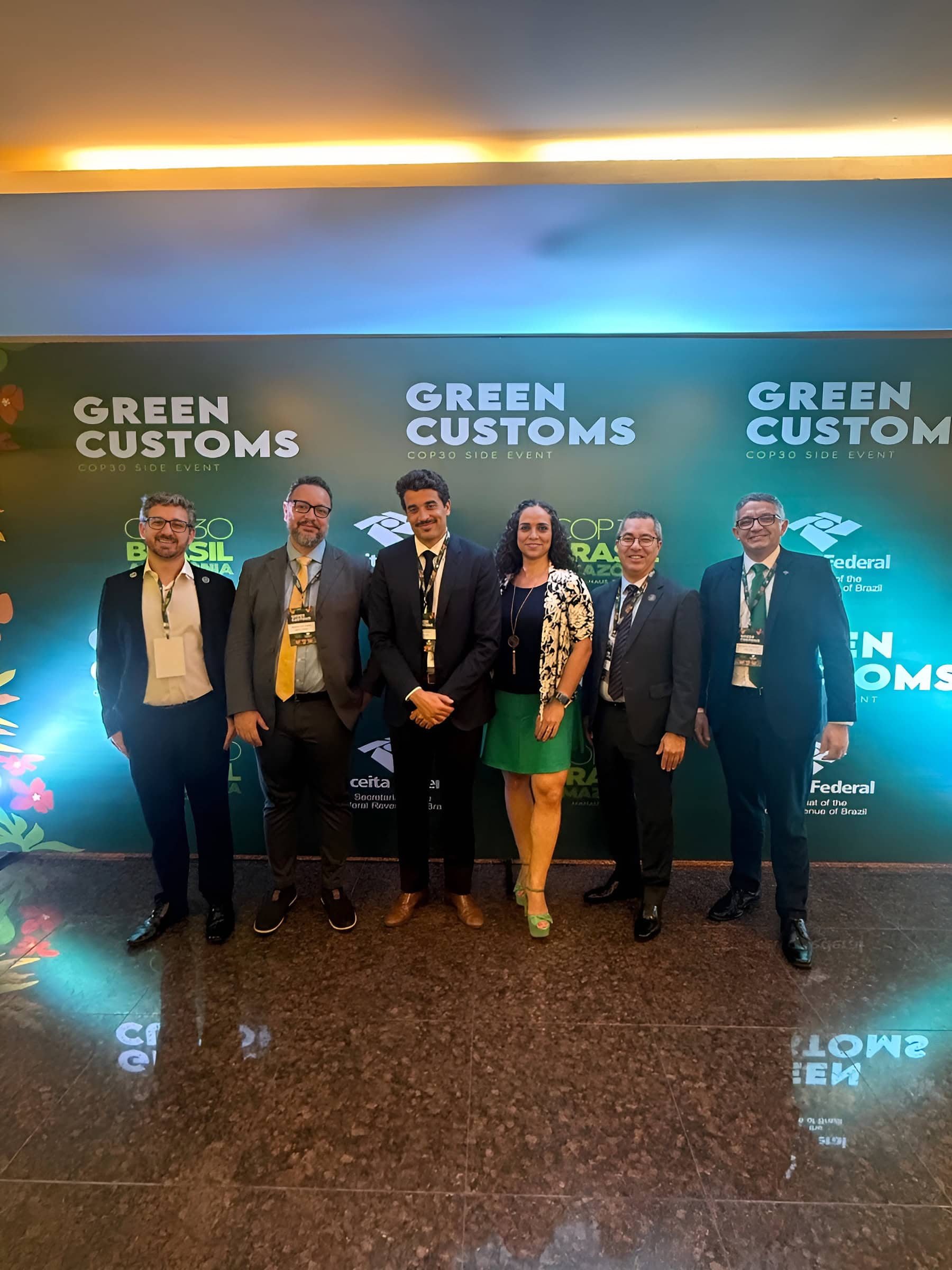
The images were provided by the column's author, Marcelo De Castro, and correspond to the event held in Manaus.
Highlighted
ALMEIDA, Paula Wojcikiewicz; VOLLERS, Lucas; MARIANI, Mariana de Brito. Haia Court affirms that States can be held responsible for climate damage. Jota, Aug 16 2025.
BASEL CONVENTION ON THE CONTROL OF TRANSBOUNDARY MOVEMENTS OF HAZARDOUS WASTE AND THEIR DISPOSAL. Basel, March 22 1989.
BRAZIL. COP30 Brazil Amazonia. Letters from the Presidency. Belém: Presidency of COP30, 2025.Access em: Nov 10. 2025.
BRAZIL. Law no. e nº 14.119, of January 13, 2021, and other provisions.
CONVENTION ON INTERNATIONAL TRADE IN ENDANGERED SPECIES OF WILD FAUNA AND
FLORA (CITES). Washington, March 3 1973.
EUROPEAN UNION. Regulation (EU) 2023/956 of the European Parliament and of the Council of 10 May 2023 establishing a carbon border adjustment mechanism. Official Journal of the European Union, L 130, 16 May 2023.
INTERNATIONAL COURT OF JUSTICE (ICJ). Obligations of States in respect of climate change (Request for Advisory Opinion). Advisory Opinion of 23 July 2025. The Hague: ICJ, 2025.
MINAMATA CONVENTION ON MERCURY. Kumamoto, 10 out. 2013.
MONTREAL PROTOCOL ON SUBSTANCES THAT DEPLETE THE OZONE LAYER. Montreal, September 16, 1987.
ROTTERDAM CONVENTION ON THE PRIOR INFORMED CONSENT PROCEDURE FOR CERTAIN
HAZARDOUS CHEMICALS AND PESTICIDES IN INTERNATIONAL TRADE. Rotterdam, September 10
1998.
STOCKHOLM CONVENTION ON PERSISTENT ORGANIC POLLUTANTS. Stockholm, May 22, 2001.
UNITED NATIONS. Kyoto Protocol to the United Nations Framework Convention on Climate Change. Kyoto, December 11 1997.
UNITED NATIONS. Paris Agreement. Paris, December 12 2015.
UNITED NATIONS. United Nations Framework Convention on Climate Change (UNFCCC). New York, May 9, 1992.
UNITED NATIONS ENVIRONMENT PROGRAMME (UNEP). Green Customs Guide to Multilateral Environmental Agreements. Nairobi: UNEP, 2022.
UNITED NATIONS ENVIRONMENT PROGRAMME (UNEP). Green Customs Initiative. Nairobi,Access em: Nov 10. 2025.
WORLD CUSTOMS ORGANIZATION (WCO). SAFE Framework of Standards to Secure and Facilitate Global Trade. 2025 ed. Brussels: WCO, 2025.

Customs Broker, with a degree in Economics and a Master in Business Administration in Business Management from Fundação Getulio Vargas (FGV). Co-founder of EBIMEX Comércio Exterior and Director of the Union of Customs Brokers of São Paulo (SINDASP), Brazil. He works as an Advisor on Marketing and Institutional Communication at the International Association of Professional Customs Agents (ASAPRA) and is a member of the Brazilian Chamber of Pharmaceutical Products (CBFARMA) of the CNC. He holds certifications in Artificial Intelligence from the OAS (Organization of American States) and in Marketing and Communication from the International Business Management Institute (IBMI), Germany.