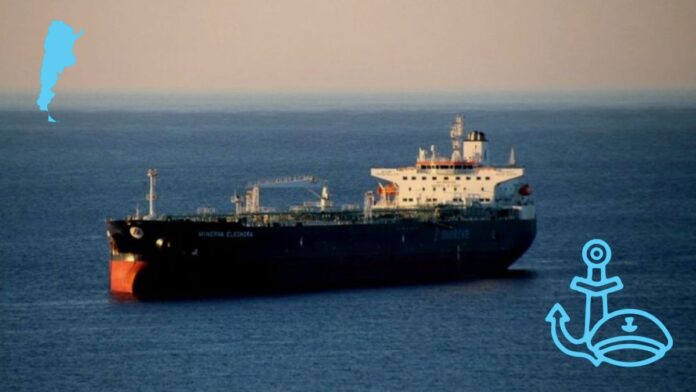
With the aim of Argentina's foreign trade regaining its prominence and reversing the crisis affecting river and maritime transport, the National Government approved a Exception Regime for the National Merchant Navy, Through the Decree of Necessity and Urgency (DNU) 340/2025.
The measure contemplates the deregulation of the maritime and river cabotage market, and introduces profound reforms to the water transport system, especially the Paraná-Paraguay Waterway, to optimize logistics costs, modernize the current regime, and guarantee the continuity of the service as an essential activity.
According to the decree's preamble, "the regulatory reform proposed by this measure to adapt the Argentine naval sector to global competitiveness standards and integrate it more efficiently into international trade is essential to address the current crisis affecting the National Merchant Marine." In this regard, the Executive Branch warns that regimes persist that "whether excessive or insufficient, obstruct commercial maritime traffic and result in significant cost increases in this sector," creating a context in which "the National Merchant Marine is at real risk of disappearing."
In line with the above, it was declared as “essential service” to navigation by sea and/or river waters intended for the commercial transport of people, merchandise, cargo, related services and offshore operations, through the different means used for this purpose.
DNU 340/2025
From a technical perspective, the authors of the Customs Manual They emphasize that this exceptional regime "not only seeks to alleviate the crisis of the merchant marine, but also to revitalize the potential of the Paraná-Paraguay Waterway, a fundamental logistical axis for agro-industrial exports and the economic development of regional economies."
The main points are:
- Regulatory deregulation: Restrictions are being eliminated and regulations are being simplified to reduce costs and bureaucratic obstacles.
- Opening to the foreign pavilionForeign vessels and barges—for example, those flying the Paraguayan flag—will be able to operate under national registration, promoting greater competition.
- Flexibility in crews: Greater freedom is allowed in the hiring of on-board personnel, under the control of the Argentine Naval Prefecture (PNA).
- Extension of cabotage for international vessels: They will be able to carry out transport between Argentine ports for longer periods, boosting internal movement, such as supplying to and from Tierra del Fuego.
- More agile procedures: : Vessel registration and deregistration is streamlined, and limits on naval and repair workshops are eliminated.
- essential serviceAs a critical activity, its regulation must guarantee continuity even in the face of conflicts.
Furthermore, the DNU specifies: "With this regime, the Government also seeks to foster regional integration in the Paraná, Paraguay, and Uruguay river basins, promote the sustainable development of the national merchant fleet, increase its share of domestic and international freight, and generate stable employment for Argentine workers. All of this without neglecting operational safety, job continuity, or compliance with current regulations."
It should be remembered that the National Merchant Marine It is made up of unarmed transport vessels serving the Argentine Republic, used for economic activities related to the transport of products or passengers between sea, river, and lake ports. The strengthening of the Argentine-flagged merchant marine not only boosts national logistics but also contributes to partially restoring the trade balance.

Aduana News foi o primeiro jornal aduaneiro da Argentina a lançar sua versão digital. Com mais de 20 anos de trajetória, suas publicações e iniciativas têm como objetivo oferecer o conhecimento mais relevante sobre temas aduaneiros, contribuindo para a promoção do comércio seguro e da facilitação do comércio na região.