The national government created the “Federal Coordination Table for the Prevention and Combat of Drug Trafficking and Organized Crime in the Corridors "Bioceanic," a new inter-institutional framework intended to Strengthen federal coordination, criminal intelligence, and controls on the country's main logistics and trade routes, with the aim of improving the management and oversight of the flows of people and goods.
The measure was established by the MSN Resolution No. 446/2026 from the Ministry of National Security, published this Friday (May 15, 2026), and is framed within the international commitments assumed by the Argentine Republic in matters of combating drug trafficking and transnational organized crime.
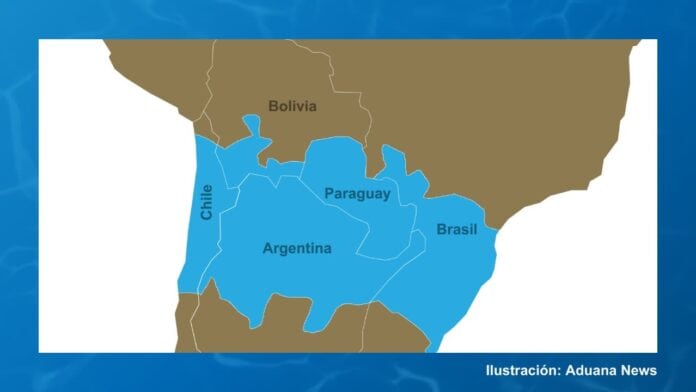
Additionally, the initiative responds to the growth of the bi-oceanic corridors —which connect Argentina with Brazil, Paraguay, Bolivia and Chile—, which increases trade, logistics and human flows, but also expands the opportunities for action of transnational criminal organizations with the capacity to adapt to new dynamics of trade and transport.
The scheme will operate under the orbit of Ministry of National Security and will have a permanent character. It will be made up of agencies with competence in security, criminal intelligence, migration and the fight against drug trafficking, including the National Security Secretariat, the Secretariat for the Fight against Drug Trafficking and Organized Crime, the Anti-Mafia Unit, the National Directorate of Criminal Intelligence, the National Directorate of Migration and the Federal Police and Security Forces.
It also provides for the participation of organizations linked to foreign tradeLogistics and transportation, such as the Ministry of Economy, the General Directorate of Customs (ARCA) and the National Commission for Transport Regulation (CNRT), as well as provincial and municipal authorities.
In that framework, The Government highlighted the role of the General Directorate of Customs in the control of international merchandise traffic, especially in the prevention of smuggling, drug trafficking and the diversion of chemical precursors.
The regulation defines bi-oceanic corridors as an integrated system of roads, railways, border crossings, logistics hubs, and ports connecting Argentina with countries in the region. In this sense, it identifies three main corridors—Northern, Central, and Patagonian—and gives priority to the North, particularly in the Northwest and Northeast regions, due to the growth of logistics flows.
The functions of the Roundtable include early risk identification, strategic crime analysis, operational coordination of federal forces, and strengthening controls over critical infrastructure. It also promotes mechanisms for public-private cooperation, with logistics operators, transport companies and actors in the sector, aimed at strengthening the systems of prevention, monitoring and exchange of information in the face of possible illicit activities.

Aduana News foi o primeiro jornal aduaneiro da Argentina a lançar sua versão digital. Com mais de 20 anos de trajetória, suas publicações e iniciativas têm como objetivo oferecer o conhecimento mais relevante sobre temas aduaneiros, contribuindo para a promoção do comércio seguro e da facilitação do comércio na região.