Following the LXVI Summit of Presidents of MERCOSUR, held on July 3 in Buenos Aires, the Heads of State of Member countries and guests gave speeches and signed a Joint Communiqué highlighting the achievements made during the first half of the year. During its Pro Tempore Presidency, the Argentine Republic promoted an agenda with a special focus on the operational integration of customs, the exchange of information at the border, the simplification of procedures, and the fight against transnational economic crime.
Among the main advances agreed upon in this area during the period, the document highlights:
- The effective implementation of Integrated Control Areas (ICA), considered key to facilitating intra-regional trade and transit in border areas. During the semester, regulatory, operational, and infrastructural obstacles were identified, and progress was made in developing coordinated solutions to improve the functioning of border crossings. For example, the synchronization of controls by national agencies with foreign trade interventions.
- The elimination of taxes and restrictions on intra-zone trade, with concrete progress in the elimination of certain measures and a renewed commitment to continue eliminating barriers to the exchange of goods and services between the States Parties. For example, tariff reductions for certain sectors.
- Approval of the temporary extension of the National Lists of Exceptions to the Common External Tariff (CET), which will allow each country to incorporate up to 50 additional tariff codes, allowing for up to 150 items per country. This flexibility seeks to adapt to the international economic environment and strengthen the competitiveness of the bloc's economies.
- The modernization of the Regime of Origin with Chile, through the signing of a new Additional Protocol to the Economic Complementation Agreement No. 35 (ACE 35), which represents a step toward more agile rules of origin adapted to current trade dynamics.
- The conclusion of negotiations for the Free Trade Agreement between MERCOSUR and the European Free Trade Association (EFTA), thus achieving the objectives of projecting the bloc's exports to Europe. Now only the legal review process of the text and its subsequent signature remain, scheduled for the second half of 2025. Argentina was recognized for its coordinating role throughout the negotiation process, which began with an exploratory dialogue in 2017 and which, thanks to a pandemic, was concluded after 14 rounds of negotiations.
- The ratification of the strategic objective of continuing to advance in the negotiation with the United Arab Emirates, with the goal of concluding a Comprehensive Economic Partnership Agreement before the end of the year, coordinated by Paraguay.
- The impetus given to the Association Agreement of the Mercosur with the European Union during the last year, during which texts were revised and adapted and whose formal closure It is projected for 2025, highlighting the work coordinated by Brazil during the semester.
These results reflect a stage of technical dynamism within the bloc, also manifested by the realization -for the first time since the signing of the Treaty of Asunción- of two meetings of Foreign Ministers in less than a month, in addition to the usual meeting of the Common Market Council. A sign, according to the leaders, of the renewed commitment to strengthening regional integration.
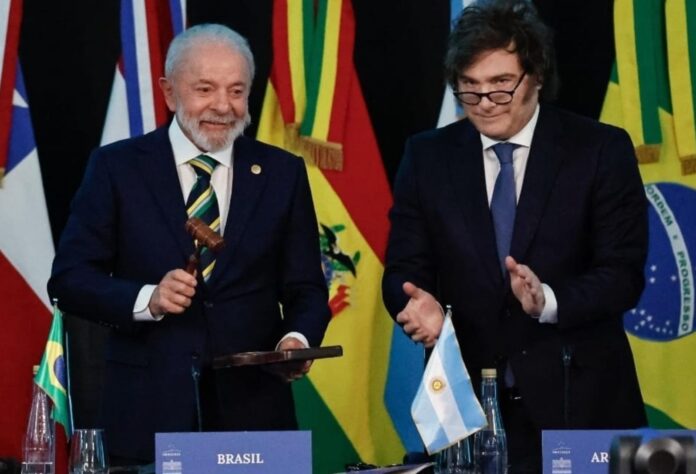
As shown on the cover, the Summit concluded in Buenos Aires with the formal transfer of the Pro Tempore Presidency of MERCOSUR from Argentine President Javier Milei to his Brazilian counterpart, Luiz Inácio Lula da Silva, who will hold it until December 2025.

Aduana News foi o primeiro jornal aduaneiro da Argentina a lançar sua versão digital. Com mais de 20 anos de trajetória, suas publicações e iniciativas têm como objetivo oferecer o conhecimento mais relevante sobre temas aduaneiros, contribuindo para a promoção do comércio seguro e da facilitação do comércio na região.