The Model Law on Asset Forfeiture is a legal instrument that is of increasing interest to Latin America. Colombia, Ecuador, Mexico, El Salvador, Honduras, Guatemala, Peru, Bolivia and Argentina have adopted this novel mechanism as an effective response to organized crime, since it is aimed solely at the pursuit and return of assets obtained from illicit activity.
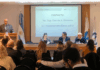
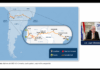
At the recent Parliamentary Forum on Intelligence and Security, held on June 29 and 30 in Panama City, Experts analyzed the advantages of the Model Law on Asset Forfeiture, approved by the Latin American and Caribbean Parliament (PARLATINO) in February 2021.
Crime Stoppers Regional Director for the Caribbean, Bermuda and Latin America, Alejo Campos, said that “economic resources are the driving force of the criminal structure. As long as they remain intact, the criminal organization will never weaken.”
"According to the United Nations, one percent of these profits are seized, meaning that 99% remain in the hands of illegal organizations," added Armando Padilla, Justice Advisor at the U.S. Embassy in Panama.
In this regard, the specialist highlighted the various international efforts that have been advancing with practical tools that allow the seizure of assets, such as the Model Law on Asset Forfeiture of PARLATINO.
"This effort shared by Colombia, Peru, Mexico, El Salvador, Honduras, Guatemala, Bolivia, Ecuador and Argentina is characterized by its aim to declare ownership in favor of the State of goods whose origin is illicit, through a autonomous process of the criminal process,” Padilla explained.
He also added that "the Public ministry It is the body that carries out the investigation with the sponsorship of financial intelligence units and requests a judge to adopt legal or material precautionary measures to locate and immobilize assets of that origin and these prosecutors request Magistrates specialized in the forfeiture of assets that occurs in this regard.”
In this context, Padilla said that "there are different variants in the procedures. The Panamanian bill, commented on by the Secretary General of the Ministry of Public Security, Jonathan Anier Riggs, proposes that the action be jurisdictional and oral in nature.”
"The important thing about the extinction of domain is the protection that it exercises over property that every person has and of which no one can be arbitrarily deprived," he clarified.
How does the implementation of domain forfeiture work in Argentina?
“In the Argentine case, the project of domain extinction was promoted in 2016, following the model of Colombia: this country had managed to remove the constitutional obstacles with this civil action, autonomous, applied retroactively and prescriptible,” commented National Deputy Luis Petri. And he affirmed that “our constitutions cannot be guarantors of the private property of criminal organizations because it must be removed to be retroactive to the national States. Hence the importance of establishing an autonomous action with specialized prosecutors and civil procedure.”
The Argentine deputy commented that the original project of domain extinction obtained partial sanction from the Chamber of Deputies. Two years later, the Senate approved it, but with various modifications with respect to the original of the Deputies, which had taken as an example the Model Law of the United Nations Unit against Drugs and Crime. Unlike the project of the Deputies, the proposed one, which was approved by the Senate and returned to the lower house for its second review, associated the law of domain extinction to the criminal process and required a sentence in the first instance. It was when the then President Mauricio Macri signed a Necessity and Urgency Decree which proposed "extinguishing by means of a civil action the right to ill-gotten property."
According to Petri, the decree remains in force with the current administration of Alberto Fernández, but it was not promoted or enforced. “However, Some provinces such as Mendoza modified their procedural legislation and based on that decree established the forfeiture of assets for crimes against public administration," said the official.
“Recently, there was Two processes in the province of Mendoza: one of them regarding a public official convicted of corruption and another, regarding the seizure of three high-end vehicles, three properties and cash, in favor of the State," he said.
Other concepts
The experts then highlighted other aspects of the Model Law on Domain Forfeiture such as: Protection of bona fide third parties In the process of domain extinction (people not involved in illegal behavior, but who by virtue of a legal transaction are directly affected), the social destination of goods (Example: financing of care and reparation programs for victims of illicit activities) and the duty of international cooperation of a State with regard to investigations and procedures whose purpose is the extinction of domain, whatever their name.
“This instrument, together with the model law on cybersecurity and the Model Law Against Organized Crime "There are three fundamental elements that must be worked on together to inspire the legislation of Latin American and Caribbean countries for the purposes of reforming or developing new legislation," said Alejo Campos while moderating the panel.
"We must stop thinking of laws as independent instruments," he concluded.
Some fundamentals of the Model Law on Asset Forfeiture
- The main purpose of the model law is to act on the "Company» as a central factor in organized crime.
- Criminal organizations associated with drug trafficking, human trafficking, money laundering, and other crimes of a transnational nature, have reached a regional dimension and have escaped the control of national institutions.
- The explosive development of the technology provides vast advantages to criminal organizations to hide and maximize illegal operations.
- Such a situation makes it necessary to territorial strategy to confront regionally organized crime.
- Consequently, it is essential to attack not only the means and mechanisms used by these organizations for their criminal activities, but also the earnings, the product and the profit of these activities illicit.

Aduana News foi o primeiro jornal aduaneiro da Argentina a lançar sua versão digital. Com mais de 20 anos de trajetória, suas publicações e iniciativas têm como objetivo oferecer o conhecimento mais relevante sobre temas aduaneiros, contribuindo para a promoção do comércio seguro e da facilitação do comércio na região.