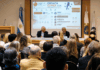
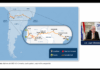
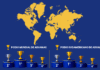
Based on the IDB-INTAL Initiative, specialists and institutional authorities presented the Mercosur Report and the Andean Report at a conference; among the challenges cited is the need to strengthen the convergence of such integration processes in Latin America, so that they can achieve greater equitable and sustainable development.
Over the past fifteen years, Latin American countries have been affected by a series of external and internal circumstances that have placed integration in a new debate to orient national policies towards greater regional efforts.
To advance this purpose, when opening the meeting that took place in the City of Buenos Aires, the Director of the IDB-INTAL, Ana Basco, said this Thursday (15.09.2022/XNUMX/XNUMX) that “the integration blocks have shown resilience.”
"Seventy percent of the population of the countries that make up both blocs support integration and more than 70% believe that integration has a positive impact on their own countries," he said.
Basco explained, in this regard, the design of the regional agenda that requires three key themes: environment, gender and digitalization. And he called for “building a more integrated Latin America internally and externally.”
In turn, the Secretary General of the Andean Community (CAN), Jorge Hernando Pedraza, He said that “it is time to make an effort to achieve convergence of integration organizations” and invited to hold a meeting in Peru, to resume the proposal that was raised in 2019.
Pedraza highlighted CAN's recent achievements: the elimination of international roaming costs, the Andean Migration Statute, the Environmental Charter, the Digital Agenda, the Andean Agricultural Agenda focused on turning CAN into the planet's food pantry, and the launch of projects such as INTERCOM and the Andean Environmental Technology Platform.
The Secretary stated that such achievements are the result of the joint work of the Member Countries (Bolivia, Colombia, Ecuador and Peru), and highlighted the recent Andean Presidential Summit. “Today we have a modern, dynamic, current, strengthened CAN with concrete results,” he stressed.
Meanwhile, Sergio Abreu, Secretary General of ALADI, stressed the need to move forward on issues such as infrastructure, which are key to new marketing models. Thus, he indicated that "if multimodal transport costs are not adjusted and if we do not have digital and green ports, even if we are the world's breadbasket, we will lose competitiveness compared to other regions."
On the other hand, he commented on the joint efforts of ALADI and CAN to train micro, small and large companies in the use of digital tools. He pointed out the advantages of access to markets and the valuable statistical information and conditions for defining strategies and making decisions in foreign trade.
Abreu also referred to the Partial Scope Agreements created by ALADI as a mechanism to deepen the integration process through the liberalization of peers or groups of countries, and that convergence would help to advance in the current circumstances. In his opinion, for this to happen, “political decisions and social will for integration” are needed.
The meeting included three panels: “MERCOSUR, between the collective imagination and reality”, “The Andean Community, in search of convergences” and “The integration of LAC in the face of new challenges”.
Participants included Ricardo Rozemberg, Integration and Trade Specialist at the IDB INTAL; Celina Pena, Author of the Mercosur Report at the IDB INTAL; Pablo García, Head of the Regional Integration Unit, IDB, and Magdalena Bas, Professor and Researcher at the University of Monterrey.
Also speaking were Juliana Peixoto, Coordinator of the LATN Network, Argentina; Alan Fairlie, Author of the IDB INTAL Andean Report; Gabriel Duque Mildenberg, Commercial Counselor at the Commercial Office of the Colombian Embassy in Brussels, former Vice Minister of Commerce, Industry and Tourism of Colombia, and Cintia Quiliconi, Professor and researcher at FLACSO Ecuador.
Additionally, Félix Peña (Director of the Institute of International Trade of the ICBC Foundation and of the Master's Degree in International Commercial Relations of UNTREF) moderated the last panel, where Jaime Granados (Head of the Trade and Investment Division, IDB); Welber Barral (Founder and advisor at BMJ Consultores Asociados, former Secretary of Foreign Trade of Brazil); Andrés Rebolledo (Consultant, former Minister of Energy and former Undersecretary of International Economic Relations in Chile); Esteban Actis (Professor and Researcher at the Faculty of Political Science and International Relations of the National University of Rosario, Argentina) and Paloma Ochoa (Research Coordinator of the ICBC Foundation) presented their perspectives.
During the conference, there was a closing message from Fabrizio Opertti, Manager of the Integration and Trade Sector, IDB.

Aduana News is the first Argentine customs newspaper to launch its digital version. With 20 years of experience, its publications and initiatives aim to provide the most relevant knowledge on customs issues in order to contribute to safe trade in the region.