The Inter-American Committee against Terrorism (CICTE) of the Organization of American States (OAS) began the Webinar on ““Safe Trade in Free Trade Zones of Latin America”, in which experts seek to discuss best practices that enable trade facilitation through compliance with security standards promoted by the Authorized Economic Operator program, detailed in the SAFE Standards Framework.
For this reason, the two-day digital event (March 22 and 23) brought together authorities linked to border control, experts in trade facilitation, supply chain actors, and representatives of the World Customs Organization, the Latin American Free Trade Zone Association and the World Free Trade Zone Association, among others.
At the openingViolanda Botet, Deputy Executive Secretary of the Organization of American States, referred to the SAFE Framework developed by the World Customs Organization to act as a deterrent to international terrorism and to promote trade facilitation. He also mentioned the Authorized Economic Operator (AEO) Program, through which customs offer trade facilitation benefits to companies that demonstrably apply the security standards established in the SAFE Framework. “Thanks to its positive reception worldwide, Latin America is joining the evolution that the AEO Program must undergo to continue guaranteeing the security of its borders,” he said.
The official stressed that “multidimensional security should not only involve state administrations but also the private sector,” at the start of the first day dedicated to the public sector.
Marcelo Martinez, member of Inter-American Committee against Terrorism She agreed with the Deputy Executive Secretary on the importance of the partnership between Customs and the business community, and presented CICTE's Supply Chain Security (Authorized Economic Operator-AEO) program. “This program focuses its efforts on the public-private partnership that is accepted worldwide as a best practice in terms of risk management and supply chain security, in addition to facilitating greater trade,” she said.
He referred to CICTE's main objective, which is to "strengthen the capacities of member states to secure their supply chain by creating national Authorized Economic Operator programs that also help facilitate international trade in the region."
After detailing the contents of the CICTE program that is being developed in 19 countries, Martínez announced that the initiative will incorporate electronic commerce and inter-institutional coordination to ensure greater security and greater facilitation of trade in Latin America.
He also distinguished this concept from the Free Trade Zone (in English). In this regard, he said that the free trade zone refers to free trade agreements, while the Free Trade Zone refers to the geographical space that a country generates, that is, the free trade zones.
Martínez added that, given the demand in the region, CICTE intends to reach all partners in the supply chains that operate in these geographic areas with its Security program.
The first day of the event also provided a comprehensive overview of CICTE's Programs in Latin American Free Trade Zones. To this end, Lisbeth Laurie addressed maritime and port security, while Fernanda Sarmiento pointed to technical and legislative assistance.
Meanwhile, Claudia Abastante The Spanish Customs Office shared the advantages of the Authorized Economic Operator Program in international markets and explained how the Spanish tax agency’s Single Customs Window (VUA) works, highlighting that “cooperation is key to the solid development” of AEO programs.
The meeting also provided an opportunity to raise awareness about the importance of free trade zones in Latin America as a mechanism used worldwide to attract new investments and generate formal employment. According to Maria Camila Moreno, Executive Director of the Free Trade Zone Association of the Americas (AFTA), these spaces have become “fundamental mechanisms” for the growth of countries.
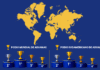
According to the director, AZFTA has more than 600 free trade zones for services and industrial manufacturing, more than 13.000 companies established in them, which generate one million formal jobs, in addition to carrying out operations that generate USD 38 billion in exports per year, which, she clarified: "is almost the same as what Colombia exports annually."
He also said that free trade zones contribute an average of 4,6% to the economies of countries, and stressed that they are "the real driving force and generator of investment and employment, with new regulations on teleworking and safety standards."
He also stated that in Latin America, Guatemala, the Dominican Republic, Uruguay, Costa Rica and Colombia have free trade zones certified as Authorized Economic Operators.
The event also discussed other topics, including: “The benefits of the AEO program for the private sector in border cities and its impact on international trade,” “Strengthening Cargo and Transportation Interdiction Capabilities in Free Trade Zones: Incident Response Exercises, Interdiction Courses, Risk Analysis and Management, and Coordination between the Private Sector and Customs and Border Control Agencies,” “The advantages of the Paraguay Authorized Economic Operator Program for free trade zone users,” and “How foreign trade security becomes trade facilitation.”
Also speaking were Antonio Russo, expert tax auditor and founder of Consultores Asociados Russo (Brazil); Roberto Valenzuela of CICTE/OAS; María Karina Ojeda, OAS coordinator of the National Customs Directorate (Paraguay) and Fernando Gil Vaca Diez of Transcruz SRL (Bolivia).
The digital event, which aims to promote fully secure supply chains in Latin America, will continue this Wednesday with the participation of the private sector.

Aduana News foi o primeiro jornal aduaneiro da Argentina a lançar sua versão digital. Com mais de 20 anos de trajetória, suas publicações e iniciativas têm como objetivo oferecer o conhecimento mais relevante sobre temas aduaneiros, contribuindo para a promoção do comércio seguro e da facilitação do comércio na região.