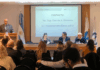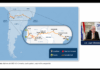
Customs officials from the Asia-Pacific Economic Cooperation (APEC) member economies met in Incheon, South Korea, for the second meeting of the Subcommittee on Customs Procedures (SCCP) in 2025, with the goal of promoting the use of technology and innovation to improve border management and facilitate international trade.
El Subcommittee on Customs Procedures (SCCP) APEC is a technical body - similar to those operating in other regional blocks - that works on the modernization, harmonization and security of customs processes, respecting the powers of each national administration. It is made up of representatives of the 21 APEC member economies, including the main American economies of the forum, such as Chile, Mexico, Peru, Canada and the United States.
APEC noted today (06.08.2025) that the meeting focused on "the use of artificial intelligence and digital innovation to strengthen the efficiency, resilience, and security of trade" in an increasingly demanding international context, marked by the rise of e-commerce, environmental regulations at borders, and growing demands for supply chain security.
During the meeting, the Commissioner of the Korea Customs Service, Myeong-ku Lee, expressed that “In the rapidly changing environment we face, innovation has ceased to be an option and has become a necessity.”. He also stated that “Artificial intelligence can enable faster and more accurate customs clearances,” although he warned that “To unleash its full potential, we must strengthen cross-border cooperation and trust.”
Customs transformation
Over the course of three days, participating economies discussed strategies to strengthen risk management, foster cooperation with the private sector, and advance digital transformation projects. Ju-yeon Lim, Director of the International Cooperation Division of the Korea Customs Service and chair of the subcommittee, he stressed that “Trade and customs environments are becoming increasingly complex, particularly with the rise of e-commerce, carbon border adjustment measures, and concerns about supply chain security.”
The delegations analyzed the Progress in the implementation of the Supply Chain Connectivity Framework (SCFAP III), valid until 2026, and shared experiences on digital facilitation initiatives, such as electronic certificates of origin, single-window systems, and pilot initiatives incorporating technologies such as blockchain and artificial intelligence.
One of the highlights was the Customs-Business Dialogue, which brought together customs authorities and private sector representatives to discuss e-commerce, authorized economic operators (AEOs), and merchant trust programs. Official sources emphasized the need for "agile standards and digital tools that support dynamic business models, without neglecting large-scale risk management."
Initiatives related to the sustainable trade, including the promotion of low-carbon logistics, green process design, and digital documentation. The event's agenda included parallel activities such as a workshop on cross-border e-commerce, a seminar on rules of origin, and an exhibition dedicated to technological solutions applied to customs management.
At the close of the meeting, Commissioner Lee reaffirmed the need to move toward modern border management. He stated, “Technology alone is not enough: we need trust, interoperability and shared standards.”. Finally, he highlighted that this technical body plays a central role in promoting collective solutions in the face of the current challenges of international trade.
Currently, the subcommittee has three special guests who participate as observers for a period of three years: Colombia, the World Customs Organization (WCO) and the Oceania Customs Organization (OCO).

Aduana News foi o primeiro jornal aduaneiro da Argentina a lançar sua versão digital. Com mais de 20 anos de trajetória, suas publicações e iniciativas têm como objetivo oferecer o conhecimento mais relevante sobre temas aduaneiros, contribuindo para a promoção do comércio seguro e da facilitação do comércio na região.