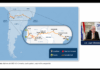
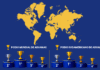
The World Trade Organization (WTO) presented today (17.09.2025) its flagship annual report, the World Trade Report 2025, focused on how artificial intelligence (AI) is transforming international trade and its potential to drive more inclusive growth. The study warns that the technological leap that AI represents —comparable in magnitude to milestones such as electricity or the Internet— could generate an increase of almost 37% in world trade by 2040 and a growth of 13% in global GDP.
During the presentation, Director-General Ngozi Okonjo-Iweala highlighted: “AI is already transforming our economies and societies. While it is not without risks, it has the potential to change the way we produce, consume, and trade.”. He also stressed that, despite the geopolitical and geoeconomic challenges, many members continue to respect the body's rules, constituting a "ray of hope" for the multilateral system.
AI and International Trade: Key Findings
The report delves into the study “Trading with Intelligence”, published last year, and identifies four main findings on the adoption of AI in international trade.
- Cost reduction and increased trade: The WTO analyzes how AI could reduce trade costs, boost productivity, and expand participation in global marketsNew simulations confirm that its adoption could increase cross-border flows of goods and services by nearly 40% by 2040, thanks to improvements in productivity and reduced trade costs.
- Business benefits: The joint survey with the International Chamber of Commerce (ICC) reveals that 90% of companies using AI report tangible benefits in their business operations, demonstrating that the technology is already generating positive impacts in practice.
- Unequal impacts: These benefits are not distributed automatically. The Director General pointed out: “The benefits of AI will not be shared widely across and within economies automatically.”The digital divide, inequality in infrastructure, skills, and access to technology could deepen divisions between countries. If low-income countries improve their digital infrastructure and adopt AI, they could experience a 15% increase in income, compared to the 12% expected for high-income countries. Without these improvements, growth for low-income countries would only reach 8%.
- International cooperation: WTO agreements such as the ITA (Information Technology Agreement), the GATS (General Agreement on Trade in Services), the TBT (Technical Barriers to Trade), and TRIPS (Trade-Related Aspects of Intellectual Property Rights) already support the development and adoption of artificial intelligence by reducing trade barriers, facilitating trade in AI-related services, and promoting technological innovation. The director emphasized: “Trade could be a powerful enabler of an inclusive AI transformation.”.
AI in customs management
The report includes a featured case study, "Global Trade 2.0", which shows how AI is transforming customs management and helping companies navigate the growing complexity of international trade. Faced with volatile tariffs, evolving sanctions, and stricter environmental and social regulations, companies across a range of sectors are using AI to anticipate customs risks, improve supply chain visibility, and automate alerts that support strategic decisions.
Tools such as those developed by Maersk They allow compliance issues to be identified before goods reach customs, tariff exposure to be modeled, and alternative sourcing scenarios to be planned. This approach reflects a shift toward proactive, data-driven customs management, which reduces compliance costs and increases resilience in the face of an increasingly uncertain global trade environment.
The data in the report show that the AI adoption in customs applications varies according to the country's income level:
- High income: predictive risk analytics (35%), detection of anomalies in trade data (30%) and classification of tariff codes (30%).
- Upper-middle income: anomaly detection (25%) and analysis of free trade agreements and rules of origin (20%).
- Low income: calculation of tariffs and taxes (5%) and analysis of rules of origin (10%), with little use of pre-filling of customs declarations (0%).
These results show that, although AI offers opportunities to optimize customs management, its adoption remains uneven, so strategic investments are required in digital infrastructure, skills training, and reliable regulatory frameworks, along with international cooperation, to achieve more efficient and inclusive trade.
WTO Conclusions
The WTO reaffirms that its rules facilitate open trade, support innovation, and reduce barriers. The Director-General warned: “Whether AI will become a force for shared prosperity or a force for widening inequality will depend on the decisions we make today and in the years to come.”
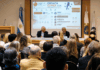
Okonjo-Iweala also highlighted that the report is the result of the work of a specialized team, in collaboration with partners such as the International Chamber of Commerce: “It is this team here that made it possible, starting with Emmanuelle Ganne, Marc Bacchetta, Ankai Xu, Eddy Bekkers and Johanna Hill.” (view image)
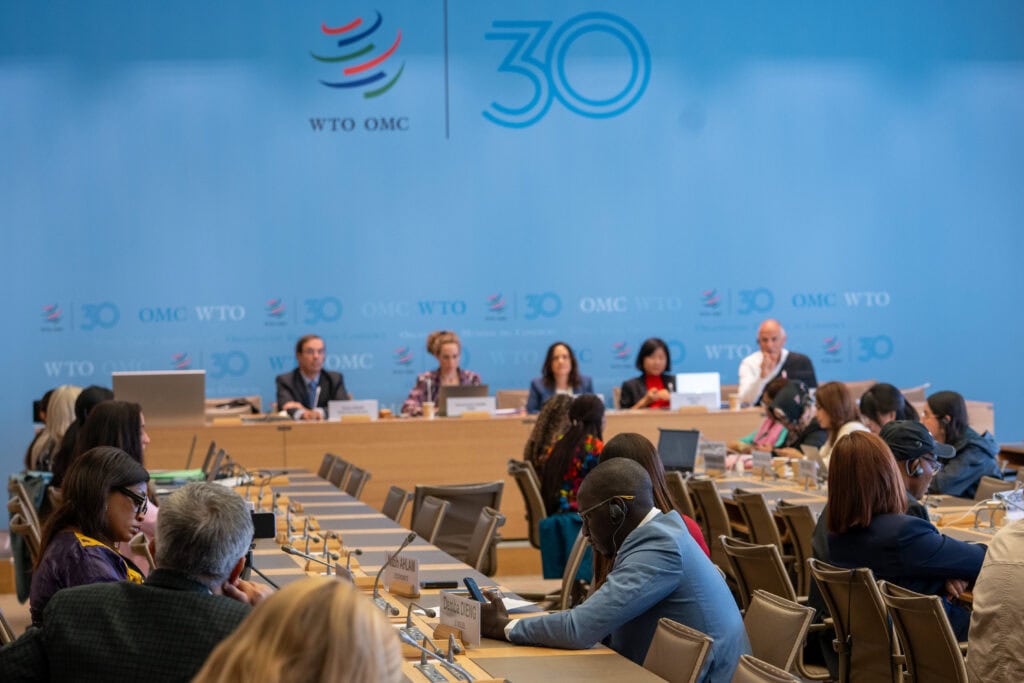
The report underlines the need for a integral approach that combines digital infrastructure, skills development, environmental sustainability and competition policies so that AI-enabled commerce to be more inclusive and resilient.
El World Trade Report 2025 It's now available to the entire community. You can read it, share it, and consult it..
Annex: WTO video on AI and global trade
The following audiovisual material, published by the World Trade Organization (WTO), complements the note “AI could increase global trade by nearly 40% by 2040, according to the WTO” de Customs News. Presents the key concepts and findings of the report World Trade Report 2025, particularly the potential impact of artificial intelligence on global trade and the productivity of different countries.

Aduana News is the first Argentine customs newspaper to launch its digital version. With 20 years of experience, its publications and initiatives aim to provide the most relevant knowledge on customs issues in order to contribute to safe trade in the region.