The General Directorate of Customs (DGA) prevented the smuggling of a hundred dinosaur fossils and other paleontological pieces belonging to a private museum that were destined for Spain, the country where it was seized. A container with elements belonging to Argentina's cultural heritage, official sources reported this Thursday (24.09.2020/XNUMX/XNUMX), according to the Télam agency.
The criminal act was discovered after a Joint work between security forces and customs of both countries, and allowed that The DGA managed to recover more than one hundred historical pieces.

Following a series of previous investigations, which are still ongoing, the DGA was alerted to the possibility of an illegal export of fossils.
According to sources, it all began when a container declared as a moving company left for Murcia, in the southeast of the European country, and raised suspicions that it was transporting fossils. Therefore, Argentine Customs immediately requested that the Spanish customs service carry out an exhaustive control of the cargo upon arrival.
The agency headed by Silvia Traverso found that the moving declaration included merchandise with characteristics typical of a museum exhibit, such as stuffed birds.
Although the documentation did not mention any type of fossil, since it is prohibited to take such elements out of the country without express authorization from the authorities, the declared cargo raised suspicions that it could transport this type of merchandise.
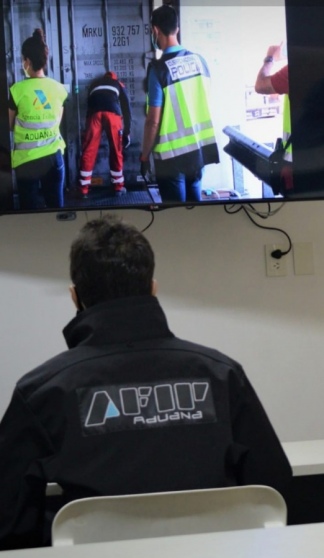
At the request of the DGA, the Spanish Customs stopped the operation in the port of Valencia, carried out a visual inspection of the cargo and took photographs of the items, an operation that was followed remotely by the local Customs.
As a result of this, Some 100 pieces were detected, including fossil bones of dinosaurs and mammals, dinosaur eggs and abundant quantities of fossil trunks and invertebrates, all belonging to Argentina's cultural heritage.

Specialists from the Bernardino Rivadavia Museum of Natural Sciences together with Spanish scientists certified that part of what was seized in the port of Valencia was original fossil material from Argentina, something that is protected by Law 25.743 on the Protection of Archaeological and Paleontological Heritage.
Now The DGA initiated the formal procedures for the return of fossils and paleontological pieces to the country and filed a criminal complaint before the federal court., which began an investigation to establish who was responsible for the smuggling attempt.
The operation coordinated by Argentine Customs also involved the Department for the Protection of Cultural Property of the Argentine Federal Police, Interpol and the Argentine Museum of Natural Sciences "Bernardino Rivadavia", all of which are members of the National Committee to Combat Illicit Trafficking in Cultural Property, created in 2003.
The Customs Office also had the collaboration of the World Customs Organization (WCO), the Judicial Police of the Spanish Customs Office, the Historical Heritage Brigade of the Spanish National Police and the Natural Sciences Museum of Valencia.

Aduana News foi o primeiro jornal aduaneiro da Argentina a lançar sua versão digital. Com mais de 20 anos de trajetória, suas publicações e iniciativas têm como objetivo oferecer o conhecimento mais relevante sobre temas aduaneiros, contribuindo para a promoção do comércio seguro e da facilitação do comércio na região.