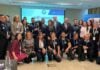
On Thursday, April 3, 2025, the Argentine Shippers' Council organized a key seminar for Argentine foreign trade. The organization, which represents the interests of exporting and importing companies—especially SMEs—affiliated with the Argentine Industrial Union (UIA) and the Argentine Chamber of Commerce and Services (CAC), brought together specialists and representatives from the public sector to analyze current challenges in foreign trade.
During the meeting, representatives from the business and government sectors participated in two panel discussions. The discussion focused on three key areas: costs and logistics competitiveness at the Port of Buenos Aires, the private sector's perspective, and the actions implemented by national agencies.
In a global context of increasing trade restrictions, optimizing costs and strengthening coordination between the public and private sectors becomes a strategic priority.
Below are the highlights of each intervention.
Entities and companies
Carlos Restaino – Council of Shippers of the Argentine Republic
Restaino, an engineer and international trade consultant, opened the seminar by highlighting the role of the Argentine Shippers' Council, founded in 2007 to improve the sector's competitiveness and ensure that SMEs also benefit.
He stressed that the Council follows models such as the American Shipper Council and the European Shipper Council, and maintains links with the Chamber of Exporters (CERA) and the Chamber of Importers (CIRA).We have formed an Expanded Workers' Council that represents 100% of the country's export and import cargo."I affirm.
Among the issues raised by the Council in recent years, Restaino highlighted:
- Port terminals and logistics costs: The lack of transparency in charges such as the Delivery Handling Charge (DHC), which is applied arbitrarily by shipping lines, was reported.
- Review of rates and charges: It was requested that the incorporation of new costs be avoided until the bidding documents are updated.
- Elimination of the ISPS security charge: It was proposed that security costs be absorbed by port terminals.
- Container Delivery Optimization: A continuous container pickup model was suggested to avoid cost overruns and improve efficiency.
- Reducing logistics costs: The elimination of overcharges on 40-foot containers and the need to streamline procedures with Customs and ports were proposed.
- Greater transparency and simplification: Any new tariff concept was required to undergo a rigorous evaluation.
Furthermore, Restaino announced that the creation of the Mercosur Shippers' Council is under consideration, and its official presentation will soon be before the Council of Chambers of Commerce.
"Logistics has gone from being a problem of availability of inputs to becoming a key factor for the competitiveness of foreign trade." he warned.
Eduardo Rodríguez – Argentine Industrial Union (UIA)
Eduardo Rodríguez, head of the UIA's SME and Development Department, highlighted that port overcharges reach $86 million annually, affecting exporters. He also warned of union blockades at Terminal 4 and the port of Rosario, which, for example, force cargo to be diverted to Montevideo, increasing the cost of operations.
He also pointed out the congestion at the entrances to the Port of Buenos Aires, which causes delays and reduces the efficiency of foreign trade. His assessment echoed that of Carlos Restaino, who has insisted on the need to improve port infrastructure and reduce logistics costs to boost Argentina's competitiveness.
Oscar Fernández Choco – Exporters
Oscar Fernández Choco, director of the Chamber of Exporters of the Argentine Republic (CERA), warned about market concentration and the importance of ensuring fair conditions for exporters.
Fernández Choco emphasized that, despite the high quality of Argentine products, logistics costs and infrastructure deficiencies remain an obstacle. He specifically mentioned the difficulties at the Port of Timbúes. As a solution, he proposed developing deepwater ports, improving connectivity with international routes, and strengthening security controls without hindering trade, seeking a balance between protection and operational efficiency.
Fernando Furci – Importers
Fernando Furci, General Manager of the Chamber of Importers of the Argentine Republic (CIRA), follows the lead of his predecessors in addressing the challenges facing business competitiveness and concrete proposals for addressing them.
He emphasized the need to define what type of ports the country needs in the coming decades, stressing that cargo must be the central focus of the debate. "Without cargo, there is no foreign trade or sustainable port infrastructure," he stated. He also warned that the costs fall directly on business owners, making it essential to design an efficient and equitable model.
"Many of these problems could be solved with administrative measures, without the need for major structural reforms."These measures are not just a solution," Furci asserted. Among the solutions, he proposed eliminating the exchange rate differential, which increases the cost of foreign trade and harms both importers and exporters.
Paulina Campion – Food and Beverages
Paulina Campion, representative of the Coordinator of Food Product Industries (COPAL), supported the business vision with data, highlighting the strategic role of the food and beverage sector in the Argentine economy and the importance of advancing a competitiveness and logistics agenda, in line with the seminar's key themes.
He noted that the industry represents 29% of industrial employment, with 411.000 registered jobs, and generates four out of every ten dollars exported. In 4, the sector recorded a trade surplus of $10 billion and contributed 2024% of national tax revenue.
Regarding logistics, he indicated that 70% of exports are shipped by water and 30% by truck, but noted that Argentina ranks 73rd in the World Bank's Logistics Performance Index, behind Brazil, Chile, and Mexico. Furthermore, logistics costs can represent up to 30% of the final product price.
Given this scenario, COPAL is promoting measures to reduce port costs and optimize land transport using double-trailer trucks, with the goal of improving the country's logistical efficiency.
José María Fantoni – North of Santa Fe
Northern Santa Fe is a strategic region for Argentine foreign trade, with a high flow of exports to Brazil, Paraguay, and Uruguay. José María Fantoni, representative of the Chamber of Foreign Trade for the region, highlighted the urgent need to implement improvements in infrastructure, logistics, and operating costs to strengthen competitiveness. He proposed adopting international standards, such as 40-foot HQ containers, reviewing transport rates to encourage higher volumes without increasing tolls, and making port slot assignments more transparent to reduce cost overruns. He also highlighted the need to optimize port services with predictable rates, improve the control of empty containers to avoid rejections at destination, and stem the loss of exports to Brazil.
He also proposed incorporating technology, such as scanners, to streamline customs inspections and preparing export documentation in advance to reduce time and costs.
Jorge Álvarez- Chamber of Shipping
Jorge Álvarez, representative of the Shipping Chamber—which represents maritime and river transport companies in national and regional trade—stressed the need for business-oriented logistics management. He warned that, between 2013 and 2023, the value added in exports grew only 13%, reflecting the lack of development in the sector. He also warned about three decades without significant progress in infrastructure, which impacts competitiveness and foreign trade.
Despite this situation, he highlighted ongoing initiatives, such as the recent agreement between the Chamber of Shipping and the Navigation Center—which represents foreign shipowners—to improve logistics competitiveness. He also highlighted the joint work with the Ministry of Deregulation, the National Port and Navigation Agency, the General Directorate of Customs, and various business chambers. He concluded that the sector requires concrete solutions and that the contribution of private companies to the State is key.
Oscar Fernández Choco – WAX
Oscar Fernández Choco, from the Chamber of Exporters of the Argentine Republic (CERA), intervenes again to propose how to reverse the loss of regional competitiveness.
He noted that Argentina went from representing 13% of Brazilian imports in 1997 to 5,2% today, while China grew from 2% to 24%. To measure the stagnation, he suggests measuring exports in tons, not dollars, which reveals a logistics plateau since 2006. Meanwhile, countries like India and China have multiplied their port traffic, and Montevideo is advancing with investments and greater depth, attracting more regional cargo compared to the stagnation of the port of Buenos Aires.
He also warned about the sustained increase in logistics costs: port and river toll fees have increased by more than 340% in dollar terms since the 90s, impacting the system's efficiency.
In this stage, called for urgent regulation of the National Trade Facilitation Committee (CNFC), a key tool—and still pending—for articulating concrete solutions between the public and private sectors, with a common agenda aimed at productive development.
Public organisms

Marcelo Sosa – Customs
That's not all. After the business sector's presentation, the seminar gave way to interventions by state agencies. Marcelo Sosa, Deputy Director General of Metropolitan Customs Operations at the DGA, outlined some measures adopted to improve port competitiveness.
Specifically, he mentioned the repeal of General Instruction No. 10/2024, which imposed strict controls on transshipments between third countries, causing port congestion and affecting the operations of the main shipping lines in Buenos Aires. "The elimination of this regulation seeks to streamline operations, avoid delays, and ensure that national operators access slots at port terminals without unnecessary obstacles."
He also highlighted that the DGA (General Directorate of Customs and Customs) has authorized the transfer of merchandise to bonded warehouses for inspection, a measure that reduces entry costs. Regulated by ARCA General Resolution 5644/2025, this provision allows "the declarant or dispatcher to carry out the inspection at said warehouses, avoiding waiting for an appointment at the port terminal." This reduces wait times, decongests terminals, and improves the operational efficiency of foreign trade, facilitating compliance with customs controls without causing delays.
On the other hand, Sosa referred to AFIP General Resolution 5586/2024, which eliminated the participation of sectoral entities in the physical inspection of merchandise and relaxed certain controls for exporters and importers. However, he clarified that Customs has not abandoned its contribution. In this new configuration, coordination is carried out directly with the General Directorate of Customs, which—he emphasized—“optimizes procedures and streamlines operations.”
In his presentation, he also highlighted the progress made in the "elimination of SIM messages within the Malvinas computer system." He explained that these messages, generated automatically by the first line of control (verifiers, guards, and presenters), were intended to comply with various procedures, but in practice, they could slow down operations.
Finally, he mentioned that Customs is making progress in implementing a "satellite tracking" system that will streamline import inspections, especially for reputable importers. This model is based on systems already successfully implemented in other jurisdictions.
"In these five months of administration, we have made significant progress, and we are confident that we will continue to facilitate foreign trade and optimize customs operations.", said Marcelo Sosa, who assumed the position through the Provision 176-E/2024, in October 2024.
Eugenia Rodríguez – One-Stop Shop
Eugenia Rodríguez, director of the Argentine Single Window for Foreign Trade (VUCEA), urged the business sector to leverage this free tool to streamline foreign trade. "Its underutilization is a problem that needs to be solved. It is key that foreign trade operators adopt it to improve the sector's efficiency," she emphasized.
To this end, Rodríguez explained some key features of the VUCEA, such as the optimization of imports, exports, and customs transits through artificial intelligence and search by tariff item. "The system streamlines operations, reduces costs, and improves controls thanks to its interoperability with Customs."
In logistics and customs clearance, he emphasized that "interoperability" through data integration reduces unnecessary inspections and prioritizes the orange channel over the red channel according to the risk matrix. In this regard, he stressed the importance of real-time information exchange with regulatory agencies to strengthen oversight.
Rodríguez highlighted the "digitalization" of the stock replenishment system, which allows for automatic management of balances at any customs office, and announced the launch of the "Single Maritime Window," interoperable with SENASA and ANMAT. He also announced the "Comprehensive Customs Declaration," which will optimize the processing of shipments and document control with a digital folder.
He closed his speech by calling for technological proposals: ""Digitization is key to more agile and competitive foreign trade."
Iñaki Arreseygor – Ports
Iñaki Arreseygor, the new executive director of the National Agency of Ports and Navigation (ANPYN), presented a diagnosis of the sector upon taking office. He highlighted three problems: the extension of the Port of Buenos Aires contract without real investment or innovation, the stagnation of the port situation under state management, and the failure to update cabotage regulations, which diverted cargo to land routes, deteriorating road infrastructure and increasing logistics costs.
To address this situation, ANPYN centralized functions, eliminating redundant structures and reducing staff by 80% without affecting operations. It also balanced the operating deficit, which exceeded five million dollars per month.
The current action plan prioritizes three axes: relaunching the bidding process for the Main Waterway to attract private investment and improve management; revising Decree 299 and redefining the Port of Buenos Aires' concession model to reduce costs and modernize its structure; and updating cabotage regulations to move more cargo to the river network, relieving land routes and reducing logistics costs.
Arreseygor assured business operators: “We will continue moving forward with determination to strengthen the country's infrastructure and optimize logistics, ensuring transparency and efficiency at every stage."
Closing
Daniel Funes de Rioja – UIA
Daniel Funes de Rioja, president of the Argentine Industrial Union (UIA), closed the seminar with a call to transform challenges into opportunities and move forward with concrete solutions, despite global uncertainty. In this regard, he stressed the importance of a serious and sustained approach and reaffirmed the need for a "public-private partnership» that provides stability and promotes growth.
"Argentina has the opportunity to graduate and demonstrate that it is up to the global challenges."He concluded.
That was the spirit that permeated the seminar. The world is changing. Argentina can change too. It's time to cooperate.

Aduana News foi o primeiro jornal aduaneiro da Argentina a lançar sua versão digital. Com mais de 20 anos de trajetória, suas publicações e iniciativas têm como objetivo oferecer o conhecimento mais relevante sobre temas aduaneiros, contribuindo para a promoção do comércio seguro e da facilitação do comércio na região.