La Managing Director of the International Monetary Fund (IMF), Kristalina Georgieva, He warned today (09.04.2026) that the world economy faces a scenario of greater uncertainty and lower growth as a consequence of a global supply shock associated with the war in the Middle East.
“The world is facing a new shock… the shock is global, but asymmetric,” the IMF said, warning that energy-importing countries are the most exposed to rising fuel and input costs.
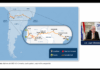
In that context, he indicated that between 25% and 30% of the world's oil and about 20% of liquefied natural gas pass through the Strait of Hormuz, which amplifies the impact of any disruption on international energy prices.
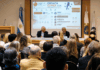
Georgieva explained in her opening speech at the IMF and World Bank Spring Meetings, to be held next week in Washington, that The shock acts through three main channels: rising prices and supply shortages, deteriorating inflation expectations, and tightening global financial conditions.
In that regard, he warned that the increase in energy, food and transportation costs is already being passed on to inflation and affecting economic activity, with impacts on trade, transportation and global production.
The IMF official also noted that global growth will be weaker than expected, even in scenarios of relative stabilization, due to infrastructure damage, disruptions in supply chains, and a loss of confidence.
Georgieva anticipated that the organization It will present its World Economic Outlook Report next week., with different growth scenarios that, in all cases, will involve downward revisions compared to previous projections.
“Growth will be slower, even if the new peace proves to be lasting,” he said.
The IMF also warned that the shock's impact is uneven across regions, affecting energy-importing economies in Africa and Asia most severely, and creating additional pressures in Latin America due to rising food and fertilizer prices.

Aduana News is the first Argentine customs newspaper to launch its digital version. With 20 years of experience, its publications and initiatives aim to provide the most relevant knowledge on customs issues in order to contribute to safe trade in the region.