
When winds of change blow across the world, and the United States indefinitely suspends the de minimis, which until August 29 of this year was US$800, and the European Union announces that, as of January 1, 2026, the €150 duty-free allowance will end, with all shipments required to pay tariffs; in the south of the world, Chile implements a reform that increases the de minimis up to US$500, eliminating, of course, the VAT (value added tax) exemption.
On October 25, the new regulations on the treatment of purchases of goods located abroad made on digital platforms, contained in Law No. 21.713 (1), came into force in Chile, modifying the regime of de minimis.
This is an innovative reform that only has similarities with similar regimes applied in Australia or New Zealand, and it aims to be a response to the continuous increases in purchases made on digital platforms, that is, an effective response to the explosion of e-commerce in Chile, which other countries in the region may be watching very closely.
Part of the problem with e-commerce is the increase in packages at Customs, which must undertake significant administrative work to ensure the accurate calculation and payment of customs duties and taxes on imported goods. This also includes exercising the necessary controls to identify potential undervaluation, infringement of intellectual property rights, and verify that all required authorizations for the final entry of these goods are in place. The reform addresses some of these challenges by establishing an indirect tax collection system, this time managed by digital platforms. But let's take it one step at a time.
Prior to the enactment of this law, the customs treatment of shipments purchased through e-commerce platforms lacked legal recognition. Furthermore, concepts such as B2C and B2B were not included in regulations as they are now. The classification of express delivery shipments was limited to the four categories recognized by most countries:
a) Correspondence and documents without commercial value, exempt from the payment of fees;
b) Low-value shipments exempt from duties and not of a commercial nature (corresponding to heading 00.23)(3): which until the new law came into effect was US$41, but which were also exempt from VAT. This was what is known as the de minimis, and what is modified by the new regulation;
c) Low-value shipments: This category includes shipments valued up to US$3.000, where the intervention of a customs agent is not required; and
d) High-value shipments: This category includes shipments that exceed US$3.000.
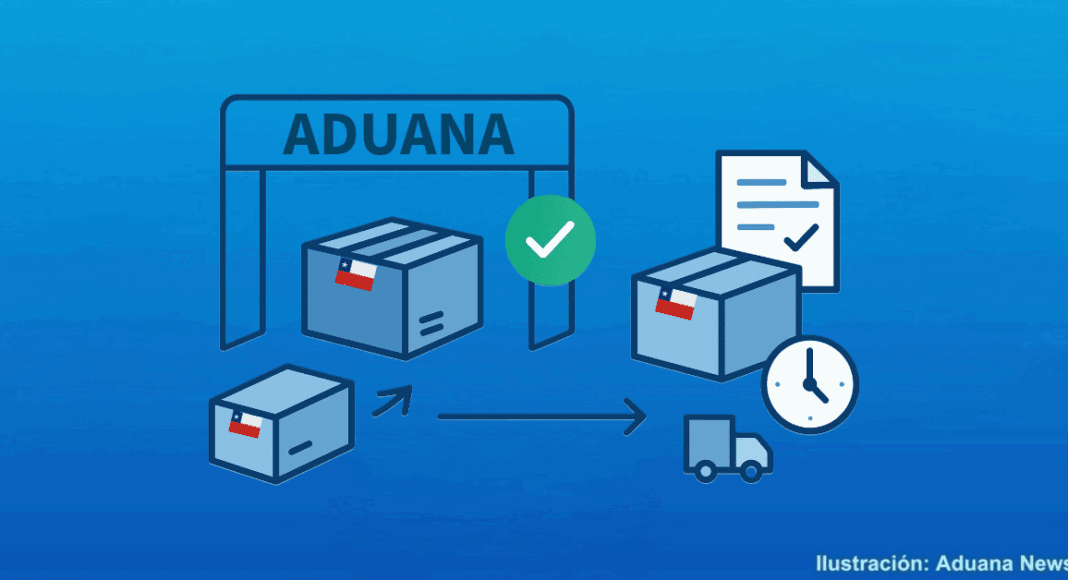
Well, with the legal reform, letter b) is substantially modified de minimis, eliminating the VAT exemption on imports made under heading 00.23, but increasing the range of de minimis up to US$500 FOB.
Among the reasons for this modification, we can point to the intention of introducing undistorted competition between importers (individuals) who, using this exemption, imported goods for tax-free sale, and companies that imported or produced in the country and paid VAT. In terms of revenue, this would also mean an increase, since all imports will be subject to VAT, which is 19%, and although purchases up to US$500 will not be subject to customs duties (which are 6%), many were already exempt due to the application of tariff preferences established in trade agreements.
But beyond all of the above, the novelty of the system lies in the fact that it establishes an indirect withholding agent for VAT, namely the digital platforms (4) that have voluntarily registered with the Internal Revenue Service (SII) (5). Indeed, the law, through a legal fiction, considers them national taxpayers when Article 3 bis states: “The following shall also be taxpayers of the tax established in this law (VAT) and in the manner established in this article: operator of a digital intermediation platformas if it were a regular seller of the goods or provider of the service that is concluded through the digital platform it operates, and provided that it is a transaction subject to the tax established in this law.”
With this change, consumers who purchase products with an FOB value of up to US$500 on platforms registered with the Chilean Internal Revenue Service (SII) will pay VAT at the time of purchase and will be exempt from import duties. Registered digital platforms will have one to three months to pay the withheld VAT to the Chilean tax authority.
This change is especially relevant in these times because it reflects a reality that seems unlikely to disappear: cross-border e-commerce, particularly B2C. It addresses this reality with a tool that should, on the one hand, simplify international trade transactions carried out on digital platforms, and, on the other, ensure efficient and accurate tax collection. Finally, it gives the system (purchases via e-commerce platforms) a significant degree of transparency and certainty, to the benefit of the end consumer.
1. Law No. 21.713/2024, which dictates rules to ensure compliance with tax obligations within the pact for economic growth, social progress and fiscal responsibility. https://www.bcn.cl/leychile/navegar?idNorma=120774
2. Resolutions 4317 and 4318/2025 https://www.aduana.cl/capitulo-7-mercancias-sujetas-a-despacho-especial/aduana/2016-11-22/164057.htm
3. “Heading 0023.0000: Parcels, postal shipments, express delivery shipments, and occasional general cargo, not of a commercial nature, up to a FOB value of US$500, even if included in other headings of the customs tariff. Legal Note. The expression “gifts not of a commercial nature” shall be understood to refer to goods that, in addition to the conditions indicated in the description of this Heading, meet the following requirements:
a) That they are consigned to a natural person by another resident abroad or on their behalf.
b) That it is an occasional shipment.”
4.Article 3 bis Law 21.713: “It shall be understood as "digital intermediation platform" The term "digital platform" refers to the interface that, through the internet, allows or facilitates the conclusion of sales or services by third parties; and "operator" refers to natural or legal persons or other entities, national or foreign, with or without domicile or residence in Chile, that economically exploit a digital platform. Services that consist solely of advertising or payment processing will not be considered digital platforms.
5. As of November 17, 2025, almost 30 platforms are registered, among which we find Amazon, Shein, Temu, Aliexpress, Ebay,

Lawyer, Master in International Law from the University of Heidelberg. He worked for almost 20 years in the Chilean Customs, holding various responsibilities. He is an accredited expert of the WCO and is a frequent arbitrator/panelist at the WTO. He is a professor at various universities and the author of various publications on customs and international trade. He is President of the Chilean Institute of International Trade, and is currently Director of Regulatory and Customs Affairs for DHL for Central and South America.