Robots are already in Latin America. According to the International Federation of Robotics[1] (IFR) there were 42.041 industrial robots[2] installed in Latin America at the end of 2017: 27.010 in Mexico, 12.373 in Brazil, 2.238 in Argentina, 182 in Chile, 149 in Colombia, 48 in Peru, 16 in Puerto Rico and 25 in Venezuela.
In 2012, there were 13.100 units installed, which implies an average growth rate for the region of 26 percent annually during the five-year period. This growth exceeds the world average (11 percent) and that of geographical areas on the technological frontier, where Southeast Asia stands out with 14 percent. In contrast, human employment only grew 1 percent annually in the same five-year period in the simple average of the six largest economies in Latin America, according to the IDB SIMS database.
As impressive as these figures may sound, Latin America is at the rearguard of the so-called Fourth Industrial Revolution[3]. The big drivers of the robotics race are Asian countries. China (with 473.429 units), Japan (297.215) and South Korea (273.101) together have 50 percent of the total number of industrial robots in operation, while their robotics industry produces industrial robots and personal and professional service robots for export to the rest of the world.
A good part of the robots in Latin America They work for the manufacturing industry (39.096 units) and within it, for the automotive industry (28.980 units). The Mexican automotive and auto parts industry employed 20.843 robots in 2017 – almost half of the total number of robots in Latin America – followed by the Brazilian and, to a lesser extent, the Argentine industry (see Table 1).
Robotics helped Mexico achieve record production in 2017 3,8 million light vehicles, making it the world's sixth largest producer and fourth largest exporter. Robots are also used in the production of plastics and chemicals, in the metal sector and in food and beverages, although in these sectors the penetration of robotic technology is much more modest.
Automation is an expensive process. A crude indicator of price[4] suggests that the average cost of a robot is US$44.000. Furthermore, according to the International Federation of Robotics, this basic cost could triple once the cost of systems engineering services is taken into account, with and secondary equipment. However, the phenomenon that has promoted the economic viability of new technology around the world has been the price reduction. According to Graetz and Michaels[5], the price of industrial robots has halved between 1990 and 2005 in the six largest developed economies. If improvements in robot quality are taken into account, quality-adjusted prices in 2005 are 20% of those in 1990.
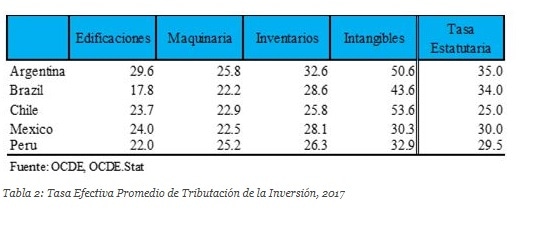
Figure 1 shows the evolution of nominal dollar prices of robots in the United States (without adjustment for quality) and nominal dollar wages of workers in the manufacturing industry in Argentina, Brazil, and Mexico. While wages have increased between 20 percent and 100 percent, depending on the country, between 1998 and 2017, robot prices have fallen by half.
If these trends continue, it is expected that the jobs of many workers, particularly those with low qualifications, will be reduced or disappear, giving rise to what has come to be called technological unemployment.[6].
The Robot as a Contributor
Many analysts[7] They attribute part of the accelerated process of robotization to artificial effect of tax systems, which distort the decision in favor of hiring robots at the expense of human workers.
Taxation, such as payroll taxes and mandatory employer social security contributions, falls heavily on the hiring of the labor factor and increases the human costs of the firms.
If the robot army is expanded at the cost of fewer people being hired, these taxes would no longer be paid. For example, employers' contributions to social security rise in Argentina and Brazil to 3.9 percent and 2 percent of GDP, respectively.[8].
Many observers and analysts[9] They also debate about the need or not to make robots pay taxes. The truth is that they already pay taxes. Although there is no such thing as a chapter on the tax regime of robots –among other reasons because it is a very difficult object to define from a fiscal point of view– robots are a form of capital and capital income is subject to taxation in the chapter on the corporate income tax regime of the tax statute.
The point is how much they pay relative to the work
We cannot give a conclusive answer to this question. In order to answer it, we must examine the effective tax rates, which measure the effective tax burden on capital income.[10]Unfortunately, there are no comparable measurements for the region between countries or between different types of investments or industrial sectors within a country. With the little evidence available, we will try to suggest some ideas.
The Organisation for Economic Co-operation and Development (OECD) provides comparable estimates of the GDP for a small group of Latin American countries. average effective tax rate. As is well known, this effective rate is constructed from information available in the tax codes and not from the actual payment of taxes. The average effective tax rate measures the impact of taxes and other relevant tax provisions on the decision to invest in four types of assets (buildings, machinery – including robots –, inventories and intangibles). In general, tax rates are relatively high, in line with high statutory rates, and there does not appear to be a substantive bias in favor of investments in machinery and equipment.
The point is how much they pay relative to the work
We cannot give a conclusive answer to this question. In order to answer it, we must examine the effective tax rates, which measure the effective tax burden on capital income.[10]Unfortunately, there are no comparable measurements for the region between countries or between different types of investments or industrial sectors within a country. With the little evidence available, we will try to suggest some ideas.
The Organisation for Economic Co-operation and Development (OECD) provides comparable estimates of the GDP for a small group of Latin American countries. average effective tax rate. As is well known, this effective rate is constructed from information available in the tax codes and not from the actual payment of taxes. The average effective tax rate measures the impact of taxes and other relevant tax provisions on the decision to invest in four types of assets (buildings, machinery – including robots –, inventories and intangibles). In general, tax rates are relatively high, in line with high statutory rates, and there does not appear to be a substantive bias in favor of investments in machinery and equipment.
Unfortunately, the incentive that arises from the tax system to invest in robots is notor is well captured by the previous effective tax rate. This measures the tax burden on a firm that invests domestically and chooses which sector to invest in.
But this is not necessarily the most relevant decision. Given the nature of investment in robots, what matters is the effective tax rate on foreign direct investment.
For example, the largest multinationals (Nissan, General Motors, Fiat Chrysler Automobiles, Volkswagen, Ford, Honda, Mazda, Toyota, Hyundai-Kia) are involved in the light vehicle industry in Mexico. In practice, the multinational company decides where to locate its robots and the tax rate is one of several aspects to take into account. The calculation of the effective tax rate is now more complicated because it depends on the tax regime of the host country, the regime in the country of residence of the parent company, and the interaction between the two. This calculation does not exist for countries in the region.
The robotics revolution is underway and there will be no sector of industry that is not affected. The decision to robotize is costly and mistakes at the time of adoption of the new technology and in the location of the investment can put companies in the region at a disadvantage with international competition. Tax systems must be neutral and to prevent the decision to robotise from being based on purely fiscal reasons rather than on reasons of efficiency. However, we know little about our tax systems.
By: By Rodrigo Suescun – This column was originally published on the blog Collecting welfare from the IDB.
Highlighted
[1] Unless otherwise indicated, the data source used is the Statistics Department of the International Federation of Robotics.
[2] This article focuses on robots used in industrial applications and ignores so-called “service robots” which may or may not have commercial and professional applications. The IFR Statistics Department adopts the definition of an industrial robot given by the International Organization for Standardization (ISO): see: [https://www.iso.org/obp/ui/#iso:std:iso:8373:ed-2:v1:en]. Examples of industrial applications include robots used for material handling, assembly and “disassembly”, painting, enamelling, various types of welding, bending, etc. Examples of “service robots” in professional services include those used in demolition, construction, assisted surgery, demining, autonomous vehicles, inspection and maintenance of pipes, tanks and pipelines, etc.
[3] The Fourth Industrial Revolution, a term coined by the World Economic Forum, refers to the implementation of twelve new emerging technologies (Artificial Intelligence and Robotics, Augmented and Virtual Reality, Neurotechnology, space technologies, nanomaterials and advanced materials, geoengineering, etc.). See [http://www3.weforum.org/docs/FOP_Readiness_Report_2018.pdf] for measurements of how well-positioned countries in the region are to benefit from Future Production.
[4] Relationship between the value of global production of industrial robots in 2017 (US$16.7 billion) and the number of new robots installed in the year (381.335 units).
[5] G. Graetz and G. Michales (2018): “Robots at Work”, The Review of Economics and Statistics, Vol. 100, December 2018, p. 753-768.
[6] In a future blog we will explore the potential fiscal consequences of technological unemployment.
[7] On the pro-capital bias of the income tax see, for example, Soled and DeLaney: “Automation and the Income Tax”, Columbia Journal of Tax Law, Vol. 10, No. 1, 2018.
[8] Source: OECD, OECD.Stat
[9] See for example E. Porter: “Don't Fight the Robots. Tax Them”, The New York Times, February 23, 2019.
[10] See our column on labor income taxes at

Aduana News is the first Argentine customs newspaper to launch its digital version. With 20 years of experience, its publications and initiatives aim to provide the most relevant knowledge on customs issues in order to contribute to safe trade in the region.