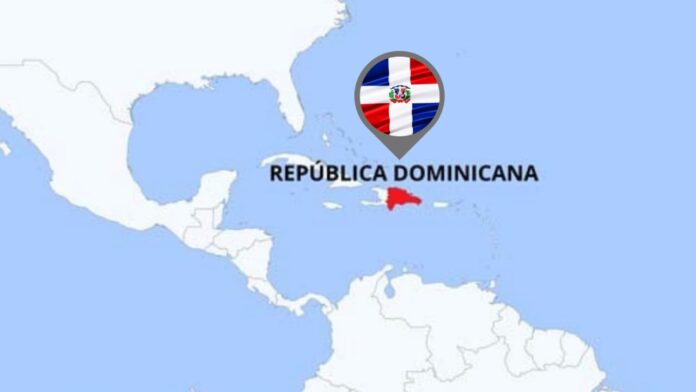
The Government of the Dominican Republic presented this Wednesday (09.02.2022/XNUMX/XNUMX) a modern x-ray scanner, which will allow the verification of goods in containers and detect contraband, while expanding the average dispatch capacity. from 400 to 1,000 containers daily at the Port of Haina, the country's most important multipurpose terminal located in the Caribbean.
The event was attended by the Vice President of the Republic, Raquel Peña, accompanied by the Director General of Customs, Eduardo "Yayo" Sanz Lovatón and Erik Alma, CEO of Haina International Terminals (HIT), according to the statement from the Presidency.
The high technology of the RAPISCAN Eagle P60-S scanner (made in the United States) supports the Government's objective of clearing containers within 24 hours, facilitating and reducing the inspection processes of goods and time in the port. According to official information, the equipment complies with the guidelines and technical specifications of the World Customs Organization (WCO).
This is a donation made last March by Haina International Terminals to the General Directorate of Customs, which represented an investment in infrastructure and support systems of around USD 3 million, allowing the country to have agile international trade exchange in compliance with the law, the statement said.
During the event on Wednesday, Sanz Lovatón highlighted the implementation of this scanner at the Puerto Río Haina jtogether with the 24 Hour Dispatch program. In this regard, the official said: “It is another step forward to achieve the goal of positioning the Dominican Republic as a world-class logistics hub.l”. He then added: “We announced it, we brought it, we installed it, we trained the staff and 10 months later it is fully operational.”
In that line, Erik Alma, CEO of HIT Puerto Río Haina added that the Dominican Republic has made steady progress, positioning itself as a great ally in foreign trade, with a record in exports and imports, where most operations are carried out through ports. “In 2021 alone, more than 1,587 ships passed through HIT,” he explained.
The CEO added: “It is our duty to move forward and continue improving, which is why we are committed to implementing the best technology, innovating to meet the safety standards demanded by the international market.”
How does the scanner work?
The rapid clearance of containers is possible because the device avoids the need to open the ramp and physically check the containers, especially for loads that do not represent risks.
The integration between the Integrated Customs Management System (SIGA), the NAVIS Port System and Rapiscan allows for the Single Customs Declaration (DUA) and the cargo manifest to be pulled, which are presented on the image analyst's screen along with the image generated by the equipment, which allows containers to be inspected thoroughly, regardless of the density of the cargo and its condition.
This equipment provides a detailed view of the cargo inside the container, making it impossible for certain spaces to be an option for smuggling illicit goods, weapons, drugs and/or people. While the scanning process is being carried out, the trucks must maintain a constant speed of between 5 and 10 kilometers per hour, so they do not need to stop for the system to carry out the process. (Press release from the Presidency)

Aduana News foi o primeiro jornal aduaneiro da Argentina a lançar sua versão digital. Com mais de 20 anos de trajetória, suas publicações e iniciativas têm como objetivo oferecer o conhecimento mais relevante sobre temas aduaneiros, contribuindo para a promoção do comércio seguro e da facilitação do comércio na região.