The United Nations Conference on Trade and Development (UNCTAD) has published a new policy brief that analyses the causes of rising freight rates during the pandemic and measures to prevent a similar situation in the future.
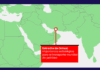
The report titled “Shipping during COVID-19: Why container shipping rates have increased” acknowledges that “when the mega ship Ever Given blocked traffic in the Suez Canal for nearly a week in March, it triggered a new surge in spot container freight rates, which had finally begun to stabilize from record highs reached during the COVID-19 pandemic.”
Given this, the report shows that shipping rates are a major component of trade costs, so the new increase poses an additional challenge for the global economy as it struggles to recover from the worst crisis since the Great Depression.
In this regard, Jan Hoffmann, Director of UNCTAD’s Trade and Logistics Branch, noted: “The Ever Given incident reminded the world how much we depend on shipping.” He added that “about 80% of the goods we consume are transported by ships.”
Container tariffs have a particular impact on global trade, as almost all manufactured goods, including clothing, medicines and processed foods, are shipped in containers. In that regard, Hoffmann warned: “The ripples will affect most consumers. Many companies will not be able to withstand the higher rates and will pass them on to their customers.”
Unprecedented shortages
The policy brief notes that demand for container shipping has grown during the pandemic and recovered quickly from an initial slowdown.
“Changes in consumption and purchasing patterns brought about by the pandemic, including a surge in e-commerce, as well as lockdown measures, have led to increased import demand for manufactured consumer goods, a large share of which are transported in containers,” UNCTAD said.
Seaborne trade flows surged further as some governments eased lockdowns and approved national stimulus packages, and businesses stocked up in anticipation of new waves of the pandemic.
“The increase in demand was stronger than expected and was not met by sufficient supply of shipping capacity,” the report said, adding that the subsequent shortage of empty containers was “unprecedented.”
According to the report, The underlying causes are complex and include changing trade patterns and imbalances, carrier capacity management at the start of the crisis, and ongoing COVID-19-related delays at transportation hubs such as ports.
The impact on developing regions
The report says the impact on freight rates has been greatest on trade routes to developing regions, where consumers and businesses are less well off.
“Currently, rates to South America and West Africa are higher than any other major trading region.. By early 2021, for example, freight rates from China to South America had risen by 443%. compared to 63% on the route between Asia and the east coast of North America,” he details.
UNCTAD points to the fact that routes from China to countries in South America and Africa are longer as one possible explanation. More ships are required for the weekly service, which means that many containers are also “stuck” on these routes.
“When empty containers are in short supply, an importer in Brazil or Nigeria must pay not only for the transportation of the full import container, but also for the cost of holding the empty container inventory,” the policy brief says. That means the factor driving the highest costs is the lack of return cargo. Nations in South America and West Africa import more manufactured goods than they export, and it is costly for shippers to return empty boxes. to China on long routes.
Implications for policy makers
To help reduce the likelihood of a similar situation in the future, the UNCTAD report highlights three issues that require the attention of policymakers:
1. Advancing trade facilitation reformsThis implies that policymakers must implement changes, many of which are spelled out in the WTO's Trade Facilitation Agreement.
By reducing physical contact between shipping industry workers, such reforms, which rely on modernizing business procedures, would also make supply chains more resilient and better protect employees.
Shortly after the pandemic began, UNCTAD provided an action plan to keep ships moving, ports open and trade flowing.
The organization has also joined forces with UN regional commissions to help developing countries accelerate such reforms and address the trade and transport challenges brought to light by the pandemic.
2. Improve monitoring and forecasting of maritime tradeTo this end, UNCTAD says policymakers should promote transparency and foster collaboration throughout the maritime supply chain to improve the way port calls and shipping line schedules are controlled.
3. Strengthen national competition authorities. The UN General Assembly's main body says governments should ensure that competition authorities have the expertise and resources to investigate potentially abusive practices in the shipping industry.
“While the disruptive nature of the pandemic is at the heart of the container shortage, certain carrier strategies may have delayed container repositioning at the start of the crisis,” he clarifies.
The report's recommendations regarding necessary oversight are more difficult to implement for authorities in developing countries, which often lack resources and experience in international container transport.

Aduana News is the first Argentine customs newspaper to launch its digital version. With 20 years of experience, its publications and initiatives aim to provide the most relevant knowledge on customs issues in order to contribute to safe trade in the region.