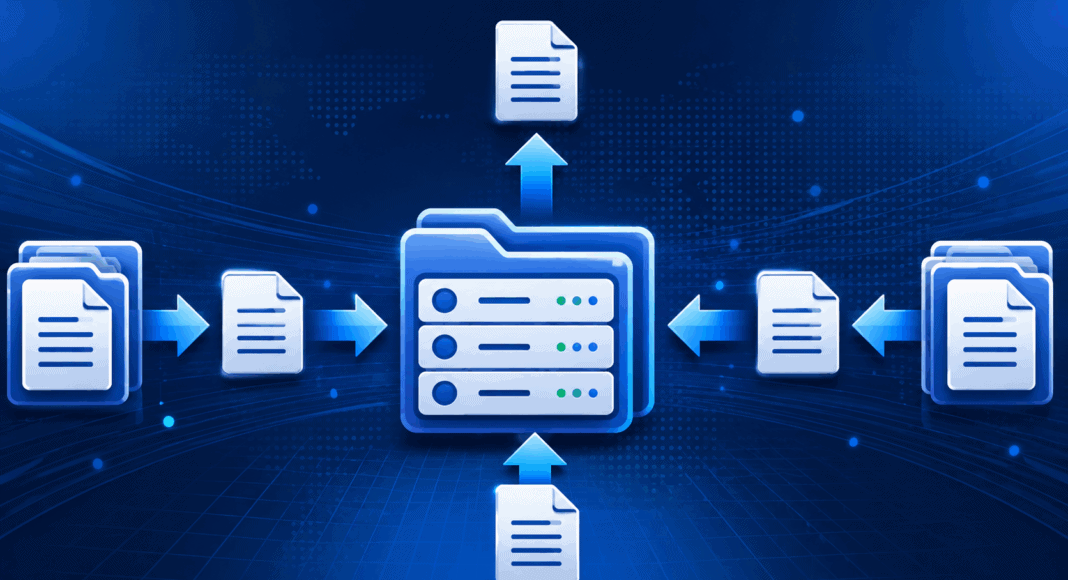

Customs no longer controls paperwork: it controlsto dataAnd this mutation is not aesthetic, it is structural: it shifts control from the file to the systemic coherence of the operation, supported by digital platforms, traceability, and risk analysis. In this new ecosystem—where the VUCE/VUCEA and the operational core coexist— SIM/MALVINA and the electronic notification and processing channels—the operator stops “submitting documentation” and moves on to explain your compliance system.
New-generation trade agreements and environmental regulations no longer operate as “barriers”: they set the global standard for market accessIn this context, digital self-certification encapsulates the definitive cultural shift: the State does not "certify for the operator," but rather validates—when appropriate—the consistency of the declaration and the robustness of the evidence.
1) From the technological bridge to the paradigm shift
Customs no longer controls forms: it controls systems. What crosses the border today is not just merchandise, but structured information that is validated, processed, and audited within a digital ecosystem. In this context, concepts like traceability, sustainability, and self-certification are not additional requirements or new barriers, but rather the standard language of international trade. The real question is no longer what document is presented, but rather the operator's capacity to substantiate their claims with data.
This shift is not unique to Argentina. It reflects a global trend where trade facilitation is not achieved by removing controls, but by changing the type of controls: from verifying documents to validating consistency, risks, and traceability.
2) The data replaces the document (and the system replaces the file)
The core of the change lies in the object of control. Traditional Customs controlled documents: forms, certificates, files. Contemporary Customs controls data: anticipated, interoperable, traceable, and reusable throughout the entire supply chain. In this model, control is no longer limited to clearance but is based on systemic coherence: consistency between declarations, logistics flows, payments, traceability, and the operator's historical behavior.
This shift is only possible with an integrated digital ecosystem. In practice, this means an architecture that encompasses: operator registration and profiling, legally valid electronic notifications, digital case processing, electronic payments, and the core operations of foreign trade. SIM/MALVINAIt's not about "digitizing a procedure": it's structure the operation as data.
3) Facilitation is not relaxation: control shifts and deepens
A common mistake is thinking that “facilitating” is equivalent to “controlling less.” In reality, control does not disappearIt moves through time and becomes more sophisticated.
Less prior verification can coexist with more traceability, more demanding post-audits, and extended operator responsibility.
In the digital ecosystem, release is not the end of control, but the beginning of a verification window based on data, cross-referencing, and traceability. Digitization changes the economics of non-compliance: what could previously be diluted by analog friction now appears as systemic inconsistency. And inconsistency is detectable.
4) The operator no longer “submits paperwork”: he exposes his operating system
In the new paradigm, the foreign trade operator is no longer a mere "document submitter." They become part of the control system:
Infrastructure, internal procedures, digital records, cargo traceability, security, and ongoing compliance become the true objects of evaluation. Compliance ceases to be episodic and becomes permanent bases.
Therefore, when a regulation replaces documentary requirements with declarations from the operator, we are not facing a deregulation of control, but rather a transfer of responsibility: Fewer documents for Customs and a greater obligation to demonstrate consistency when inspections occur later. This approach professionalizes the ecosystem and increases the value of internal compliance.
5) New generation agreements: the standard is no longer tariff-based, it is systemic (and environmental)
This digital transformation doesn't happen in a vacuum. It's directly connected to next-generation agreements. Instruments such as the MERCOSUR-EU Interim Agreement They incorporate disciplines on facilitation, rules of origin, and sustainable development that presuppose institutional and operational capacity to sustain verifiable information.
Similarly, the PLUS The agreement with the United States is presented as a framework that incorporates commitments related to digital trade, regulatory governance and technical cooperation, pushing towards verifiable and more traceable "paperless" trade.
In parallel, environmental requirements ceased to be “accessory conditions”. EUDR The European regulation on deforestation-free products requires due diligence, robust traceability, and geolocation of the production origin to access the European market. It is not a barrier in the traditional sense: it is the new standard for access in a data-driven international trade.
In other words: the market no longer asks only “what do you export”, but how it occurred, where, with what impact, with what traceability and with what audit capacity. And those answers aren't built with an isolated document; they're built with interoperable digital ecosystems that connect production, logistics, certifications and borders.

The author has a degree in Administration and a Master's degree in International Relations (UNCBA), with an outstanding career as an official of the Customs Regulation and Control Agency (ARCA) for 39 years. A former OAS and Spanish Government fellow, he has been a university professor at undergraduate and graduate levels in various Argentine universities for 33 years, and a member of the Soft Landing World Network.
Foreign Trade specialist and independent consultant, he is the author of the books: "Customs Operations from A to Z", as well as"Intangibles: how to export services and not die trying"He has held important positions such as Deputy Director General of Metropolitan Customs Operations, Regional Director of the Waterway, and Administrator of the Customs of Córdoba and Rosario. He has served as First General Counsel at the General Directorate of Customs – Aduana Córdoba, and currently works as a foreign trade consultant.