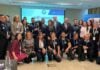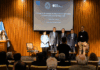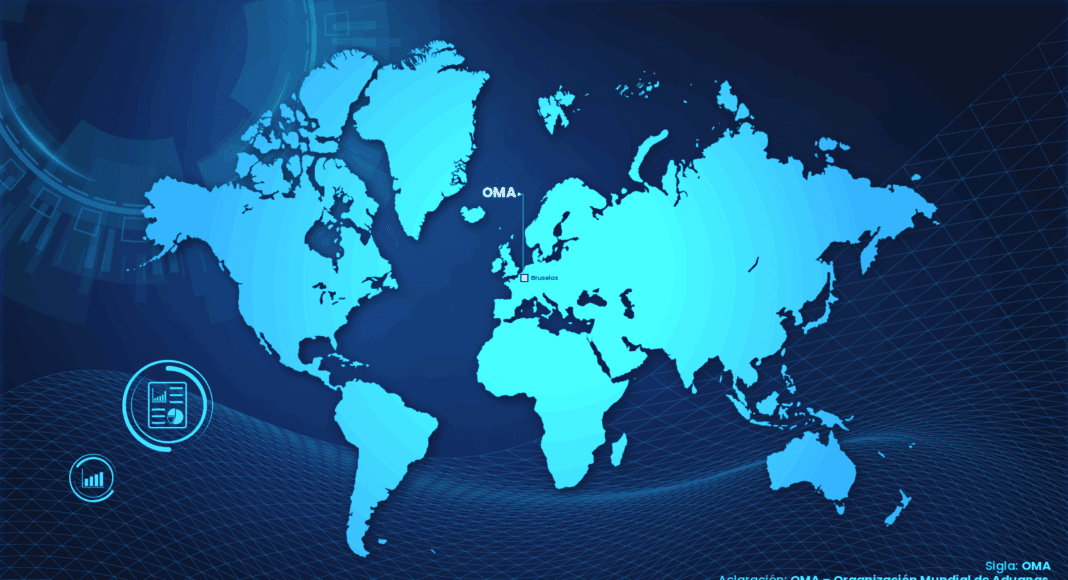

The World Customs Organization (WCO) reported the holding of the 251st and 252nd sessions of the Standing Technical Committee (STC)), key body responsible for analyzing core customs issues and preparing recommendations that are then submitted to the WCO decision-making bodies.
Cross-border e-commerce was a central focus of analysis on the committee's agenda, which took place from May 5 to 8, 2026, in Brussels and in a virtual format, within the framework of technical work aimed at developing standards and tools to facilitate legitimate trade.
The sessions were opened by the WCO Deputy Secretary General, Ricardo Treviño, and included the participation of the OECD, represented by its Deputy Secretary General, Fabrizia Lapecorella.
“The discussions highlighted the growing complexity of cross-border e-commerce,” the WCO noted, while stressing the need to strengthen international cooperation and the implementation of solutions for customs modernization.
More than 280 representatives from customs administrations, international organizations, academia and the private sector participated in the sessions, reflecting the relevance of the event.
Tools for customs modernization analyzed
The Committee analyzed and moved forward with the approval of instruments aimed at customs modernization, with a focus on interoperability and digitization.
In that context, the update of the Data Model (version 4.3.0) and its management document were supported, along with the approval of the 2026 disruptive technologies report and the progress of the Smart Customs Project.
Also analyzed were decentralized credentials and the WCO's updated technology guidelines, in addition to the Practical Guide on Free Zones with new guidelines on AEOs and rules of origin.
Additionally, the Committee dedicated a specific day to cross-border e-commerce, in which progress was made on the Framework of Standards on Cross-Border E-Commerce and on the seventh edition of the Compendium of Case Studies, with contributions from the Private Sector Consultative Group (PSCG).
The WCO reported that challenges related to sustainable trade and fragile borders, Within this framework, a study on remanufactured and recycled goods, a self-assessment tool on sustainability, and progress on the Action Plan on Fragile Borders were highlighted, for the development of future work on the impact of conflicts on trade flows and customs operations.
In terms of cooperationThe WCO —the organization that coordinates the work of customs administrations and stakeholders in international trade— highlighted the work with the private sectorIn particular, the review of the Private Sector Consultative Group (PSCG) and the agreement on the composition of the WCO-UPU Contact Committee for the period 2026–2029, aimed at strengthening coordination between customs administrations and services of post in the face of the growth of cross-border e-commerce.
Progress under the WTO Trade Facilitation Agreement was analyzed, as well as the role of National Trade Facilitation Committees.
Finally, it was noted that the tools resulting from the Permanent Technical Committee will be submitted to the Policy Commission and then to the WCO Council, which will also meet in Brussels in June 2026, for final approval.

Aduana News foi o primeiro jornal aduaneiro da Argentina a lançar sua versão digital. Com mais de 20 anos de trajetória, suas publicações e iniciativas têm como objetivo oferecer o conhecimento mais relevante sobre temas aduaneiros, contribuindo para a promoção do comércio seguro e da facilitação do comércio na região.