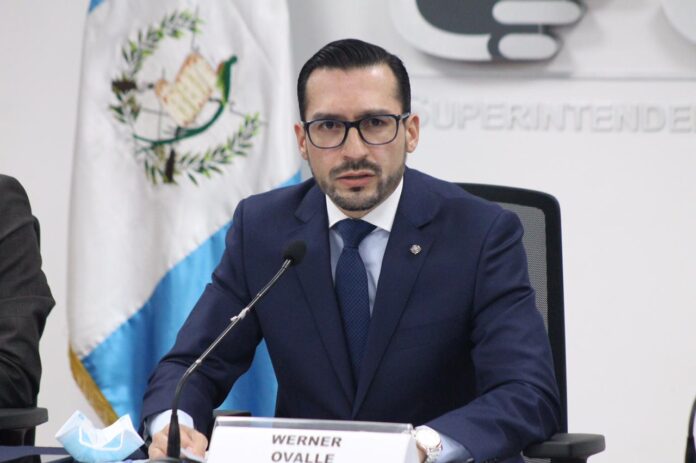
Werner Ovalle, a lawyer and Master in Politics, Public Security, and Integration and Development, has in-depth knowledge of the management of the customs service (he is the Superintendent of Customs in Guatemala) and of regional management (in charge of the Vice Presidency of the World Customs Organization for the Americas and the Caribbean). He understands and explains how these central border management institutions should function in terms of trade facilitation and human development. He is critical of corruption. What lessons have customs learned during the pandemic? What is your reflection on Argentina?
Below is his dialogue with Aduana News.
What is meant by trade facilitation?
Trade facilitation is one of the new trends in international trade. And Customs are the ones who implement it, But it is the result of one of the great negotiations that have been carried out by the ministries, secretariats of Finance or Economy of many of the countries; Customs are putting it into practice to contribute to efforts linked to the competitiveness, reduction of dispatch time, exchange of information and public-private coordinationIt is important that all the actors in international trade share the vision of work in order to carry it out jointly. It is essential to commit to the simplification of procedures and the facilitation of trade without losing customs control.
In this line, I point out the coordination of efforts between the World Trade Organization (WTO) and the World Customs Organization (WCO)) in the implementation of the Facilitation Agreement. In many countries, customs is responsible for more than 90 percent of the implementation of actions in order to carry out these efforts. This demonstrates the importance of the role of customs in ensuring that international trade can flow.
I want to highlight that the Trade Facilitation Agreement motivates the work of National Trade Facilitation Committees where the added value is in ensuring that the private sector can have facilitation mechanisms with customs. For example, Guatemala has created a dialogue table where there are more than 28 actors in the logistics chain. This has allowed us to have a work plan, identify the problems and jointly determine how to resolve them.
What is the importance of trade facilitation?
One of the pillars of trade facilitation is that Strengthens trade between countries by reducing additional times and costs. For this purpose, the WCO has implemented the Dispatch Time Study for the lifting of goods. This tool allows for a real diagnosis of each of the actors, detecting problems and making an action plan that determines how the faults will be corrected to make trade effective.
It is also important make itself transparent customs procedures in trade facilitation. Therefore, all administrative acts of customs must be on the web and social networks so that actors have dynamic access.
That's why you have to betting on technology. Trade facilitation has forced customs services to improve electronic tools to provide information and facilitate the payment of taxes. This avoids discretion and moves towards compliance with the requirements of the “Customs of the 21st Century"which requires less use of paper. To achieve this, all countries are working together.
What role do customs play in trade facilitation?
Customs must become real actors that enable the competitiveness of their countries both in imports and exports. Before, customs were seen as control entities. But now, in addition to security, trade facilitation becomes one of the cross-cutting axes that customs services must work on together with the private sector.
Trade facilitation is a task for all actorsIn this sense, establishing communication mechanisms in countries, such as the Trade Facilitation Committee, allows for monitoring work combined with pillar two of the WCO SAFE Framework – customs and businesses – to optimally achieve the objective.
Where have cutting-edge initiatives applied to customs modernization been implemented at the regional level?
I have the honour of representing a very participative region. Each customs office, in its country, is carrying out a series of important actions. To date, there is no customs office that is not carrying out trade facilitation measures. We have all found the added value that this has. I would like to highlight the customs modernisation programme of Peru through its SMART customs; also, the customs program of the United States (CBP) through which technical cooperation has been provided, due to the importance and technological advances it has in the region. They created the position Resolution Team, a good practice, presented and accepted by the customs directors of the Americas and the Caribbean.
On the other hand, e-commerce has been one of the new challenges we have as customs due to the change it generates in traditional trade. For example, in Guatemala, during 2020, where there are 21 customs offices nationwide, the only one that reached its collection goal was the air express customs office that handles e-commerce. This shows us that e-commerce is necessary in times like COVID-19, and it is here to stay.
The region is working in line with this reality. We see it in the advances of the United States, Chile y Dominican Republic. Also, in the efforts of Colombia with the implementation of its single foreign trade window, in coordination with a monitoring and traceability center. Mexico implemented the Customs Technological Integration Project (PITA) and the use of the single window for foreign trade. Chile andIt is a major reference in matters of inspection, with actions such as customs risk management.
In Guatemala we have generated strategies for the implementation of non-intrusive controls in maritime customs, the Electronic Label, RFID (data collection technology for containers via satellite) in conjunction with the Central American Trade Facilitation Strategy. Added to this is the advance declaration, an innovative project that is in line with the Trade Facilitation Agreement and the Central American Strategy mentioned. Guatemala is implementing this initiative with Honduras and will soon do so with El Salvador. In addition, a customs modernization plan has been developed that has allowed us to achieve results to represent the World Customs Organization in the region.
What are the regional initiatives to reduce illicit trade?
The WCO Region of the Americas and the Caribbean has two Regional Intelligence Liaison Offices (RILOThe first, managed by the Saint Lucia customs, deals with Caribbean matters. And the second, managed by the Chilean customs, deals with South American matters. This initiative is fundamental because it allows us to carry out regional operations, exchange information and have access to the WCO database. The good news is that we are close to having a new RILO officer in Guatemala to deal with Central American matters, thanks to the support of the customs directors of the central region. In this regard, I highlight the support of the IMF so that we can have a Central American strategy for customs risk management, in order to reduce red selectivity and comply with the WCO standard (one digit).
The efforts of the parlatino which has approved a Specific Law against Illicit TradeThis instrument has identified important aspects for countries to include in their legislation and be more forceful in the fight against smuggling and customs fraud. This is an initiative that has the support of various countries in the region and Crime Stoppers to be more forceful in the results against illicit trade.
How are customs involved in promoting gender equality in the region?
It is a fundamental issue for the WCO and the Region of the Americas and the Caribbean. In December 2020, the Gender Equality and Diversity Declaration in the WCO Council. In order to understand this effort, the region is made up of: 33 customs, of which 19 are led by men and 14 remaining, by womenIn this regard, I would like to emphasise that equality and diversity are essential to ensure the performance and quality of the customs service.
For this reason, in the Regional Office we promote the participation of female directors in the WCO Gender Equality Group in order to publicize the progress we have made in the region. Our representatives are Velma Ricketts Walker, Director of Customs of Jamaica (Caribbean sub-region), Marilu Llerena, Superintendent of Customs ofPeru (Sub-region of South America) and Tayra Barsallo, Director General of the National Customs Authority of Panama (Sub-region of Central America).
What lessons have customs learned during the pandemic to respond in the future?
No one predicted the impact of the pandemic on health, citizenship, foreign trade and the economy. Hence, one of the lessons was the need to be more connected and coordinated with neighboring customs.
Thus, Central America generated a Biosecurity Plan to have a common approach between the ministries of health, economy and customs, allowing intraregional trade to have the least impact. For this reason, I highlight and appreciate the work and commitment of customs officials from many countries in the region in ensuring that international trade does not stop in the context of the pandemic.
I also highlight the fundamental role of the WCO and its authorities by promoting communication and the exchange of good practices to share these experiences with the customs community. In this line, the WCO Council Resolution on the “Role of Customs in cross-border facilitation of medicines and vaccines in critical situationss ".
All of this confirms the strategic importance of customs in our countries in pursuit of crucial trade facilitation objectives.
What qualifications should a customs agent have to generate trust?
La integrity and transparency These are fundamental values on which our customs must be built. In Guatemala, we are working at all levels of administration, adhering to the Code of Ethics and Conduct, which allows us to achieve credibility and legitimacy in communication with other actors. But we have demanded that all members of the logistics chain act in the same way. To this end, the WCO has accompanied us in this effort so that we work under the same vision.
At a regional level this marks us. All customs are making efforts to increase ethics in the organization. Arusha Declaration, a basic tool for this purpose, has ten concrete principles that every country must implement.
Finally, do you have any thoughts for Argentine Customs?
My reflection is linked to the role that Argentine Customs has played in the region and in the WCO, and also to the efforts deployed during the COVID-19 pandemic.
In this regard, The Argentine Customs was a reference between 2007 and 2015 in capacity building. From my Regional Vice Presidency, Argentina together with Peru were the ones who promoted the first initiatives. In view of their commitment, We are working on the accreditation of your Dog Training Center, approved by all customs directors in the region in 2020, and in the final stage of the memorandum of understanding with the WCO.
This demonstrates the commitment and leadership of the Argentine Customs to work on trade facilitation, customs control and security of goods in the Americas and Caribbean region.

Aduana News foi o primeiro jornal aduaneiro da Argentina a lançar sua versão digital. Com mais de 20 anos de trajetória, suas publicações e iniciativas têm como objetivo oferecer o conhecimento mais relevante sobre temas aduaneiros, contribuindo para a promoção do comércio seguro e da facilitação do comércio na região.