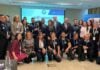
The Guatemalan Customs Superintendent, Werner Ovalle Ramírez, leaves his position as Regional Vice President of the World Customs Organization (WCO) for the Americas and the Caribbean this Thursday (30.06.2022). After two years, this global institution in charge of harmonizing, simplifying and unifying customs practices in countries will have a new representative. In an interview with Aduana NewsOvalle answers questions about his administration, the greatest challenges in his position, as well as his vision of the challenges to come.
Mr. Vice President, what achievements would you highlight from your work plan?
– I would like to highlight that throughout 2020 - 2022 We have had a series of positive results in the coordination of the Regional Vice Presidency exercised in the context of the Covid-19 pandemic. For this reason, we have generated a series of strategies with the customs directors to continue with the corresponding meetings. In this sense, we managed to create at an institutional level three new structures for the Americas and the Caribbean: a Regional Customs Laboratory in Peru, an Canine Center in Argentina and a Liaison and Intelligence Office “RILO” for Central America with headquarters and secretariat in Guatemala. In institutional terms, this is a success for the region, since, according to the Secretary General of the WCO, there had not been a new liaison office since 2008.
On the other hand, there was projects with strategic vision where we have deepened trade facilitation and control. In May 2022 we signed the Mutual Recognition Arrangement for Authorized Economic Operators across customs of eleven countries. This is the first time that within the framework of all customs there is an agreement with this number of participating customs. Namely, at the regional level we have the mutual recognition agreement of the Andean Community (four countries), Mercosur (four countries) and Central America (four countries when we implemented it, until Honduras joined), but the recently signed mutual recognition agreement between the countries has the important characteristic that they are participating nations of three regions different: South America, Central America and the Caribbean. This is a signal to the entire customs community that we are having an articulated vision.
Another important aspect is the Dispatch Time Study in Central America. This is the first time that this WCO tool has been applied at a regional level. That is, six countries of Central America agreed to this end with the support of the Secretary General.
An important milestone is the Gender and Equity Study, work developed in collaboration with the International Monetary Fund.
Likewise, another contribution from the Guatemala Customs with the support of the 33 regional administrations is the AMERICARIBE Guide This will allow any country that wants to apply for the vice presidency, committees and/or commissions of the WCO to know the scope, functions, representativeness and obligations that they assume with the objective of being increasingly better represented in the international customs community, which is essential. Last week I delivered the guide to the Secretary General. It will be used as a model for the six regional vice presidencies that exist within the WCO to implement and take as a reference. This guide was approved by the customs directors of the region and has now become a legacy of the management during 2020-2022 with the vision of continuing to strengthen the institutional structure of the Americas and the Caribbean.
Measuring is accountability… What data is most relevant?
– I would like to tell you that when Guatemala presented its candidacy, it did so with a work plan focused on four axes: institutional strengthening, customs technologies, interregional cooperation and logistical security.
In the first component, referring to institutional strengthening, We have had more results because it is an issue that all customs feel identified with. We carry out 18 Regional institutional strengthening workshops over the two years, 1 Expert accreditation workshop, 2 Expert pre-accreditation workshops, 1 final study on gender equity, 3 institutional structures, 1 letter of intent to fight corruption with the Regional Private Sector Group. This point is important because the Private Group for the Americas and the Caribbean was established within our Regional Vice-Presidency; this is an opportunity to generate proposals and to work as a customs system and not as customs services. It also reflects the focus on the openness of the private sector and the commitment to work on ethics, transparency and integrity, aspects that should not involve only customs but all actors in the logistics chain. This result was also highlighted by the Secretary General of the WCO as a good practice for the entire customs community. 47 virtual forums for strengthening.
As for the component of customs technology, we managed to make the translation into Spanish of 2 documents related to disruptive technologies. In our region, many countries speak Spanish, which is why the resources of the WCO, whose official languages are English and French, were not used. The Customs of Chile and Guatemala collaborated to this end. We also carried out 2 forums promoting trade facilitation, disruptive technologies, e-commerce (increasingly important), as well as topics related to customs modernization. Regional workshops related to technology and data models are also held.
Regarding the third component linked to the inter-institutional cooperation, We conducted the first Regional Dispatch Time Study, 1 Mutual Recognition Arrangement of the Americas and the Caribbean, 21 forums related to border management coordination, binational clearance, also with the Mercator Programme (WCO tool to articulate the customs function with trade facilitation) and 6 regional cooperation workshops.
In the fourth component referring to logistical security, We perform 7 forums promoting RILOs, which are intelligence liaison offices, as well as the OMA's technological platforms, 6 Information capsules on the WCO tools for the region. Added 1 AMERICARIBE's guide to the operation of its structure and 9 Featured Country publications, a mechanism to showcase the capabilities, successes and challenges of customs in the region. We also had 4 meetings with general managers. These are the direct results as a work plan.
What is the result that most identifies you in terms of cooperation?
-Based on the slogan chosen for the Regional Vice Presidency, “Working together for a digital, competitive and integrated region”, we have implemented a route of cooperation via chat This allowed us to share our successes and problems with all the customs directors. Today we have a more integrated, better communicated and better articulated structure for the Americas and the Caribbean region. This is a fundamental element that will allow us to continue growing and contributing to the international customs community within the framework of the WCO. It also helps to build trust among directors and to exchange information.
Another relevant aspect is to guarantee cooperation mechanisms in different efforts such as Dispatch Time Study, excellent cooperation between the six countries Central Americans. We managed to get the Dispatch Time Study, which was always national, to be carried out at a regional level by the six customs offices. Added to this initiative is the openness of the WCO authorities to accept it, because not everything is written in stone. This is revolutionizing the efforts that the WCO has made.
An example of cooperation is the Mutual Recognition Agreement of eleven countries; As I told you, there are three subregions that have signed a mutual recognition agreement. Within the WCO, there is no other region that has done so. It is an effort that has taken four or five years and, thanks to the strategic vision of the countries and the support of my work as Regional Vice President of the WCO, we now consider it a concrete result of cooperation in the Americas and the Caribbean.
What is your current view regarding customs and the private sector in the region?
-Our vision has been to ensure the Customs of the 21st Century and I have focused my efforts towards this thanks to what has been projected within the framework of the WCO, because we always continue working to promote growth and development through trade facilitation, using the strategies established by the WCO. SAFE Framework in the three pillars that make it up. I mention the SAFE Framework because we need to have a comprehensive perspective on where to go.
On the one hand, to strengthen the customs – customs relationship, is an issue in which significant progress has been made in accordance with the actions and data described.
On the other hand, customs – private sector: I mentioned the signed Letter of Intent. It is a fact that many countries have articulated agendas to have a common vision of foreign trade. In the case of Guatemala, in 2016 we established a national public-private dialogue table for customs issues, an experience that has allowed us to move forward to detect bottlenecks and solve them jointly. Why? Because we managed to draw up an action plan using scientific data from the study of clearance times carried out. This leads us to state that we should not be afraid of feedback when things are not going as they should be on the agenda.
Furthermore, the private sector should know that customs are now more professional, have more technology and information and are the ones that provide feedback to companies. This two-way feedback will allow us to be a more competitive and integrated region..
What are the customs challenges and the way forward?
-Among the latent challenges in the region is the having customs as technical bodies for foreign tradeIt is important not to politicize the actions and functions of customs, because they play a key role in countries.
It is also a challenge continue to adopt international best practices. In this regard, there is the Revised Kyoto Convention. Currently, only 8 of 33 countries have signed this agreement. Continuing to advance in this instrument that establishes the best practices in terms of trade control and facilitation from a customs perspective is a challenge.
He's the theme of ethics and fight against corruption It remains a challenge. We must continue to automate processes and expand the culture of transparency and integrity, not only in customs but in all the actors in the logistics chain. To the extent that there is a real commitment from everyone in this regard, we will have conclusive results.
One last challenge. We are emerging from a pandemic, which must be the focus to continue with the vision of the Customs of the 21st century in order to guarantee the functions of control, collection, trade facilitation and reinforcement of security at the borders of our countries.
Mr. Vice President, thank you very much for this conversation.
The interview was conducted by María Elsa Coronel.

Aduana News foi o primeiro jornal aduaneiro da Argentina a lançar sua versão digital. Com mais de 20 anos de trajetória, suas publicações e iniciativas têm como objetivo oferecer o conhecimento mais relevante sobre temas aduaneiros, contribuindo para a promoção do comércio seguro e da facilitação do comércio na região.