
1.Introdução
UN
Traditionally, customs activity in the European Union has been marked by a succession of reforms, each one more revolutionary than the last, which have shaken it up and have changed it and shaped it into its current reality and its future future.
Thus, when the creation of the Single Market or the disappearance of customs and internal community borders was raised, or the disappearance of each of the national currencies (the peseta, the mark, the franc, etc.) and their replacement by a single currency was addressed, our first reaction was that this or that was impossible to achieve, but time has not proven us right and as we all know, all these reforms have been satisfactorily carried out.
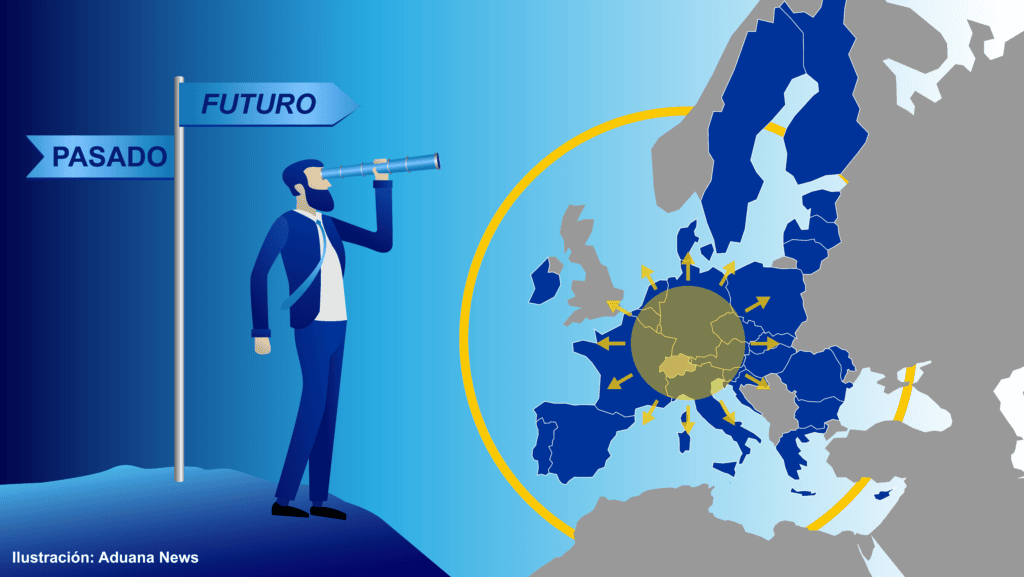
Well, it has done it again. On 17 May 2023, the European Commission presented a series of proposals in Brussels under the heading “the customs reform of the Union” which the Commission itself has described as the “most ambitious and comprehensive reform of the European Union since it was established in 1968”.
The aim of this reform is to thoroughly simplify and rationalise customs processes in order to reduce costs, eliminating current procedures that are sometimes cumbersome and slow in favour of simpler and more reliable ones that will provide Community companies with a drastic reduction in the operating costs of the system.
The mechanism devised by the Commission to achieve these objectives is based on replacing traditional customs declarations with a new approach based on carrying out imports using common databases managed at Community level which, in a more intelligent way and with the use of tools provided by artificial intelligence, allows control of commercial processes and the real risks that arise for the European Union, its citizens and the Community economy itself.
This new approach to international trade within the Community responds to a basic premise derived from the extraordinary increase in international trade volumes and exchanges that is taking place, and in particular that of electronic commerce, which is increasing trade volumes at a double-digit level, generating the need to create or drastically modify the import and export procedures of the European Union and to achieve control of the Community's external border in order to also take into account the ever-changing geopolitical crises and to exercise the necessary protection of citizens (understood as the basic task of customs), all through the use of simple and reliable procedures that make it possible to reduce the time needed to complete import processes, with the aim of reducing the costs of foreign trade within the Community by 25%, all without undermining the necessary political and security objectives.
Furthermore, the Commission itself has stated that this reform represents the next step in the consolidation of actions that have been in the works since the beginning of the century to achieve true harmonisation, not only fiscal but also planning, supported by unique computer procedures (in permanent variation and development) to which it is necessary to adapt on the fly, introducing and using the most advanced mechanisms that are available at any given time (such as artificial intelligence) and any other computer advances that may appear in the future.
On the other hand, it also represents a public commitment by the European Commission, a true declaration of intent on what its priority objectives will be for customs in this century, such as the creation of the Internal Market, the disappearance of the Community's internal borders or the creation of the euro.
In my view, the reform that has been presented is the only way to achieve true economic integration in the European Union and to be able to act as a single country, with a single customs procedure, a single language, a single risk analysis based on a single database, compared to the current situation represented by 27 countries, 27 different procedures, 23 official languages and 27 national databases and computer centres from which 27 studies are derived, all potentially different.
2. Preparatory work for the reform
This reform is the result of a series of preparatory works carried out over the last few years and promoted by the Commission itself, among which we can highlight the following:
a. In 2022, the High-Level Group of Wise Men and its report on the future of customs called for urgent structural change and put forward a series of recommendations on the Customs Union with the aim of achieving more agile and coherent customs procedures adapted to the rapidly changing geopolitical reality of today's world.
b. The 2021 European Court of Auditors report called for a much more uniform application of customs controls with improved risk analysis and management capabilities and greater coordination at EU level.
c.The report entitled “The Future of Customs in the European Union 2040”, which was carried out by the Commission’s Joint Research Centre, reflected on the future, relevance and long-term effectiveness of the Customs Union.
d.Finally, the public consultation carried out by the Commission, through which it gathered views from all stakeholders in international trade with a broad assessment of the real-world impact of these measures.
3.The Reformation in figures
DOS
In presenting this reform, the Commission made express reference to the great success of European integration, which has allowed the free movement of goods within the Member States and has fostered a long period of European prosperity. At the same time, it stressed the great importance of the European Union's Single Market at a global level, being considered the largest integrated area in the world.
From a quantitative point of view (referring to the year 2021), the European Union values trade with third countries, which reached the figure of 4,3 billion euros, which represents 14% of all world trade, highlighting that up to 56 million jobs depend on trade with third countries.
On the other hand, from the tax collection point of view, the Commission points out that Community customs collect more than 80.000 billion euros per year in customs duties, excise taxes and value added tax, as imports are a taxable event for all of them, which represents figures of great importance for the financing, not only of the budgets of the European Union, but also for those of each of the Member States.
Apart from the great importance of tax collection mentioned in the previous paragraph, we must not forget the important work assigned to customs in order to enforce the (increasingly ambitious) legislation that establishes environmental, social and even digital standards self-imposed by the European Union for products entering the Union, in such a way as to put the operation of community companies on an equal footing with the standards required beyond borders, which is of strategic importance, not only for the community economy and its prosperity, but also from the point of view of security in its broadest sense.
4. Reasons for the reform
THREE
The evolution of international trade and its challenges constitute in themselves the reasons for the proposed reform, which can be summarized as follows:
The evolution of international trade and its challenges constitute in themselves the reasons for the proposed reform, which can be summarized as follows:
a. The extraordinary increase in world trade and in particular electronic commerce, which in itself makes a comprehensive reform of customs procedures necessary in order to respond to the needs created by this fact.
b. The great proliferation and diversity of applicable standards These include those aimed at environmental protection, climate change, labour dumping, firearms control, health, etc. etc. etc., which add up to a total of 378 Community regulations plus national ones, which requires a harmonised and effective response from Community customs bodies that guarantee control and compliance with them at the lowest possible cost.
c. Geopolitical changes and the need to react in a harmonious manner in support of any crisis or in the application of community sanctions (remember the war in Ukraine), requires the adoption of standardised procedures that facilitate and enable a single response from the Union's customs.
d. Community customs procedures too complex for both customs authorities and economic operators, which entails high costs and a corresponding loss of competitiveness.
The existence of 27 different national customs administrations with which importers from the European Union must deal, the existence of 111 separate interfaces and computer systems with their corresponding administration and management costs, the lack, in certain cases, of an interconnection between the different Community computer systems, the absence of a Single Database of the European Union, justify, by themselves, the need for the proposed reform.
e. Common risk management: The lack of standardisation referred to in the previous paragraphs makes the Community customs office, to a certain extent, vulnerable to a large number of risks, not only those relating to tax collection, but also to risks related to terrorism and security in general, with respect for strategic Community values and the loss of Community competitiveness. This common risk management is essential given that entry through any Community customs office implies entry into the entire territory of the Union, so national risk management at the level of 27 States is of no use.
5.The foundations of reform
CUATRO
The reform analysed is based on a new Customs/business association and on a new reallocation of resources in such a way that traditional customs control is replaced by greater freedom and agility in the circulation of goods and with greater responsibility on the part of the company, leading to a simplification of customs procedures with the corresponding reduction in their costs, thus achieving an increase in the competitiveness of Community companies, and all this without prejudice to the necessary protection of citizens' rights and the defence and security of consumers.
It is clear that if customs knows in advance which goods will arrive at its border, it will be able to make decisions in advance and decide whether or not an intervention or inspection is necessary in order to enforce the applicable regulations, focusing and concentrating its resources appropriately, facilitating legitimate trade as opposed to illegal trade.
To this end, the aim of the reform is to move from a focus on individual shipments to control of the supply chain in general and to the use of single, general databases for the entire European Union, databases shared by all customs offices and improved by artificial intelligence. It is, therefore, a change of model that will go from the current submission of customs declarations for each individual shipment to the provision of data on supply chains in general.
Furthermore, based on the current figure of the Authorised Economic Operator, a specific group of traders will be created, called Trust & Check operators (in English “Trust & Check”) who will offer maximum transparency in their supply chains, being able to clear all their imports before the customs authorities of the Member State in which they have their headquarters, regardless of where the goods physically enter the European Union, using their own language and even, under certain conditions, they will be able to carry out their imports without needing any active customs intervention.
In general terms, it can be concluded that nothing will change with regard to the level of detail of the data that importers must provide to Customs. The major change will be determined by the time of supply of this information (prior), its scope (the entire supply chain) and its common management (a single database).
6. Benefits of the reform
FIVE
The reform proposed by the Commission will directly benefit all those involved in international trade, and the impact can be distinguished depending on the different subjects, namely:
A. Benefits for Community Customs:
The fact that customs authorities can have access to all the information in real time about which goods are arriving or will arrive at the community markets will allow them to intervene in any shipment before, during or after it is materialized through a common risk analysis at the total level of the 27 States, which will imply a significant improvement in the allocation of human resources with a significant saving of resources by being able to free up control over reliable operators and thus focus all available resources on controlling illegal or simply “unknown” trade.
B. Benefits for Economic Operators and Trade in General:
According to the European Commission's proposal, and based on the Authorized Economic Operators program, a specific file will be created for traders subject to control (trusted operators that the proposal calls "Trust and check"), which is expected to be operational from 2032, and through which said trusted operators will be able to clear all their imports before the customs authorities of the Member State in which they have their headquarters, regardless of the State through which the goods physically enter and, all this, using their own language.
Furthermore, and under certain conditions, they will be able to carry out their imports without generating any active intervention by Customs, that is, without apparent controls and therefore free of administrative and customs burdens, which will produce a significant reduction in times and costs derived from customs clearance for companies accredited as reliable operators.
According to data provided by the Commission itself, the proposed simplifications will result in cost savings for Community companies of around 2.700 billion euros per year.
7.Timeline of the reform
In presenting this new proposal and with the aim of subjecting itself to temporary control in its actions, the Commission has proposed a time sequence of actions to achieve the intended goal, which involves the following milestones:
A. Legislative amendment. The proposed reform requires a profound modification of the Union Customs Code, currently underway, to adapt to this proposed future reality.
B. Transitional period. Once the aforementioned modification of the UCC has been approved, we will enter a period of between 5 and 15 years in which the necessary work must be undertaken to implement the proposed reform, including the design and implementation of the Customs Data Centre of the Union, the creation of the Customs Authority of the European Union and the creation of the figure of the Trusted Economic Operator, which constitute the three fundamental pillars on which the proposed reform is based.
C. Year 2028: Implementation of the reform to electronic commerce.Once the European Union Customs Data Centre has been created and the registry of trusted operators has been created, the Commission's proposal proposes its limited application, in a first operational phase, to electronic commerce in 2028.
In addition, in line with the launch of the Customs Data Centre, the European Union Customs Authority will also take up its functions on 1 January 2028, becoming immediately operational in terms of its Community risk management and assessment tasks.
D.Extension of the reform to all foreign trade. Once the personalised customs regime for electronic commerce has been implemented, the next step would be to complete its extension to all EU foreign trade so that the rest of traders can use the new system including the Customs Data Centre from 1 January 2032 on a voluntary basis and, compulsorily, from 1 January 2038.
8. Pillars of reform
The major Customs reform presented by the Commission is based on three pillars:
SIX
A. The creation of a European Union Customs Data Centre:
The new European Union Customs Data Centre is conceived as the driving force behind the entire reform presented and will be equipped with cutting-edge technology, through which it will collect all the data provided by all companies and economic operators in a single register, replacing all the national IT infrastructure currently owned by the Member States, providing a single interface throughout the European Union and facilitating the reuse of data, potentially saving (according to information provided by the Commission itself) up to 2.000 billion euros per year in customs operating costs.
The procedure designed will require economic operators to provide the information directly to customs through this EU Data Centre instead of through the multiple national systems. In addition, they will be able to submit this information once and reuse it in subsequent imports for multiple shipments with the same characteristics.
Thus, by creating a single Community data registry, customs authorities at national level will be able to have a global view of the external traffic of the entire Community, and, therefore, will be able to carry out a much more specific and qualified risk assessment at Community level (not as is currently done at national level), being able to detect and prevent Community risks in real time.
This new system will enable and facilitate the exchange of information and joint risk management not only between customs authorities but also between non-customs authorities, specifically citing the European Anti-Tax Fraud Office (OLAF), the European Public Prosecutor's Office (EPPO), Europol and Frontex, among others, which will substantially strengthen their analytical capabilities.
Once the European Union Customs Data Centre is launched, it will be implemented for electronic commerce exchanges in 2028 and, on a voluntary basis, by the rest of the importers from 2032 (obligatory from 2038), which will allow them to participate in the benefits and simplifications more immediately.
SEVEN
B. Reliable operator for control, (in English Trust & check):
The figure of the trusted operator for control (Trust & Check), together with the creation of the European Union Customs Data Centre, represents the second fundamental pillar on which the major customs reform proposed by the Commission is based.
This new figure is based on the current operating scheme of the Authorized Economic Operator, from which it takes its principles, conditions and requirements for its authorization, although with stricter criteria, especially with regard to the supply of data, including not only those of its operations but also those of the entire supply chain (in real time), so that customs authorities can know, prior to their realization, the content and identification of their shipments and the evidence of compliance with all the requirements necessary to request imports, all being managed through the aforementioned Customs Data Center of the European Union.
This new procedure strengthens its performance and its relationship with the Community Customs, allowing for total transparency, even giving said authorities authorization to access its electronic and accounting systems in such a way as to enable control of the movement of its goods and the necessary monitoring at all times.
In return, the system provides these trusted operators with a customs clearance system with low supervision (even without the need for active intervention by customs), so that it is the operators or importers themselves who can self-control the conformity of the goods with what was declared to the administration, all without the need to submit a customs declaration for each shipment.
The possibility of paying import taxes in instalments or periodically is also envisaged, based on stable information on the supply chain that has been previously submitted and which can be used and reused for subsequent imports or exports that are identical or of the same nature, with the significant savings in customs costs that this simplified procedure brings to authorised traders, thus greatly increasing the competitiveness of Community companies.
C. The creation of a new European Union Customs Authority:
EIGHT
The reform provides for the creation of a new European Union Customs Authority, staffed by Community officials and conceived as a decentralised Agency, whose objective is to combine the experience and resources of each and every one of the customs offices of the Member States with that developed by the European Commission, in such a way that risk management can be carried out at Community level by using and analysing the data provided by the European Union Customs Data Centre, which will be permanently updated and available in real time.
With this information, the customs authority in question will be able to indicate to the Customs of the Member States the level of risk involved in each import or export operation and even specify those operations that should or could be subject to customs control, thus creating a true common external border, regardless of whether the Customs Authorities of the Member States maintain their own risk analysis at a local level adapted to their specific needs.
Furthermore, the aforementioned European Union Customs Authority will be the competent body for coordinating the management of any crisis that may arise at the level of Foreign Trade and for ensuring compliance with the protocols and procedures to be developed whatever the crisis scenario in which a Member State finds itself, whether it involves emergencies, public health, interrupted or blocked supply chains or simply the application of European Union sanctions.
9. Conclusions
- The reform is based on three pillars, among which the creation of a Single Database for the European Union stands out.
- It will be based on the use of EU international trade data, always updated in real time.
- It encourages a change in the clearance procedure from the current customs declaration system at the time of customs clearance to the data communication system prior to the arrival of the goods, i.e. we will move from a clearance system based on declarations to a data-based procedure.
- Data will be provided in advance regarding time and scope of the entire supply chain.
- That the system thus conceived will allow (on numerous occasions) that Customs does not have to act actively at the time of importation and that the entry of goods is authorized even before their arrival in the customs territory.
- That the trusted operator for control (Trust & Check) is the axis around which most of the simplifications revolve, which, starting from the current figure of the Authorized Economic Operator, establishes greater interaction with Customs.
- That the entire system will lead to a great simplification of the procedure with the consequent economic savings and increase in the competitiveness of the companies involved, replacing the customs declaration with a self-assessment or self-evaluation.
- It will enable risk management at EU level that is compatible with risk management at national level.
- All of the above will allow for a standardisation of behaviour and a single response from the Union to any international situation, which will be coordinated by the new Customs Authority of the European Union, which will also be the body responsible for relations with other affected bodies, whether customs or non-customs.

CALLS
- The European Commission has described the current customs reform as the “most ambitious and comprehensive in the European Union since it was established in 1968”.
- The European Union's Single Market is the largest integrated market area in the world, accounting for 14% of all world trade and employing more than 56 million people.
- There are at least 378 community standards plus the national ones applicable on occasion
the entry of goods into the Community customs territory. - The big change will be determined by the time of supply of information (prior), its scope (the entire supply chain) and its common management (a single database).
- According to data provided by the European Commission itself, the proposed simplifications will result in cost savings for EU companies of around 2.700 billion euros per year.
- The new EU Customs Data Centre will collect, in real time and at a national level,
Community all data on the Union's foreign trade. - The trust & check operator may be authorized, instead of Customs, to self-control the conformity of the goods with what was declared.
previously without the need to submit a customs declaration. - The Union customs authority is conceived as a decentralised Agency and will be the competent body for the coordination and control of customs management.

The author holds a degree in Law and is a lawyer from the Complutense University of Madrid. He currently works as an Inspector for the State Agency for Tax Administration (AEAT) and is the former Administrator of the Customs of Coslada and Barajas (Spain). He is also a consultant for the Inter-American Development Bank (IDB).