





More and more countries are making commitments to environmental protection, adopting new control mechanisms in their customs operations, in pursuit of more conscious and sustainable trade. But why is this?
First, I would like to go back to 2015, when the United Nations General Assembly approved the 2030 Agenda for Sustainable Development. It consists of 17 goals with 169 integrated and indivisible targets spanning the economic, social, and environmental spheres. While these goals are not legally binding on countries, their implementation leads to greater sustainable development and is a success story based on the adoption of measures that can foster it.
In line with this, the World Customs Organization –WCO- has promoted the initiative called “Green Customs"to incorporate environmental care into customs operations. The measures proposed by the organization not only lead to reducing the environmental footprint but also to protecting trade between countries, collaborating with the objectives established by the United Nations. At the 45th Joint Forum between Customs and the Regional Group of the Private Sector (GRPS) of the Americas and the Caribbean and at the 7th Meeting of the Cooperation and Mutual Assistance Agreement between the National Customs Directorates of Latin America, Spain and Portugal (COMALEP), held this recent May 9-2025, 2025, the WCO Assistant Secretary-General, Mr. Ricardo Treviño Chapa, highlighted the alignment of the WCO's work program with the strategy proposed for the 2028-XNUMX period on topics such as: security, trade control and facilitation, integrity and inclusion, use of technology, and green customs. (emphasis added). A factor of great importance in which they focused on the capacities of customs to prevent illicit trafficking of goods related to the environment. (1)
Customs worldwide plays a very important role in effectively controlling the merchandise that crosses our borders, in terms of controlling those that may be harmful to the population. This latter concept has been integral to Customs' mission for many years.
Polluting products, substances that can deplete the ozone layer, and endangered species are also areas of interest in terms of control. At the international level, Uruguay has assumed various commitments, such as the Basel Convention, which refers to the control of cross-border movements of hazardous waste and its disposal. Incorporated into our legal system by Law 16.221 of 1991, it is still applicable in our country today. It was recognized in 2019 for its transparency in chemical management (2).
On the other hand, our country also adhered to other regulatory agreements on environmental matters, of which the Stockholm Convention, Montreal Protocol, Cartagena Protocol, Rotterdam Convention and CITES Convention stand out, the latter being modified in its procedure, coming into force as of June 2 of this year (3).
Coordinate to prevent
For the implementation of policies other than environmental ones, coordination is required. Coordination between interested parties, countries that make the commitment, and international organizations, including the private sector. Coordinated efforts can lead to improvements in this area. In the case of our country, the coordinated actions established by law and carried out by the former Ministry of Housing, Territorial Planning and Environment, the current Ministry of the Environment, and the National Customs Directorate made possible a series of improvements, detailed below. These improvements emerged after the entry into force of Law 17.283.Environmental Protection Law” where the protection of the environment is declared to be of general interest, in accordance with the provisions of Article 47 of the Constitution of the Eastern Republic of Uruguay.
Packaging Recycling Law
Since the Law 17.849 came into force, all potential impacts arising from packaging of any type have been controlled, as well as the handling and disposal of their waste. To this end, it has been determined that only individuals or legal entities that meet certain conditions may manufacture or import finished or preformed packaging or their raw materials. This includes being registered with the Ministry of Housing, Land Use Planning and the Environment, and having a waste management plan for packaging and used packaging derived from the "products packaged or marketed by them, approved by said Secretary of State.”Following the creation of this standard, regulated by Decree 260/007, whose procedure was established by the National Customs Directorate in Order of Day 11/2012, the definitive import of this type of product was regulated. Registration in the registry is a necessary condition for processing the Single Customs Document (SAD). Within the scope of Decree 260/007, it is established that all importing companies or brand owners that market packaged products, regardless of the material used, with the exception of those packaging for products used and consumed exclusively in industrial, commercial, or agricultural activities, must be registered in the registry maintained by DINACEA (National Directorate of Quality and Environmental Assessment), currently part of the Ministry of the Environment. However, those companies that consider that their products are within the exclusions established in the aforementioned Decree, must carry out the corresponding procedures before the agency, who will issue the relevant certificates of non-scope (4).
As of 2012, the list of NCM to be controlled was established corresponding to the list of products prepared by the competent State body and in 2024 this list was updated, incorporating some and removing others, effective from October 21, 2024 (5).
It is important to mention that in our country, the Comprehensive Waste Management Law, No. 19.829 of September 18, 2019, is also in force, which in its section c) of art. 22, states that for the purposes of reducing environmental impacts and facilitating the effective application of the hierarchical scale of waste, the Executive Branch "may restrict or prohibit the production, importation, marketing and use of those products or materials that generate environmental impacts or risks, including human health.” It was therefore possible to arrive at the most recent entry into force of the legislation, based on the development of a technical proposal for the management of waste electrical and electronic equipment.
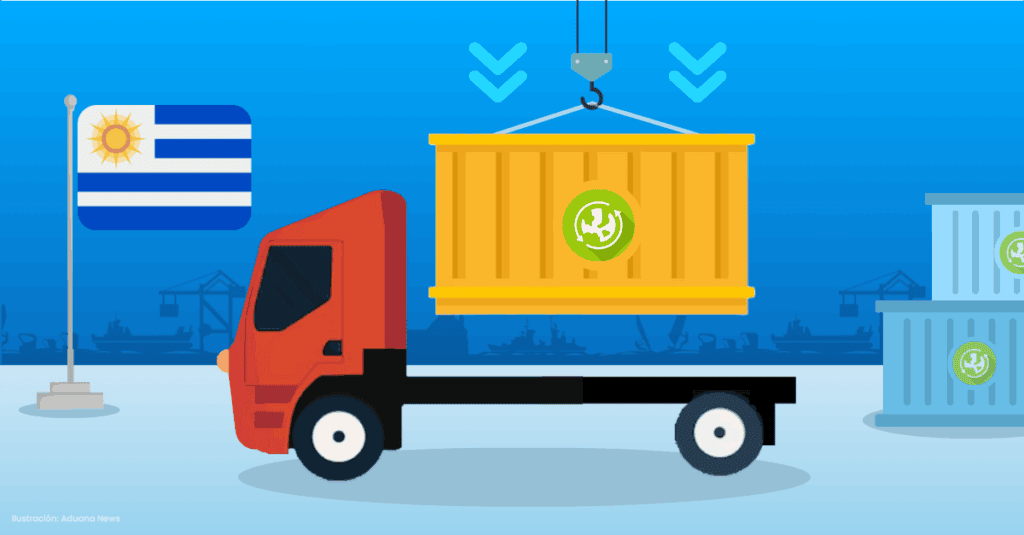
Recent approval of the Regulations for the waste plan for electrical and electronic equipment entering the country.
As of May 19, 2025, the Resolution of the National Directorate regarding the “Control for the definitive importation of goods included in Article 24 of Decree 292/2024 - Restriction of PCBs
This Resolution arose from the need to regulate the control procedure for the import of electrical and electronic equipment containing polychlorinated biphenyls (PCBs), which are regulated in Article 24 of Decree 292/2024.
This Decree establishes that importers must have a waste management plan for the aforementioned devices entering the country.
For the purposes of this standard “Electrical and electronic devices are considered to be all those devices that require electric current or electromagnetic fields to function properly, as well as those necessary to generate, transmit and measure that current or such fields; including those components, accessories and consumables used for their operation.".
The proposed management model is based on national precedents and regional and international experiences in this area. Regarding the Argentine Republic, a manual entitled "Comprehensive WEEE Management (6). Waste electrical and electronic equipment, a source of decent work to advance the circular economy.” This manual is a key tool for training and raising awareness on the correct management of these products and was developed by the Ministry of Environment and Sustainable Development of Argentina, in collaboration with the International Labour Organization in Argentina (7).
The role of customs, let's say, has adapted and increasingly followed the needs of the times. Adapting its strategic objectives and the mission of the organizations themselves, including the World Customs Organization itself, celebrated International Customs Day in 2020 with the slogan "Customs that foster sustainability for people, prosperity and the planet"(8).
Customs plays a key role as regulatory bodies, promoting compliance with environmental regulations, as shown in the examples presented, and also combating trade by restricting products harmful to a country's inhabitants. These sustainability policies not only benefit the environment but also improve the reputation of companies that comply with regulations, generating a commitment to society in pursuit of responsible trade.
1. News available at: https://www.wcoomd.org/en/media/newsroom/2025/may/ams-region-continues-to-nurture-international-cooperation.aspx
2. News available at: https://www.latu.org.uy/noticias/uruguay-fue-reconocido-por-su-transparencia-en-la-gestion-racional-de-quimicos
3. Public information available at: https://www.aduanas.gub.uy/innovaportal/v/27561/1/innova.front/resolucion-general-15_2025.html
4.Information obtained from the Ministry of Environment website: https://www.gub.uy/ministerio-ambiente/politicas-y-gestion/control-importaciones-envases
5. Public information obtained from the Customs website: https://www.aduanas.gub.uy/innovaportal/v/26819/14/innova.front/comunicado-62_2024-gestion-de-comercio-exterior.html
6. WEEE: Waste Electrical and Electronic Equipment.
7. Document available on the web: https://www.argentina.gob.ar/sites/default/files/manual_raee.pdf
8.Information prepared from the news provided in: https://www.adau.com.uy/innovaportal/v/16868/1/innova.front/la-oma-celebra-el-dia-internacional-de-aduanas-2020-e-invita-a-los-miembros-a-fomentar-la-sostenibilidad-para-las-personas-la-prosperidad-y-el-planeta.html

The author holds a degree in International Relations from the University of the Republic of Uruguay. She specialized in Comprehensive Logistics from the Catholic University of Córdoba, Argentina. She has been involved in Foreign Trade since 2011 and has worked in the Inspection Division of the Control and Risk Management Area of the National Customs Directorate in Uruguay since 2014. She received training in Post-Clearance Control from the World Customs Organization in 2016 and has been a speaker on the subject in various workshops and seminars for countries in Latin America and the Caribbean. From 2022 to 2023, she participated in WCO Missions, providing technical assistance in Post-Clearance Audit. She has also been a speaker on risk matters at other Customs authorities, such as SUNAT in 2021, presenting "Commercial fraud according to the WCO and its most significant manifestations","New challenges in risk" before the Secretary of Strategic Intelligence of the State of Uruguay (SIEE) and recently in 2025 regarding "Activities of the National Customs Directorate. Risk Control and Management Area. Inspection Division" within the framework of the Cooperation Project for Economic and Financial Security and the Fight against Organized Crime (SEFILAT).
Current events and constant technological advancement have also motivated her, so she has trained in the use of new technologies that promote trade facilitation, participating in various workshops on innovation in trade facilitation organized by the Global Alliance for Trade Facilitation.