




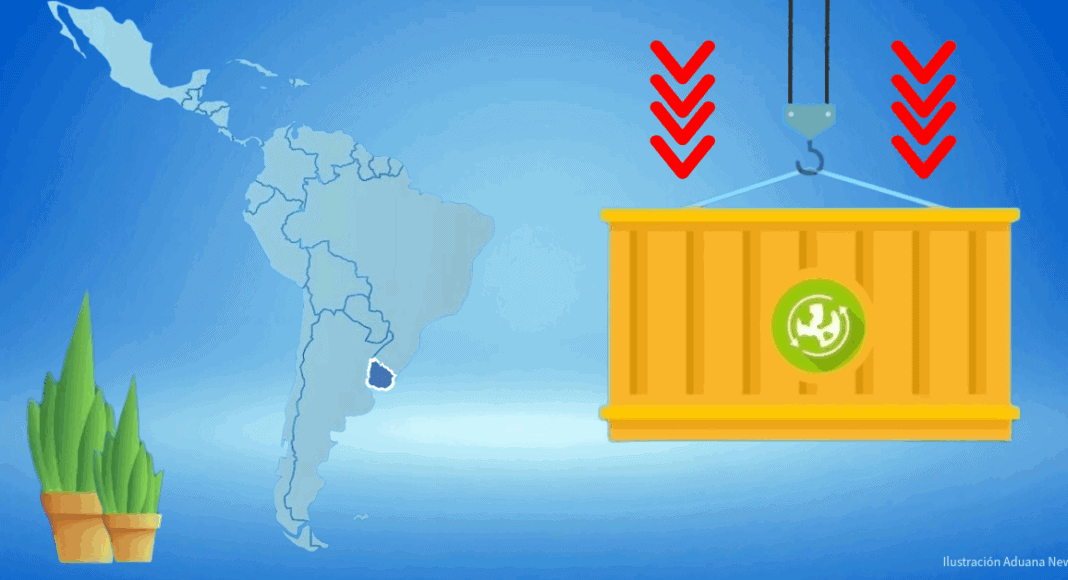

Do we agree that sustainability is not the future? Yes, because it is already the present. Topics of this nature were addressed by various foreign trade experts during the 17th World Meeting on Customs Law, held in Porto, Portugal, last September.
Technological development, climate change, pollution, and resource loss are issues that directly affect foreign trade, as environmental protection is a key element in promoting sustainable growth. 2 In this regard, new initiatives have been developed regarding "structured debates on trade and environmental sustainability," such as trade and climate change, trade and environmental goods and services, the circular economy, and sustainable value chains, as ways to facilitate and promote environmental objectives.
In recent years, the international agenda has placed sustainability at the center of the economic and trade debate. Organizations such as the World Trade Organization (WTO) have begun to more closely link environmental commitments with policies for the trade of goods and services, while the Sustainable Development Goals (SDGs) reinforce the need to integrate sustainability criteria into all dimensions of trade.
At this moment, just days away from two events of great global importance — the 16th UN Conference on Trade and Development, under the theme “Shaping the Future: Driving Economic Transformation for Equitable, Inclusive, and Sustainable Development³ and COP 30 (“Conference of the Parties”)—will address the main challenges of trade and development in a global context marked by economic fragmentation, geopolitical tensions, and the debt crisis. Both events demonstrate that multilateral efforts on environmental issues are a priority in all areas and remain relevant even in a critical global context.
In the case of COP 30, the largest global United Nations event for discussions and negotiations on climate change, which will be held in Belém do Pará, Brazil, Uruguay will assume the coordination of the SUR Group throughout 2025.
This regional group, comprised of Argentina, Brazil, Ecuador, Paraguay, and Uruguay, has established itself as a key player in international climate negotiations. 4 With this strategic position, Uruguay reaffirms its commitment to the global climate agenda, while also contributing to the fight against climate change.
In a previous post, I mentioned that countries are making commitments to environmental protection, acquiring new control mechanisms in their customs operations, in pursuit of more conscious and sustainable trade. Within this framework, in addition to advancing various instruments that regulate the import of goods with a high environmental impact, recycling has also been promoted through tax exemptions, such as the exemption from VAT and IMESI 5 on the definitive import of goods from the Free Trade Zone, customs warehouses, free ports, or free airports, 6 that meet certain requirements.
What is it?
According to Art. 266 of Law 19.996 the Executive Branch has the power “Exempt, in whole or in part, the taxes applicable to the definitive importation of goods from free zones, customs warehouses, free ports or free airports, including the Value Added Tax (VAT) and the Specific Internal Tax (IMESI), provided that the following conditions are met simultaneously:
A) the goods to be imported are waste generated by economic productive activities or are classified as special, in accordance with the provisions of letters C) and H) of article 5 of Law No. 19.829, of September 18, 2019;
B) the importer is an authorized waste manager as such in accordance with current regulations; and C) the goods referred to are intended for recycling or energy recovery.”
This measure promotes recycling management, which in turn can also generate business opportunities for those who develop it.
This law in Uruguay was regulated by Decree 95/2023, which establishes in its article 2 that "In no case may waste imported under this regime be marketed in the market in the same state in which it was imported.In the event of non-compliance, the goods will be taxed under the general regime, with fines and late payment surcharges also being applied. The spirit of the regulation, logically, is to encourage and promote the recycling of these products.
In turn, the waste manager must submit an annual sworn declaration to the Ministry of the Environment regarding the assets exempted by Article 1 of the aforementioned Decree. This sworn declaration must detail the processes and transformations applied to the waste, or part of it, "reporting on the recycling and energy recovery actions, as well as the final waste generated and its final disposal site." 7
Now, the importer must be an authorized waste manager, and to do so, they must process an authorization certificate, which must be transmitted electronically through VUCE to the National Customs Directorate.
Both regulations - Article 266 of Law 19.996 and Decree 95/2023 - were regulated by the National Customs Directorate (DNA)⁸ through General Resolution 52/2023, dated July 20, 2023, whose Annex I details the procedure to follow⁹.
The measure adopted by Uruguay is part of a broader debate in Mercosur and Latin America, where more and more countries are seeking to integrate environmental criteria into their trade policies. Within this context, Argentina, Brazil, and Paraguay have made progress on various waste management initiatives.
In this sense, the Uruguayan experience can serve as a reference for building a more homogeneous regional framework that reduces asymmetries and contributes to consolidating regional value chains based on the circular economy.
- Information prepared from a note https://aduananews.com/oporto-recibe-a-mas-de-300-
experts-at-the-17th-world-meeting-on-customs-law/ - TESSD stands for Trade and Environmental Sustainability Structured Discussions.
- Presentation made by the WTO at the aforementioned meeting. https://unctad.org/es/unctad16#:~:text=y%20Desarrollo%20(UNCTAD16)-
,16%C2%BA%20per%C3%ADodo%20de%20sesiones%20de%20la%20Conferencia%20de%20las,sobre%2
0Comercio%20y%20Desarrollo%20(UNCTAD16)&text=La%2016%C2%AA%20sesi%C3%B3n%20de%20la,f
financial%20and%20of%20world%20trade. - Information obtained from the website https://www.gub.uy/ministerio-ambiente/comunicacion/noticias/uruguay-asume-coordinacion-grupo-sur-2025-cara-cop30-brasil
- VAT: Value Added Tax. IMESI: Specific Internal Tax.
- Art. 266 of Law 19.996
- Art. 3 of Decree 95/2023
- National Customs Directorate.
- Public information available at https://www.aduanas.gub.uy/innovaportal/file/25468/1/rg-52-2023.pdf and regarding the procedure at https://www.gub.uy/direccion-general-impositiva/comunicacion/publicaciones/solicitud-excepcion-importacion-residuos-parte-persona-juridica-decreto

Aduana News foi o primeiro jornal aduaneiro da Argentina a lançar sua versão digital. Com mais de 20 anos de trajetória, suas publicações e iniciativas têm como objetivo oferecer o conhecimento mais relevante sobre temas aduaneiros, contribuindo para a promoção do comércio seguro e da facilitação do comércio na região.

The author holds a degree in International Relations from the University of the Republic of Uruguay. She specialized in Comprehensive Logistics from the Catholic University of Córdoba, Argentina. She has been involved in Foreign Trade since 2011 and has worked in the Inspection Division of the Control and Risk Management Area of the National Customs Directorate in Uruguay since 2014. She received training in Post-Clearance Control from the World Customs Organization in 2016 and has been a speaker on the subject in various workshops and seminars for countries in Latin America and the Caribbean. From 2022 to 2023, she participated in WCO Missions, providing technical assistance in Post-Clearance Audit. She has also been a speaker on risk matters at other Customs authorities, such as SUNAT in 2021, presenting "Commercial fraud according to the WCO and its most significant manifestations","New challenges in risk" before the Secretary of Strategic Intelligence of the State of Uruguay (SIEE) and recently in 2025 regarding "Activities of the National Customs Directorate. Risk Control and Management Area. Inspection Division" within the framework of the Cooperation Project for Economic and Financial Security and the Fight against Organized Crime (SEFILAT).
Current events and constant technological advancement have also motivated her, so she has trained in the use of new technologies that promote trade facilitation, participating in various workshops on innovation in trade facilitation organized by the Global Alliance for Trade Facilitation.