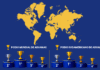
Mercosur is holding its biannual summit in Argentina this week with a revitalized agenda thanks to the historic agreement reached in June with the European Union (EU).
The discussions have been taking place in the city of Santa Fe (about 500 kilometers north of Buenos Aires) since Monday (15.07.2019) with a meeting of the Common Market Group (GMC), the executive body of the bloc founded in 1991 by Argentina, Brazil, Paraguay and Uruguay.
This meeting will serve as preparation for the meeting of the Common Market Council (CMC) on Tuesday, made up of foreign ministers and ministers of the economy, who make their decisions by consensus.
About the agenda
According to official sources who spoke to Efe, the free trade agreement announced on June 28 in Brussels with the EU This will be one of the main topics of the summit, which will bring together on Wednesday the presidents and other high representatives of the members of Mercosur, its associated States (Chile, Colombia, Ecuador, Guyana, Peru and Suriname) and Bolivia, in the process of full accession.
The pact with the Europeans, which has been under negotiation for 19 years, is the great achievement that Argentine President Mauricio Macri will present as the balance of his management at the head of Mercosur during the first half of the year.
At the last meeting of the GMC, in June, the partners reiterated the "need to intensify efforts to modernize and deepen the integration process" and proposed possible changes to the institutional structure to make it "more efficient."
The other big technical issue going on is the review of the common external tariff (CEA), the rate that goods must pay to enter Mercosur and which has been in force for 25 years.
In June, the partners argued at the GMC that this review is "fundamental" for the consolidation of the customs union and pointed out that tariff policy "must promote competitiveness and productivity in the region."
A general reduction in the AEC, particularly for capital goods and intermediate goods imported for manufacturing processes, would make Mercosur more competitive by lowering costs for certain production chains with an export profile.
The agenda of issues on the table also includes proposals to include sugar and automobiles in free trade within the bloc, the elimination of roaming charges within Mercosur and an agreement to facilitate trade within the union.
The external agenda is the most positive this semester, not only because of the historic agreement with the EU, but also because other talks have made progress, the most advanced of which is with the European Free Trade Association (EFTA, made up of Iceland, Norway, Switzerland and Liechtenstein).
In addition to this free trade agreement, Mercosur is negotiating another with Canada, which it hopes to conclude before the end of this year.
The US is also looking to expand its horizons in Asia, aiming to seal a broad trade pact with South Korea in 2020 and making progress in talks with Singapore, which began last April.
Beyond trade issues, at this summit, in which Mauricio Macri will hand over the temporary presidency of Mercosur to Brazilian Jair Bolsonaro, the Venezuelan crisis is also expected to be part of the dialogue between the heads of state, as has occurred in the bloc's recent meetings.
Mercosur suspended Venezuela from full membership in the union in August 2017, considering that there had been a "break in democratic order" in that country by the government of Nicolás Maduro.
But the position of the members of the bloc on Venezuela is not unequivocal, since Uruguay, unlike its partners, has not recognized the head of the National Assembly (Venezuelan Parliament), Juan Guaidó, as the president in charge of that country, a role he has held since last January.
Source: Reuters

Aduana News is the first Argentine customs newspaper to launch its digital version. With 20 years of experience, its publications and initiatives aim to provide the most relevant knowledge on customs issues in order to contribute to safe trade in the region.