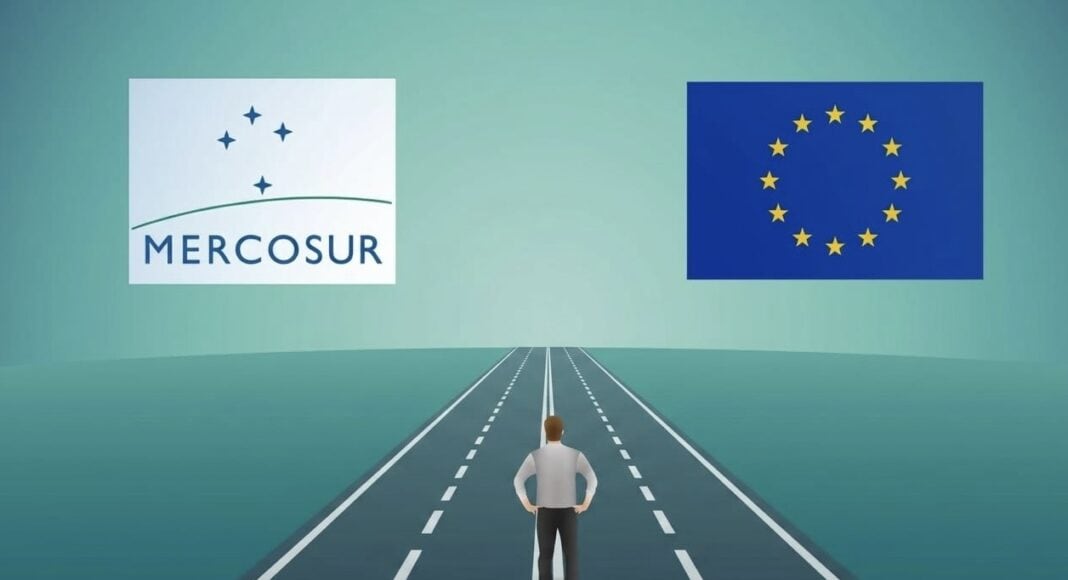

Today, 1 May, It's not just another day.
From today, the agreement between Mercosur and the European Union truly begins to take effect.
Brazil is in the front row. Argentina, on the other hand, is late to the track.
The worrying statistic: only 1 in 9 companies is ready
In recent surveys of the sector, barely 1 in 9 foreign trade companies knows the current status of their product within the agreement: tariff reduction schedule, rules of origin, quota opportunities or competitive threats.
It's not a minor detail.
It's the difference between competing... or watching the race from the sidelines.
Tax relief begins: immediate impact
Starting today:
- A relevant group of products directly drops to 0% tariff
- Another important segment (around 20%) initiates a process of gradual tax reduction which culminates in 4 years in the Making
This isn't theory. It's price. It's competitiveness. It's the market.
European foods are already gaining ground in Argentina:
- Champagne
- Liqueurs
- Pasta (these are not tax-deductible)
With the tariff reduction, that process It's going to accelerate.
Not only because of price, but also because of positioning, brand, and perceived quality.
Textiles: the first visible blow
Some Companies claim they neither export nor import, therefore the agreement doesn't affect them, which is a serious mistake. Trade liberalizations and agreements do influence even companies not directly involved in foreign trade, for example, in sectors like textiles or food.
One of the clearest impacts:
- Clothes, suits, and shirts go from 35% to 27% from today.
- In just one year, about 20%.
This means a substantial drop in effective protectionAnd it opens the door to greater penetration of European fashion, especially French and Italian.
The question is straightforward:
Is the Argentine industry prepared to compete with that level of openness?
Exporting: the opportunity we still don't understand
While we discuss the import impact, there is a huge opportunity on the other side:
- Export quotas with tariff preferences
- Access to one of the most demanding and valuable markets in the world
But a structural problem arises:
Argentina has quotas that it does not use.
The emblematic case is the cheeses to Europe.
Argentina does not exportWhile Brazil is already doing itWe have a quota of 10 million tons, but only Brazil will use it, since there is no strategy to expedite the certification of our cheese companies.
We start from the pits.
It's not an agreement problem.
It's a strategic problem.
Brazil arrives with:
- Informed companies
- Sectoral strategies
- More diversified export experience.
In products such as rice, chicken and beef —where Brazil is much more competitive—, that space appears to be the one that the neighboring country will fill.
Argentina arrives with:
- Ignorance
- Low preparation
- Focus more on defense than offense
That's why the metaphor isn't exaggerated: we're all in the same race, but the preparation of the "car" is different.
The agreement is neither good nor bad in itself.
It's a tool.
The real discussion is something else:
- Who's ready to compete?
- Who will take advantage of the quotas?
- Who understands the rules of the game?
Because the market doesn't wait.
The agreement starts today, and 9 out of 10 companies don't know how it will affect them. In fact, 6 out of 10 say the agreement was supposed to start next year, when it actually starts today.
The opening doesn't give any warning.
He doesn't ask for permission.
He doesn't wait for anyone.
And in this race,
The problem isn't that Europe is accelerating…
The problem is that we haven't started yet.

The author is a Specialist in International Trade and holds a Master's degree in Tax Administration and Public Finance, with a solid academic background and extensive experience in foreign trade and customs policies. He teaches at the National University of Córdoba (UNC) and the Catholic University of Córdoba (UCC), where he lectures on courses related to international trade and trade facilitation. He is also an accredited expert of the World Customs Organization (WCO) and a specialist in trade facilitation.