

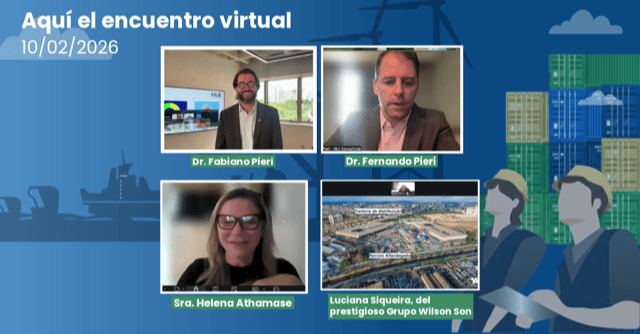
The Authorized Economic Operator (AEO) Program, fundamental to ensuring the efficiency and security of global trade, was the central focus of a virtual meeting held on Tuesday, February 10, 2026 organized by the renowned HLL Customs Consulting in Brazil. Based on information shared during the meeting (*), along with comments from specialists presentThe AEO represents collaboration between customs authorities and companies, promoting a transparent, reliable and resilient business environment.
Its reach transcends borders: in the Americas and the Caribbean region, nearly 19 countries currently have OAS programs, according to the Compendium of Authorised Economic Operator Programmes Prepared by the World Customs Organization.
In Brazil, The OAS Program has been operational since 2014consolidating itself as a strategic tool for foreign trade. This process of institutional strengthening was deepened with the promulgation of the Complementary Law 225, January 8, 2026, which establishes the legal framework of the program.
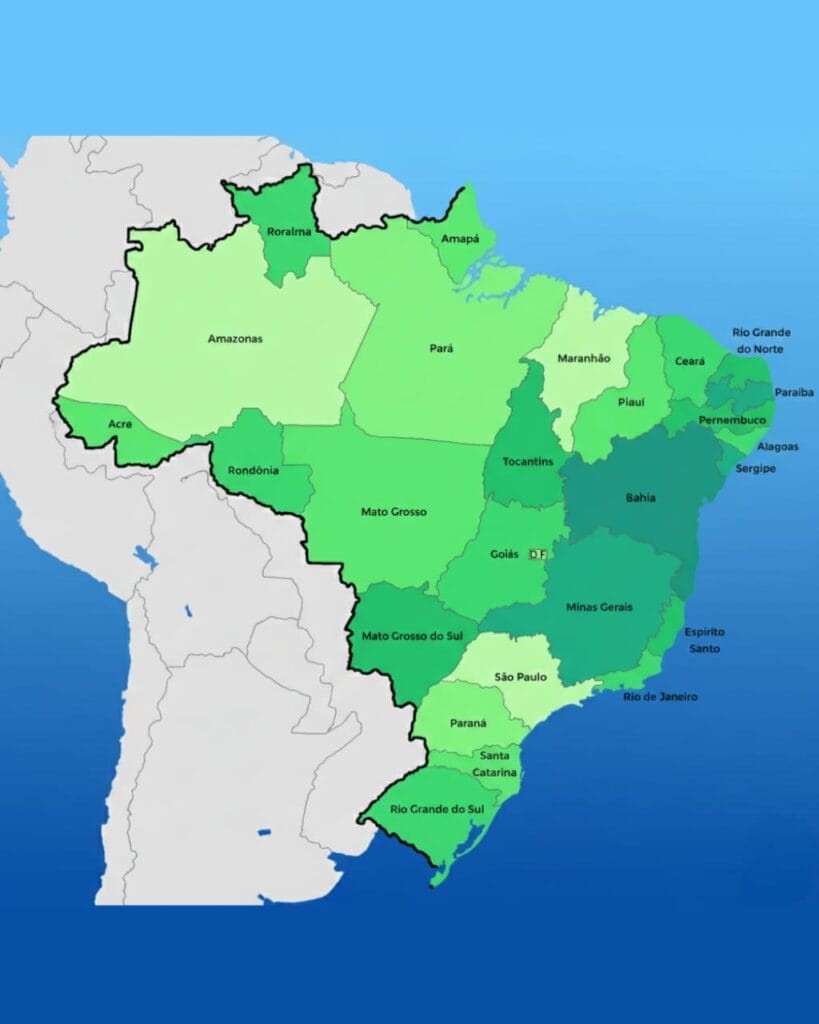
The importance of the event was also reflected in the participation of companies from different parts of the country. With its eight million square kilometers, Brazil has been called a “continental country,” where distances and territorial heterogeneity generate very different economic, cultural, logistical, and regulatory contexts depending on the region: industrialization predominates in the south; extractive and agricultural activities in the north; and in the northwest, although it shares characteristics with the north, there are local particularities that directly impact business operations.
During the opening, the lawyer Fabiano Pieri He highlighted both the diversity of participants and the progress of the AEO program in Brazil: “Around 48% of the companies present do not yet have AEO certification, while 52% already do, demonstrating the tangible benefits of the program.” He added that “its implementation requires the commitment and collaboration of multiple areas within each company, reflecting that the AEO Program is a collective effort that goes beyond customs, tax, or financial matters.”
Legal framework and benefits of the OAS Program
El Dr. Fernando Pieri He addressed the legal and operational framework of the OAS Program, emphasizing its scope: “We are live, showcasing the program and sharing knowledge about its implementation and relevance.”
In this regard, he noted that the publication of the Complementary Law 225/2026 This marks a turning point: the Authorized Economic Operator Program is no longer solely dependent on sub-legal regulations and is now consolidated as an official state policy. This program, one of the oldest of the Receita Federal (Federal Revenue Service), is now integrated, along with Confia and Sintonia, into the Federal Treasury's compliance ecosystem.
To illustrate its relevance in the legal structure And in the Brazilian customs administration, Dr. Pieri reviewed the evolution of the OAS Program Since 2014, he highlighted Complementary Law 225/2026, which provides legal certainty and institutional support. He noted that the program strengthens security in import and export operations, grants international recognition of the Authorized Economic Operator (AEO) certificate, and promotes internal audits and risk management committees. He added that “the Federal Revenue Service's monitoring is continuous; simply obtaining the program is not enough.”
In this regard, the specialist emphasized that risk management is central to maintaining the program: “The company must identify customs risks, implement controls, and ensure the continuity of certification.” The committees allow for “integrating different areas, analyzing changes, and maintaining the standards of compliance and excellence established by the Complementary Law.”
Regarding implementation, Dr. Pieri pointed out that it can be adapted to the context of each company, from an entire department to a committee within a specific area, even in small companies. He also emphasized that the creation of Risk management committees are essential to “ensure good practices, maintain compliance and strengthen trust between customs administration and trusted operators”.
Risk management
El Dr. Fabiano Pieri He then spoke again about risk management, highlighting the diversity of business contexts in Brazil: “Even with unique policies and institutional guidelines, the reality of a company in Rio Grande do Sul is very different from that of one located in the north or northwest of the country.”
He emphasized that the risk management It is the cornerstone of the AEO Program: “The company must understand the customs risks, implement controls and maintain this certification, which is fundamental.”
He noted that we all manage risks in everyday life and that, in companies, the complexity increases due to the diversity of areas: "The perception of the same event varies depending on the department."
The AEO Program's risk management is based on the WCO SAFE Framework and ISO 31.000, which provide international principles and guidelines applicable to any organization. According to Pieri, the program divides risk management into two areas: security, focused on the export flow, and compliance, focused on import processes.
Regarding multidisciplinary committees, Pieri clarified: “They are essential for integrating areas, maintaining consistency, and adapting to change. Their structure depends on the size of the company and can range from a committee within a department to an entire department. The important thing is that they function effectively, with regular meetings and monitoring through key performance indicators.”
He also emphasized the importance of carefully selecting participants and external support, and noted that Complementary Law 225 consolidates the OAS Program, allowing committees to assess internal and external risks.
Risk management from the Federal Revenue Service
Helena AthamaseA former auditor from the Receita Federal (Federal Revenue Service) shared her experience in risk management and compliance within the AEO Program. She emphasized that Risk management must be practical and operational, not just documentary."When the operation, the adhesion tests and the historical analysis of the Receita are aligned, with validation and monitoring, we are on the right track."
He pointed out common errors, such as risk matrices created only to meet requirements, lack of effective controls, action plans without responsible parties or deadlines, and third parties outside the company's control.
He stressed that the focus should be on risks that could lead to violations and that the existence of an active committee is crucial: “It must implement and monitor the process, demonstrate effectiveness to the Federal Revenue Service, and continuously review procedures and audits to improve risk management.”
Case study: Santo André Customs Industrial Logistics Center
In line with Helena Athamase's recommendations, the seminar included a case study presented by Luciana Siqueira, regarding the implementation of the OAS Program in the Santo André Customs Industrial Logistics Center, of the prestigious Wilson Sons GroupWith 120 square meters and 180 years of history, the center functions as a dry port that allows complete logistics operations, storage, distribution and, in some cases, reprocessing of merchandise, becoming a key node for regional logistics.
Luciana highlighted the formalization of processes: “Everything is based on risk management, legal compliance and well-documented procedures, so that operations do not depend solely on individual knowledge, but are maintained over time.”
Regarding the certified structure, he explained: “Our center handles both domestic and nationalized cargo, and the customs zone was certified for security. Risk mapping and identification demonstrated to the inspectors that operations do not interfere with each other, ensuring compliance with the AEO requirements.”
Regarding the risk matrix and committees, he noted: “HLL recommended that we create a specific matrix for AEO risks. We identified threats such as cargo contamination, regulatory non-compliance, media exposure, and cyberattacks. This matrix is analyzed by our committees, which ensures risk monitoring and mitigation.”
Luciana also highlighted the integration with other certifications: “In 2025 we obtained the AEO certification along with ISO 45.000, on health and safety. Our quality management system ensures the traceability of documentation, and we carry out internal and external audits, including of our service providers.”
Regarding the current risk assessment, he explained: “The matrix includes 33 risks: 4 in the orange zone (high concern), 27 in yellow (moderate risk), and 2 in green (acceptable risk). During the certification process, it was crucial to maintain evidence compatible with the previous standard and align the processes with the new regulation.”
Thus, the meeting concluded by highlighting how Complementary Law 225/2026 improves the AEO Program, consolidating it as a strategic instrument for the competitiveness of Brazilian foreign trade, aligning the country with best practices, the WCO SAFE Framework and Pillar 2, which promotes cooperation between customs and companies to strengthen supply chain security.
This publication seeks to reflect the experience of the AEO program in Brazil and its contribution to strengthening trade facilitation in the region.
(*) The coverage was done by María Elsa Coronel for Aduana News.

Aduana News foi o primeiro jornal aduaneiro da Argentina a lançar sua versão digital. Com mais de 20 anos de trajetória, suas publicações e iniciativas têm como objetivo oferecer o conhecimento mais relevante sobre temas aduaneiros, contribuindo para a promoção do comércio seguro e da facilitação do comércio na região.