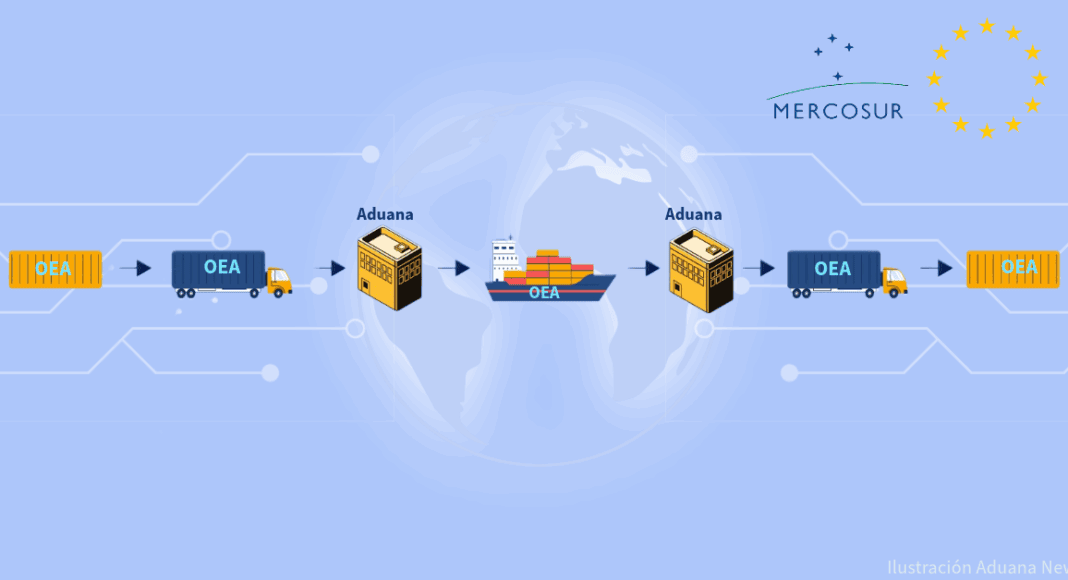
Since joining the World Customs Organization's SAFE Framework, the program of Authorized Economic Operator (AEO) Security, onwards OAS, constitutes a international standard of the Supply chain security and customs compliance based on best practices in international trade. Its design follows a clear logic: Strengthen trust between the private sector and customs administrations, promoting more predictable, transparent and secure operators.
However, in many markets The private sector's perception is ambivalent.While some sectors value certification OEA as a tool to improve the security of the international logistics chain and the integrity of the merchandise, in other areas a recurring idea is repeated: “Certification is attractive, but the concrete benefits do not always compensate for the investment and effort it demands.”
This interpretation, from my perspective, tends to rely on a short-term view focused primarily on operational benefits. However, in various business and academic forums, the analysis of the true scope of OEA shows that Qualitative or intangible benefits are as relevant—or even more so—than quantitative ones.. The OEA It is not limited to optimizing time, costs, or controls: it constitutes a Certification of excellence in security, process efficiency and compliance, applied to international business.
The main challenge for companies is that these intangible benefitsAlthough strategically relevant, they are not always easily identifiable or measurable in management contexts dominated by pressures to obtain immediate economic or financial results.
One of the distinctive features of the OAS program is its voluntary characterThis is not a regulatory requirement, but a strategic decision of the foreign trade operator to adopt standards higher than the legal minimums. This condition reinforces its reputational and economic value, as it demonstrates a proactive commitment to the security, compliance and responsible management of international trade, particularly relevant and valued at mature markets by business partners and investors.
The AEO, therefore, transcends the logic of trade facilitation to consolidate itself as a strategic certification of excellencewhich strengthens the operating efficiency, raises the management standards and requires the implementation of robust compliance programs applied to international trade.
The changing context: trade agreements and the redefinition of value
The international landscape is undergoing rapid transformation. The advance of Free Trade Agreement between the European Union and MERCOSUR It redefines the rules of the game for companies in the region and strategically revalues the AEO certification as a key asset for competitiveness and risk management.
A free trade agreement It is not limited to tariff reductionsIt also involves the construction of a common rules framework, higher legal predictability, regulatory harmonization and increasing commitments in technical, regulatory and compliance standardsIn this context, modern trade agreements operate as systemic risk management tools, bringing certainty and stability to international economic relations.
As is often the case in international trade, It is not the tool that gains or loses relevance, but the economic, regulatory, and geopolitical context. in which it is applied. In scenarios of greater integration with highly regulated markets, the Trust ceases to be a reputational attribute to transform into a objective condition of access, permanence and scalability in international value chains.
OEA: Validation of reliability and business reputation
El OEA It is, in essence, a comprehensive validation of reliability of a company within the international logistics chain. To obtain certification, operators must demonstrate, among other aspects, robustness and consistency in customs processes; sustained tax, financial and regulatory compliance; effective risk management systems; physical, documentary and information security; operational traceability and internal control, among others.
In other words, the OEA It demonstrates a capability that is central to global trade today: to operate in a predictable, safe and transparent manner in complex environments.
Until now, many operators did not perceive this certification as a direct commercial advantageThe traditional benefits—fewer controls, better relations with Customs, greater operational agility—were valued, but were not always decisive from a strictly commercial perspective.
Europe: regulation, risk and reputation
The European Union is a highly attractive market because of its economic dimension and the high purchasing power of its populationbut it also constitutes one of the most demanding regulatory environments in the worldAccessing it involves complying with a complex network of technical, sanitary and phytosanitary regulations., sustainability and traceability standards, environmental and social regulations, as well as high requirements of customs and trade compliance, supply chain security, rules of origin, due diligence y Risk management.
In this context, the OAS acquires a new strategic dimensionFor companies exporting from MERCOSUR, the AEO certification offers their European counterparts a competitive advantage: institutionalized trustIt's not just a reliable supplier based on its business history, but a company that has been evaluated, audited and validated by a customs authority, under standards aligned with international frameworks of the World Customs Organization.
In this way, AEO certified companies enter a “trusted zone”, which reduces costs of due diligenceIt simplifies business decisions and reduces operational friction within highly regulated supply chains, transforming certification into a specific competitive advantage.
This demonstrates that, The intelligent use of tools related to international trade allows companies to go beyond regulatory compliance and actively contribute to business sustainability..
This process takes on even greater relevance from a regional perspectiveLatin American countries that have had for years trade agreements in force with the European Union have operated with a structural advantage in terms of access and predictability. In the new scenario, the AEO certification allows MERCOSUR companies to shorten that competitive gapoffering European importers a comparable standard of reliability, security and compliance.
However, it is key to point out that, while the AEO certification improves access and positioning in the European market, It is not a sole or exclusive requirementSustainable accession to the European Union requires a broader and more coherent approach to regulatory compliance. Within this framework, the Authorized Economic Operator (AEO) should be understood as a strategic tool within a comprehensive approach to compliance and international competitivenessand not as an end in itself.
The impact on SMEs in MERCOSUR
For SMEs of MERCOSURthe agreement with the European Union It opens a historic opportunity, but also poses a significant challenge: compete in a highly professionalized and regulated market.
In this scenario, the OAS consolidates its position as a strategic enabler of international accessby reducing competitive asymmetries against large global operators, strengthens the perception of reliability before European counterparts and anticipate regulatory requirements typical of highly regulated markets and acts as a prior credential in instances of “due diligence”.
In the SMEsto have the certification OEA It does not only involve complying with local customs; In strategic terms, this means speaking the same language that mature markets demand.
Beyond the specific benefits, this is a concrete example of how participation in international trade not only impacts exports and imports, but also It produces positive externalities on the local marketdriving process improvements, raising operational standards, and strengthening business professionalization.
From operating profit to strategic asset
The ongoing transformation is, above all, conceptual and strategic. The OEA It would cease to be an instrument associated with operational efficiencies and would instead consolidate itself as a international positioning tool, an differentiating factor within global value chains or with a relevant intangible asset in commercial negotiations and risk management.
In the context of the EU-MERCOSUR agreement, it is reasonable to anticipate that AEO-certified companies will be in a better position to to integrate with greater predictability, less friction, and greater speedwhile those without this certification will face stricter regulatory requirements, strengthened controls, and increasing adaptation costs.
In this scenario, the key will not be to react when the agreement fully enters into force, but to have anticipated the strategic decisions necessary to be prepared from the first day of operationThe AEO certification must therefore be managed as soon as possiblewith a medium and long-term vision, as part of a strategy for access and sustainable positioning in the European market.
From the private sector's perspective, trade facilitation tools are not an ancillary compliance measure, but rather a direct investment in business competitiveness and resilience. Instruments such as the OEA permiten reduce operational uncertainty, anticipate risks, optimize hidden costs, and strengthen corporate reputation in front of international partners.
In an increasingly regulated, selective, and complex global environment, facilitating trade no longer means operating faster: This means better risk management, protecting the business, and ensuring continued access to markets..

The author is a professional with over 40 years of experience in international trade, specializing in global supply chain and customs compliance. He serves as Director of the Center of Excellence in International Trade and Customs Compliance for Latin America at Bayer; Vice President of the Global Commission on Customs and Trade Facilitation of the International Chamber of Commerce (ICC), based in Paris; and President of the ICC Customs and Trade Facilitation Commission – Argentina Chapter. He is a member of the World Customs Organization's (WCO) Private Sector Regional Group for the Americas and the Caribbean and a Director of the Argentine Chamber of Exporters (CERA). He holds a degree in International Trade, is a licensed Customs Broker, and has a postgraduate degree in Strategic Management of International Trade.