El Salvador has the lowest average customs clearance time in Latin America, at around three days per export shipment, according to a book published in 2025 by the Inter-American Development Bank (IDB). This data is part of a broader analysis of competitiveness, institutional efficiency, and market functioning in the region.
The publication, titled «Markets and development: how competition can improve lives"It proposes a comprehensive view of thereforms needed to strengthen competition in Latin America and the Caribbean. Beyond antitrust laws, the IDB analyzes the barriers that limit the functioning of markets, such as regulatory burdens, infrastructure deficits, trade restrictions, and institutional weaknesses.
In this context, the organization emphasizes that strengthening the State's capacity and designing effective public policies is key to promoting competition, innovation and employment, and underlines that advancing these reforms requires "solid evidence" that allows identifying obstacles and measuring concrete impacts, such as border clearance times.
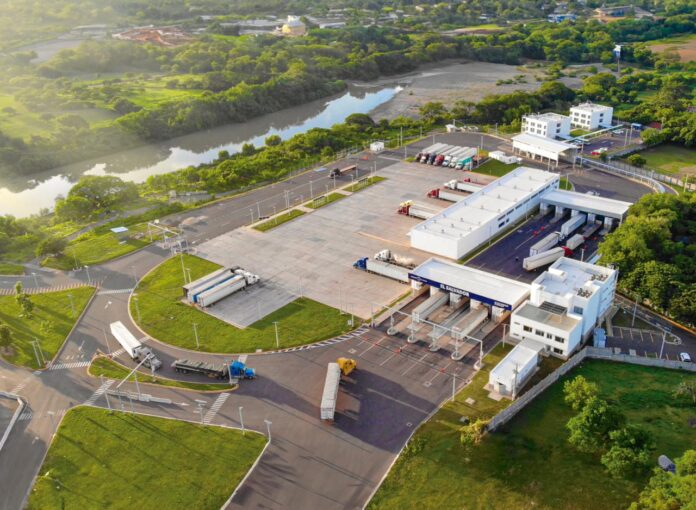
Along those lines, the IDB explains that the performance of El Salvador is the result of investments in border infrastructure, modernization of processes and trade facilitation policies implemented in recent years, which puts the country below the five-day threshold in average dispatch times.
This can be visualized in an IDB graph, which measures the average number of days it takes for an export shipment to clear customs from its final point of national departure. In it, El Salvador appears in first position, with a time close to three days, along with Uruguay and Guatemala, while most countries in Latin America and the Caribbean exceed that record.
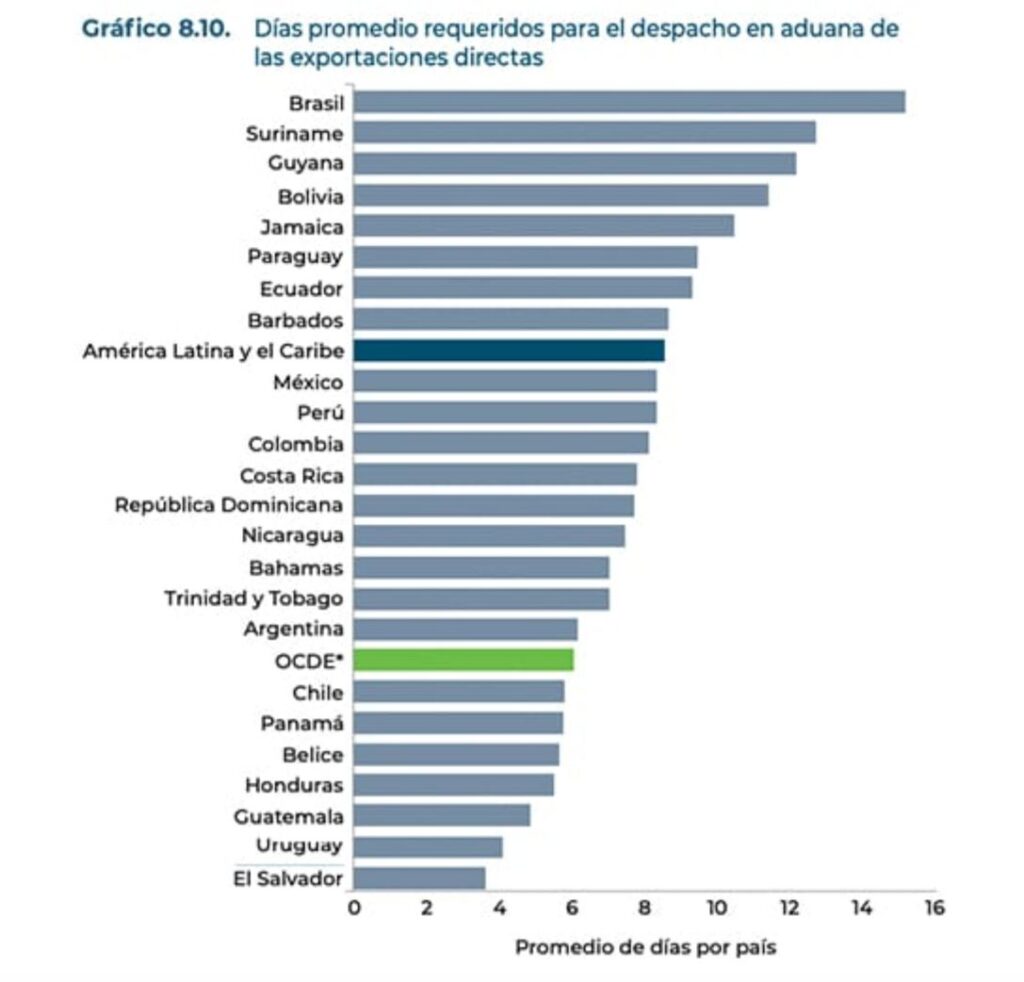
In explaining this measurement, the IDB points out that the indicator reflects “procedural delays and administrative efficiency in export processing,” and warns that Prolonged border crossing times act as non-tariff barriers that increase the cost of trade and reduce competitiveness. In contrast, countries with more efficient customs clearance processes achieve greater integration into international markets and better conditions for their businesses. Economies like Brazil, Guyana, and Suriname face delays exceeding 10 days, which, according to the IDB, “increases the cost of exports, especially for smaller and less connected companies,” and can weaken their competitive edge.
The organization also points out that Trade facilitation has direct effects on competition and prices: “Simplifying border procedures can reduce shipping times and reinforce the pro-competitive effects of trade liberalization,” and notes that borders can cease to be “costly bottlenecks” and become “efficient gateways.”
This result coincides with the actions carried out by the General Directorate of Customs (DGA) in recent years, which include the modernization of the border crossings of Las Chinamas, San Cristóbal and La Hachadura, the integration of border posts with Guatemala and Honduras, The implementation of Mutual Recognition Agreements (MRAs) and tools such as the Advance Declaration of Goods have contributed to reducing waiting times at the border, according to the IDB.
The document can be downloaded in [format] PDF.

Aduana News foi o primeiro jornal aduaneiro da Argentina a lançar sua versão digital. Com mais de 20 anos de trajetória, suas publicações e iniciativas têm como objetivo oferecer o conhecimento mais relevante sobre temas aduaneiros, contribuindo para a promoção do comércio seguro e da facilitação do comércio na região.