Argentine President Mauricio Macri and his Bolivian counterpart Evo Morales made progress on Monday (22.4.2019) in Buenos Aires on bilateral cooperation in fields such as energy and technology, and praised the historical and cultural ties that unite the two neighboring countries.
In a joint statement at the Casa Rosada, the leaders reviewed the topics that were the focus of the meetings they led together with political and technical delegations during Morales' first visit to his counterpart since he became President in December 2015.
"This visit, dear President, is being undertaken within the framework of the deep and historic friendship that exists between our countries," the Argentine head of state told reporters in the White Room of the Casa Rosada.
In the morning, both presidents met in the Buenos Aires town of El Palomar, where they talked about energy and saw an Argentine Air Force plane. which is sought to be sold to Bolivia through a joint training program.
Morales, along with his counterpart, expressed his surprise at the aircraft and stressed that since "previous administrations" his country has begun to acquire Argentine technology, such as airplanes for the Army or ambulances.
"With the brother president we have agreed, for example, to build three hospitals for nuclear medicine, all with Argentine technology," said the Bolivian president, convinced that both countries have the "obligation" to seek this type of transfer as Latin American states.
Morales stressed that for the first time in Bolivia's history, the industrialization of its natural resources has begun, and he regretted that most of the technology comes from Europe, Asia or North America, but "very little from Brazil and Argentina."
Regarding negotiations for Argentina's Pampa III aircraft, Morales said that a technical team from his country will arrive to negotiate the acquisition.
On the other hand, in terms of energy, Bolivia, through the National Electricity Company of Bolivia (ENDE), is already authorized to operate in the Argentine electrical system.
The state-owned Yacimientos Petrolíferos Fiscales Bolivianos (YPFB) will also be able to sell natural gas directly in Argentina through private Argentine companies.
"Negotiations are progressing very well. YPFB will participate in the investment of plants destined for export"Morales added.
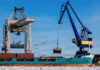
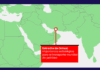
Macri said that, in addition to energy, the bilateral talks will also discuss "important issues" for the future of both countries, such as hospital equipment, the Paraguay-Paraná waterway to the Atlantic - shared by Argentina, Bolivia, Brazil and Paraguay - and commercial and cultural exchanges.
The presidents agreed to relocate the free zone granted to Bolivia in the city of Rosario - on the banks of the Paraná River - to give it greater functionality and strengthen Bolivian trade through the waterway, to connect with the Atlantic.
Bolivia and Argentina will also work on scientific cooperation to strengthen the development of biofuels.
Morales praised Argentina for providing "facilities" to his compatriots who come to work and "contribute" to the productive sector, such as brick manufacturing, and acknowledged that during the hours he has been in the country he has heard of "some problems" in the textile sector.
"There will always be problems that we will have as migrant communities," he emphasized.
The Bolivian president has been in Buenos Aires since Sunday and had a meeting with the Bolivian community living in Argentina.
Argentina – Bolivia: Joint statement ???? https://t.co/Y4YZInhfI7 pic.twitter.com/MNtvukg2HY
- Argentine Foreign Ministry ?? (@CancilleriaARG) April 22th 2019

Aduana News is the first Argentine customs newspaper to launch its digital version. With 20 years of experience, its publications and initiatives aim to provide the most relevant knowledge on customs issues in order to contribute to safe trade in the region.