




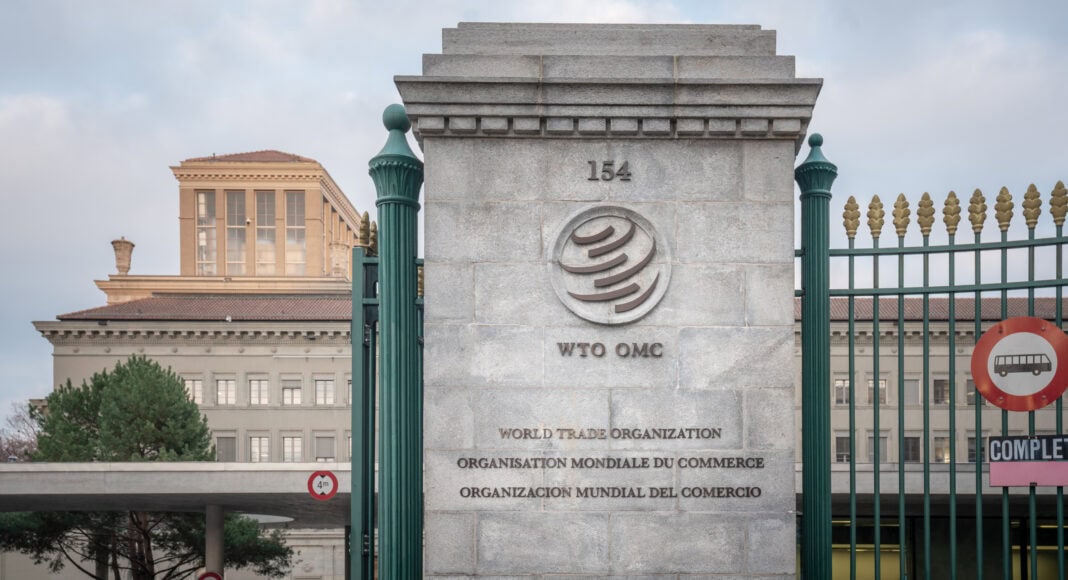

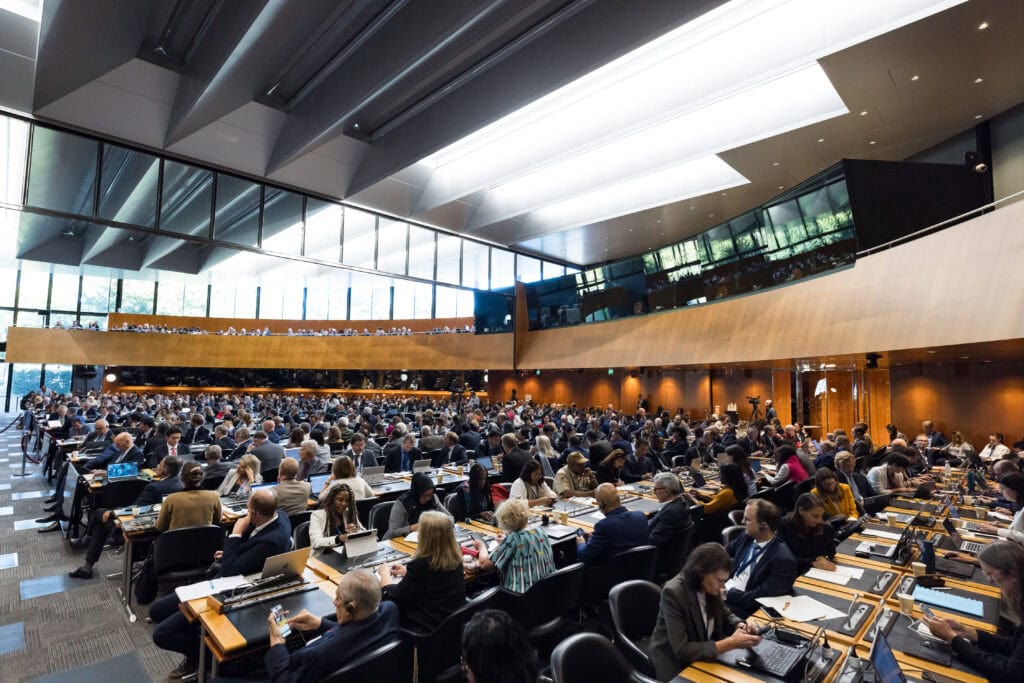
Last week, the Public Forum 2025 of the World Trade Organization (WTO), entitled “Increase, Create and Preserve"" once again brought together participants from around the world interested in various aspects of international trade. This event, the WTO's largest international outreach event, provides representatives of civil society, academia, business, governments, international organizations, and the media with the opportunity to learn about the latest developments in global trade and discuss strategies to strengthen the multilateral system. Since its first edition in 2001, the Forum has established itself as a forum for analyzing the challenges and opportunities of international trade.
In this framework, the September 17 a was carried out featured session for customs, entitled "“Seamless package flow: How digital customs are driving inclusive e-commerce” (*), organized jointly with the World Customs Organization (WCO).
The meeting addressed the rapid growth of cross-border e-commerce, which is driving customs to reinvent border management through disruptive technologies. These tools, already in use or under development, seek to make borders smarter and more agile, while ensuring transparency and security in the flow of goods.
During the session, concrete examples were presented of how these cutting-edge technologies shorten delivery times, reduce costs, and open international markets to micro, small, and medium-sized enterprises (MSMEs).
The panel was moderated by Carolina Acosta Ramos, associate professor of law at the Universidad Externado de Colombia, and featured the participation of prominent figures from the public and private sectors:
- Claire Alexandre, Head of International Government Relations at PayPal Holdings Inc.
- Yingjie Dang, Director General of the Ningbo Customs, China.
- Christian Lemke, Digitalization Technical Officer at the OMA.
- Roy Santana, Senior Advisor to the Market Access Division of the OMC.
The voice of the experts
Experts noted that digitalization of customs is essential to streamline operations, ensure effective controls, and promote inclusive e-commerce. In detail:
Christian Lemke, of the WCO, He explained that international standards for e-commerce have transformed the management of millions of low-value shipments.The introduction of advance electronic data and simplified declarations reduces friction and facilitates more accurate risk assessments. This allows customs to concentrate their capacity on more complex operations and quickly release low-risk shipments., he said. The WCO leads the development of data models for interoperability between customs agencies, highlighting that if each agency develops separate systems that don't communicate with each other, this creates unnecessary delays and costs; international standards aim to overcome precisely this challenge.
China Case: From a national perspective, Yingjie Dang recounted China’s experience in adopting artificial intelligence, digital signatures, and a one-stop shop system.Today, we can process and release low-risk shipments on the same day, even during peak demand periods. However, data quality remains our biggest challenge, so we need close collaboration with trading platforms and logistics operators."s," he said. He also highlighted the use of image analysis and big data to speed up dispatches and minimize interference with low-risk shipments.
Digital payments and predictability: Claire Alexandre highlighted that ““There is no trade without payments.” According to their analysis, digital systems are crucial for SMEs to access international markets.When payments are integrated with customs information, exporters reduce uncertainty about currencies, taxes and unexpected charges, resulting in predictability and confidence..In addition, the use of tools such as instant payments and stablecoins –Cryptocurrencies whose value remains stable by being linked to assets such as fiat currencies. can accelerate settlement and reduce costs, creating a more trustworthy ecosystem for businesses and consumers."
Facilitation and clear rules: WTO's Roy Santana stressed that customs digitalization complements the commitments of the Trade Facilitation Agreement (TFA).Transparency, predictability and efficiency are not just abstract principles: they are the necessary conditions for e-commerce to become a real driver of economic inclusion."," he stated. He noted that the TFA establishes binding rules for all 164 WTO members, includes specific provisions for express shipments, and created a Trade Facilitation Committee that meets regularly to share experiences and identify good practices. He also highlighted the Joint Initiative on E-Commerce, promoted by 71 members, which is advancing more detailed rules to improve operations and international cooperation.
Ian Saunders' Global Perspective
For his part, Ian Saunders, Secretary General of the WCO, highlighted on his social network: “The WTO 2025 Public Forum brought together 4.500 people interested in all aspects of trade. Customs is at the intersection of trade policy intent and its real-world impact. Transparency of requirements, predictability of processing, clearance efficiency, and the suppression of crime are aspects that Customs administrations strive to achieve daily. The Forum confirmed that, as important as trade, so are Customs.".
This message reinforces the idea that digital customs not only facilitate trade, but are also a central element for the effective implementation of trade policies around the world.
Consensuses and challenges
The panel agreed that digitalization: It speeds up clearance times, especially for low-value shipments; it improves cooperation between customs, trading platforms, and postal operators, and it also strengthens consumer and regulatory confidence.
Among the pending challenges were:: improve data quality, reduce the digital divide in customs in developing countries, ensure interoperability between systems, and strengthen privacy and cybersecurity protections.
In conclusion, WTO experts noted that digital customs are no longer an option, but an indispensable condition for agile and inclusive e-commerce. "The challenge is to extend these practices globally and ensure that SMEs and economies with less technological infrastructure can also benefit from this transformation.", Acosta Ramos summarized at the end of the meeting.
(*) Audio is available here.

Aduana News foi o primeiro jornal aduaneiro da Argentina a lançar sua versão digital. Com mais de 20 anos de trajetória, suas publicações e iniciativas têm como objetivo oferecer o conhecimento mais relevante sobre temas aduaneiros, contribuindo para a promoção do comércio seguro e da facilitação do comércio na região.








