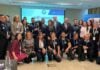
The World Customs Organization (WCO) and the World Trade Organization (WTO) held a meeting on Monday (17.10.2022) Joint workshop to examine the periodic update of the Harmonized System (HS), the international nomenclature that allows countries to classify traded goods in a standardized manner, organizers said.
The workshop also included discussions on how updates to the Harmonized System may impact legal instruments that record tariffs and other commitments of WTO members on trade in goods, in particular schedules of concessions.
The workshop responded to members' interest in developing the capacity and experience of the Market Access Committee on matters related to the Harmonized System and in better understanding the interrelations between the work carried out on this topic by both bodies.
El Committee Chairperson Kenya Uehara (Japan), stressed that the Harmonized System plays a key role in facilitating cross-border trade by providing a universal language for the coding and classification of goods. Currently, 211 economies use the Harmonized System and more than 98% of merchandise trade is classified in terms of the same. Changes in its nomenclature may have an impact on the rights and obligations of WTO members, particularly with respect to their tariff commitments.
The Harmonized System is regularly updated in light of evolving technology and changing trade patterns. The latest set of amendments (HS 2022) came into force on 1 January 2022 and introduced significant changes across a wide range of products. It also addressed current global environmental and social issues, such as health and safety, social protection and the fight against illicit trade and terrorism.
The President noted that as the Harmonized System evolves, WTO members must incorporate such changes into their national tariff nomenclature and update their WTO schedules of concessions, referred to as "lists of goods«. This exercise is called “transposition"in WTO jargon and is carried out in the multilateral review process of the Harmonized System by the Market Access Committee.
“It is of utmost importance to ensure transparency and predictability in trade, as it allows members and the trading community to compare the obligations undertaken by WTO members with the trade regimes they apply in practice,” said Uehara.
The workshop was organized in four sessions. In the first session, Gael Grooby, Deputy Director for Tariffs and Trade Affairs at the WCO, provided an overview of the procedures for amending the Harmonized System, in particular the most recentefficient (SA2022), and described the main reasons behind the SA updates.
These include recognizing changes in the commercial value of certain goods, as well as clarifying classification issues and reflecting goods restricted, monitored or controlled in international agreements. They also include recognition of societal needs and any other needs that lead a member or an international governmental organization to make a proposal for an update.
La second session provided representatives of WTO members with the opportunity to share their experience with the implementation of national level of the Harmonized System 2022 amendments. Cambodia, China, Ecuador, Maldives and the United States took the floor to provide concrete examples of their experiences and described the main challenges they face with the implementation of HS2022. They also explained how the coordination inter-institutional and how other actors, such as the private sector, are involved in this process.
In third session, the WTO Secretariat gave an introduction on the work of transposition to the Harmonized System in the Market Access Committee and on the technical work behind the preparation of the transposition files to the Harmonized System.
Finally, the fourth session allowed the WCO to speak in more detail about the next cycle of revision of the Harmonized System (SA2027), which is currently being negotiated at the WCO
“This workshop has strengthened our understanding of the Harmonized System transposition process, which should also help members to proceed with the adoption of HS 2022 at the national level and also to prepare for preparing and reviewing HS 2022 transposition files in the Committee,” said the Chairperson in closing the workshop.
The WTO recalled that the review of the Harmonized System is carried out on a five-year cycle, starting once the WCO Council approves the edition that has just been completed. The 2022 edition was approved in June 2019 (to enter into force in 2022) and the review cycle for the 2027 edition started in the second half of 2019. The last voting meeting of the HS Committee is scheduled for March 2024 and the last HS meeting of 2027. The recommendation to the WCO Council is scheduled for June 2024.

Aduana News foi o primeiro jornal aduaneiro da Argentina a lançar sua versão digital. Com mais de 20 anos de trajetória, suas publicações e iniciativas têm como objetivo oferecer o conhecimento mais relevante sobre temas aduaneiros, contribuindo para a promoção do comércio seguro e da facilitação do comércio na região.