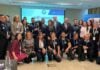
The achievements of the World Customs Organization (WCO) since its creation are many; however, given the uncertain international context of the year that begins, the challenges ahead are significant. For this reason, the Deputy Secretary General of the WCO, Ricardo Treviño, spoke about “Challenges and perspectives of customs in the world” on Tuesday (18.01.2022), at an event organized by the Confederation of Customs Agents of the Mexican Republic.
In an effort to respond effectively to the ever-changing global environment, the Under-Secretary-General outlined an analysis that covered six dimensions: political, economic, social, technological, legal and environmental, which were identified through regional consultations with its 183 members.
“The WCO has a fundamental role to play in strengthening the role of customs in the world,” said the official at the opening of the meeting, which was held virtually. He also maintained that “at the national level, agencies have to find their own spaces in government structures to have more influence as trusted advisors to their governments.”
Treviño stated, in this regard, that since the political perspective The WCO is seeing that “customs, by not being represented at ministerial or secretariat level, lose the visibility and political strength required to obtain resources or other benefits in strategic plans.”
“At the international level, we see a key challenge for multilateralism and the WCO in particular,” said the official. In this context, he explained that “through the coordinated response to the pandemic, multilateralism can move forward again and overcome the attacks that have been occurring with protectionist tendencies.”
Also, on the economic perspectiveTreviño stated that “customs have a role in promoting economic growth and their relationship with international trade is direct.”
“We are in full recovery after the fall we had at the beginning of 2020 with the pandemic, this recovery has been more positive than initially expected,” said the official. After illustrating various economic indicators, he observed the impact of the growth of electronic commerce. In this sense, he pointed out that “customs have great challenges to continue promoting international trade and facilitating the flow of goods through this new form of exchange that is here to stay.”
On the other hand, he referred to the social perspective, that is, the balance that customs must achieve between facilitation and control.
“Protecting society is the most important role of customs, which is reflected in that dichotomy,” Treviño said, proposing tools such as risk analysis and the use of technologies for efficient and effective management. He also provided details of STOP II enforcement operations in response to the role of customs in facilitating cross-border trafficking of medicines and vaccines in critical situations, from December 2020. And he referred to seizures of counterfeit and unauthorized face masks and hand sanitizers during Operation Pangea, from May 2020, a collaborative enforcement effort by the WCO, customs administrations and other international law enforcement agencies.
Regarding the technological perspective, Treviño highlighted the range of technologies used in trade and those that generate the most transformative impact based on a global survey conducted by the WCO and the World Economic Forum. The survey was conducted to understand how companies are currently using technologies in the international market, the value chain and assess which will have the most significant impact on global trade. Based on this, the official detailed that the most transformative technologies are found in e-commerce/digital payment, cloud computing, IoT, smart border systems, digital services, blockchain and AI.
“The survey also highlighted that the technologies that have been most adapted are those that have contributed to the resilience of the supply chain,” said the official, warning that “customs must contribute to this objective.” In this regard, he said that the challenges are regulation for the use of technologies, staff training and cybersecurity.
Continuing with the dissertation, Treviño referred to the legal perspective. He said that the Organization is seeking to develop new international standards to incorporate the developments currently seen in international trade. He recalled that “the Kyoto Convention is 20 years old, while the Harmonized System is 30 years old.”
At the same time he explained the environmental perspectiveHe said that “the number of endangered wildlife species has doubled and there is significant illegal trafficking”; for this reason, strategically located at the borders, customs play a crucial role.
He added that China, along with other countries, has decided to restrict international trade in plastic waste to help address inappropriate disposal and reduce its leakage into the environment.
“This leads to an increase in illegal cross-border movements of plastic waste,” he added. He encouraged the resumption of the Green Customs initiative to respond appropriately to the scourge of plastic waste, as well as to the global objectives of the United Nations to prevent the deterioration of the planet.
Finally, the The Deputy Secretary General said that in June these priorities will bes will be implemented in the Strategic Plan from 2022 to 2025 to ensure the continued role of the WCO as the only international organization fully focused on setting international standards for customs procedures, fostering cooperation between customs and providing customs capacity building to its 183 members.

Aduana News foi o primeiro jornal aduaneiro da Argentina a lançar sua versão digital. Com mais de 20 anos de trajetória, suas publicações e iniciativas têm como objetivo oferecer o conhecimento mais relevante sobre temas aduaneiros, contribuindo para a promoção do comércio seguro e da facilitação do comércio na região.