We cannot afford not to inform the public about how to combat corruption: "information is the first step towards oversight," one of the key concepts this week. In this context, and on the occasion of International Anti-Corruption Day, Uruguay's National Customs Directorate celebrated the December 9 Its Second Day of Integrity and Transparency, with more than 300 participants, reaffirming the commitment of the public and private sectors to ethics and transparency in customs management.
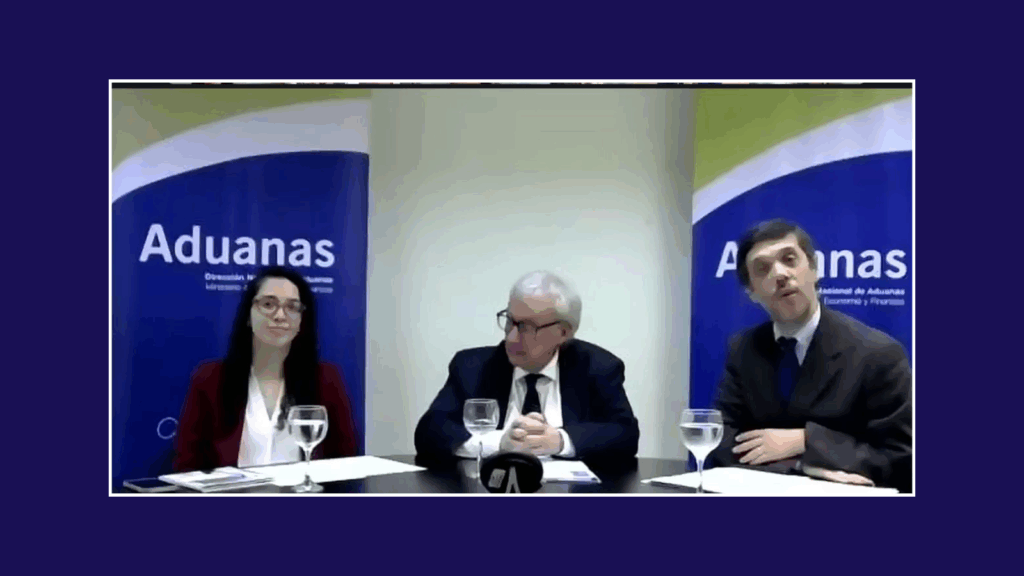
The following are the key points of the day:
Ethics as a central axis
For Mr. Joaquín SerraThe National Director of Customs stated that “public ethics is an essential pillar for protecting society and strengthening citizen trust”; in this regard, he emphasized that “in the face of complex foreign trade and illicit activities of international scope, it is essential to have trained, honest, and committed officials.”
Evidence-based decisions
Based on that announced concept, the first exhibitor was the Lic. María Mercedes Cano MartínezDr. Cano, an expert in Integrity with the WCO's A-CIP Programme, presented the talk "Deciphering the Data: From the Customs Integrity Survey to Evidence-Based Decisions." She explained the concept of "from intuition to evidence," emphasizing that strategic decisions must be supported by quantifiable information. She highlighted that the Customs Integrity Perception Survey (CIPS) gathers perceptions from both the private sector and customs officials themselves, allowing for a comparison of viewpoints and a better understanding of how the administration is truly perceived.
Dr. Cano emphasized that “knowing how we are perceived is essential” and that the CIPS data are “a starting point for dialogue,” stressing that interpretation requires two-way communication and that “evidence-based decisions strengthen integrity.”
Integrity as a moral duty and practical collaboration
La Dr. Flavia Figueredo, Doctor of Law and Social Sciences, referred to “Integrity as a fundamental duty of the Administration and of those administered. The virtuous circles of collaboration”, beginning with a quote from José Saramago: “With the same vehemence with which we claim our rights, let us also claim the duty of our duties.".
He emphasized that integrity is everyone's duty, both in the government and the private sector, and linked it to national and international standards that promote ethics, transparency, and professionalism in customs management. He cited relevant doctrine. He also highlighted the importance of virtuous cycles of collaboration, citing the relationship between Uruguayan Customs and the Chamber of Free Trade Zones as an example, and concluded with a quote from Mario Antonio Puig: “People don’t follow what they hear, they follow what they see. We are what we do.”
Institutional integrity and service to the public interest
The intervention of Dr. Felipe Rotondo, A Doctor of Law and Social Sciences spoke on the topic of "Functional Relationships and Conflicts of Interest." He emphasized that the administration exists to serve citizens and that public perception and trust are fundamental to its functioning. He pointed out that "the public servant exists for the function, not the function for the public servant," and that all public servants must act in accordance with principles such as "impartiality, transparency, reasonableness," and the prohibition of arbitrariness. He highlighted the importance of identifying and preventing conflicts of interest to preserve institutional integrity and warned that "any misuse of public office to obtain personal gain constitutes harm to the administration." Finally, he stressed that an ethical organizational culture requires training, awareness, institutional pride, teamwork, and active participation at all levels in integrity and anti-corruption programs, promoting transparency and trust in the administration.
Collective actions against corruption and smuggling
To this end, the Dr. Fabián EspejoThe UN Global Compact's Senior Anti-Corruption Expert presented the paper "Beyond Control: Combating Smuggling Through Collective Action." He emphasized that corruption and smuggling form a vicious cycle that undermines institutions, affects competition, security, and public revenues, and noted that collective action contributes to promoting the Global Compact's Ten Principles and Sustainable Development Goal 16.5: "substantially reduce corruption and bribery in all their forms."
Amongst the success stories, explained the experience of the Maritime Anti-Corruption Network (MACN) in Argentinawhere an illicit business worth $30 million annually was detected, linked to the discretionary power of SENASA inspectors. After more than three years of collaboration with the government, training, and follow-up meetings, the regulatory framework was reformed in November 2017, eliminating almost all bribes and penalizing the remaining cases. He also mentioned the MACN initiative in Nigeria, aimed at combating corruption in ports. Finally, he announced that in 2026, UN Global Compact Uruguay will launch a collective action to combat corruption associated with smuggling.
Ethics, Transparency and Training
To close the exhibitions, the Dr. Carlos E. Delpiazzo He clearly emphasized the importance of ethics and transparency in public service, linked to codes of conduct and ongoing training. He stressed that ethics are built in daily practice, through a commitment to doing a good job and striving to act virtuously.
Regarding transparency, he explained that it goes beyond mere publicity: it implies that the actions of public servants are visible and understandable, creating duties for the administration and rights for citizens. He also highlighted its ethical dimension: it is not enough to do a good job; its value must be perceived and recognized. Finally, he emphasized that information is key to social oversight, since without information there can be no supervision.
Transparency and ethics in action
Thus, the National Customs Directorate resumed the panel with Ms. María Victoria Cornacchione, who proudly and excitedly highlighted that the agency remains, for the second consecutive year, in second place in the INTAI (National Transparency and Integrity IndexFollowing the WCO's approach, he stressed the importance of evidence-based decision-making and highlighted the Customs Integrity Perception Survey as a strategic tool to guide actions, strengthen the Integrity Plan and foster collaboration between the public and private sectors through training workshops.
This survey was conducted between October 6 and 26, 2025, on a voluntary, confidential, and anonymous basis, coordinated by the WCO. It targeted customs officials and representatives of the private sector, including: ADAU (Association of Customs Brokers of Uruguay), AUDACA (Uruguayan Association of Freight Forwarders), AUDESE (Uruguayan Association of Express Service Companies), CATIDU (Uruguayan Chamber of International Land Transport), CCSUY (Uruguayan Chamber of Commerce and Services), CZFUY (Uruguayan Chamber of Free Zones), CALOG (Uruguayan Chamber of Logistics), CENNAVE (Navigation Center), UEU (Uruguayan Exporters Union), and CIU (Uruguayan Chamber of Industries).

Aduana News foi o primeiro jornal aduaneiro da Argentina a lançar sua versão digital. Com mais de 20 anos de trajetória, suas publicações e iniciativas têm como objetivo oferecer o conhecimento mais relevante sobre temas aduaneiros, contribuindo para a promoção do comércio seguro e da facilitação do comércio na região.