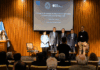
The World Customs Organization (WCO) has played a leading role in the World Trade Organization (WTO) Public Forum 2024, held from 10 to 13 September in Geneva. This event, one of the most important in the field of international trade, brought together representatives from various sectors to address the challenges and opportunities of global trade, in order to ensure that its benefits reach more people.
According to details provided to the press, on 12 September the WCO organised a roundtable discussion focusing on digitalisation in customs, highlighting the role of micro, small and medium-sized enterprises (MSMEs), the single window and authorised economic operators (AEOs).
In line with its 2024 theme, “Customs: Engaging traditional and new partners with purpose,” the session represented an opportunity to reiterate the importance of digitalization in improving global trade.
To this end, the round table, entitled “Harnessing digitalisation in customs for inclusive trade”, was attended by representatives of customs, the WTO and the private sector. Moderated by the Dr. Boriana Rukanova from Delft University of Technology, the discussion highlighted how technology can create a broader business environment.
With that intention, Ian Saunders, Secretary General of the WCO, opened the session by highlighting relevant instruments such as the Revised Kyoto Convention, the WCO Data Model, the Single Window, Coordinated Border Management and others. These initiatives improve border efficiency and foster safer and more inclusive trade. Saunders stressed that investment in customs capabilities, international cooperation and innovation are essential for digitalisation to be an effective strategy, ensuring that both large companies and MSMEs can benefit.
One of the most significant initiatives announced was the collaboration between the WCO, the WTO and the International Chamber of Commerce (ICC) to develop a document to make AEO programmes more accessible and scalable for MSMEs. This proposal reinforces the commitment to create an inclusive and enabling business environment for these companies, opening up new opportunities for them in global trade.
Angela Ellard, Deputy Director-General of the WTO, highlighted how digitalization plays a central role in the implementation of the Trade Facilitation Agreement (TFA), helping member countries overcome challenges and improve the competitiveness of MSMEs in international markets.
At the same time, Niti Wityatem, Deputy Director General of Thailand Customs Department, shared his country's progress in digitization in customs, highlighting the challenges they face, such as lack of national regulation and funding, but also highlighting successes such as the Association of Southeast Asian Nations (ASEAN) Single Window and the exchange of origin documents among ten ASEAN members.
Valerie Picard, from the ICC, The ICC stressed cooperation between the public and private sectors, underlining that digitalisation and data harmonisation are key to facilitating trade, especially for MSMEs. The ICC also highlighted the importance of the ICC Digital Standards Initiative (DSI) and the need to attract more MSMEs to AEO programmes so that they can benefit from its advantages.
In sum, the WCO session clearly highlighted how digitalisation can help make trade more inclusive and ensure that its benefits reach a greater number of people.WCO News)

Aduana News foi o primeiro jornal aduaneiro da Argentina a lançar sua versão digital. Com mais de 20 anos de trajetória, suas publicações e iniciativas têm como objetivo oferecer o conhecimento mais relevante sobre temas aduaneiros, contribuindo para a promoção do comércio seguro e da facilitação do comércio na região.