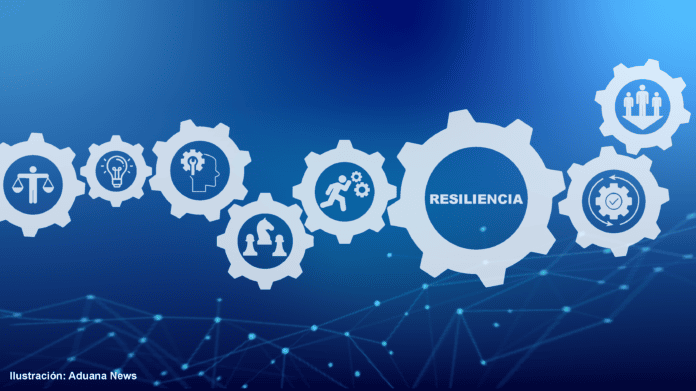
The World Customs Organization (WCO) has approved a new standard entitled "Resolution of the Customs Cooperation Council on Strengthening Resilience between Customs and Industry", during its June 2024 session. This Resolution underlines the crucial importance of strengthening collaboration between customs and industry to meet contemporary global challenges and ensure global security and prosperity.
The recent “computer blackout” that left numerous airports, ports, stations and companies without internet services is a true reflection of the global contingencies that can arise and for which the world's customs services must be prepared.
Background and Context
The WCO initiative originated in the Concept Note on Strengthening Resilience between Customs and Industry in the Asia/Pacific Region presented by its Vice-President (and Director of Australian Customs) at the 24th Regional Conference of Heads of Customs Administration held in Perth, Australia, in May 2023 and which, after its approval, was elevated to the global level and discussed by all institutional bodies of the WCO, until its approval by the Council.
Since its inception, international trade in goods has increased 266-fold, from $83.820 billion in 1953 to $24.000.000 billion in 2023.
In a world characterized by rapid transformations and unprecedented global challenges – such as pandemics, supply chain disruptions, cyber threats and environmental crises – resilience between customs and industry has become a fundamental pillar for global security and economic stability. The WCO has adopted this resolution as a strategic call to action for its 186 members, emphasizing the need for an innovative and collaborative approach.
Today, the WCO represents more than 98% of this global trade and its permanent and intermittent light, like a beacon in the wilderness, guides the world's customs on the paths to follow.
Objectives and Scope of the Resolution
The WCO operates internationally through six types of legal instruments: International Conventions, Recommendations, Resolutions, Declarations, Opinions and Memoranda of Understanding.
In this case, we are dealing with a regulation with the rank of “Resolution”, which, although it does not have a direct binding effect, it should be clarified that once internalized by the Member State, it entails an implicit commitment to implement its provisions to the extent possible.
The Resolution aims to:
- Strengthening Resilience: Engage WCO Members in strengthening Customs and industry resilience to anticipate, prevent, absorb, adapt to and recover from natural and man-made threats, ensuring the continuity of the flow of critical goods and services.
- Innovation and New Alliances: reaffirm traditional relationships with allies and forge new alliances, adapting strategies to meet modern challenges.
- Business Continuity Plans: develop and review trade and supply chain continuity plans in line with WCO tools and standards to manage disruptive situations.
- Continuous assessment: monitor and evaluate the effectiveness of resilience measures to maintain efficiency and modernity in the changing operating environment.
- Digitalization and Paperless Commerce: Promote paperless trade through digitalisation, accepting secure digital formats instead of physical documents for risk assessment and customs clearance processes.
- Data Sharing and Collaboration: increasing trust between customs and industry through data sharing and collaboration, including deepening relationships with Authorised Economic Operators (AEOs).
Importance of the Resolution
The adoption of this Resolution represents a significant step towards creating a safer and more efficient customs environment. Strengthened collaboration between customs and industry will not only help address current threats, but will also prepare the parties involved for future crises. The integration of advanced technologies and the promotion of paperless trade practices will improve efficiency and reduce risks in the global supply chain.
Speech by WCO Secretary General Ian Saunders
Secretary-General Ian Saunders recently delivered a keynote address at the G7 Industry Stakeholders Conference in Reggio Calabria, Italy. He stressed to industry and world leaders the importance of government-industry partnerships, saying that institutionalized trust between parties can lead to solutions that reconcile economic security with free trade.
Conclusion
With reference to the above, the WCO Resolution on strengthening resilience between customs and industry is a proactive measure that reflects the organization's commitment to adapt to an ever-changing global environment. By fostering cooperation and innovation, this initiative ensures that customs and industry are better prepared to face and overcome future challenges, thereby ensuring global security and prosperity.
Gratitude:We appreciate the collaboration of Dr. Hector H. Juarez Allende in the preparation of this article and we suggest reading his book "The World Customs Organization: Past, Present and Future"which, precisely, develops many of the topics discussed here.
Sources:
- https://www.wcoomd.org/en/media/newsroom/2024/july/wco-council-adopts-resolution-on-strengthening-customs-industry-resilience.aspx
- https://www.wcoomd.org/-/media/wco/public/global/pdf/topics/facilitation/ressources/permanent-technical-committee/241-242/pc0736eae1.pdf?la=en
- https://www.wcoomd.org/en/media/newsroom/2024/july/wco-secretary-general-addresses-g7-industry-stakeholders.aspx

Aduana News foi o primeiro jornal aduaneiro da Argentina a lançar sua versão digital. Com mais de 20 anos de trajetória, suas publicações e iniciativas têm como objetivo oferecer o conhecimento mais relevante sobre temas aduaneiros, contribuindo para a promoção do comércio seguro e da facilitação do comércio na região.