
Each year, about 600.000 people die from drug useAccording to estimates by the World Health Organization, this figure reflects the magnitude of an expanding global crisis, increasingly linked to the advance of synthetic drugs.
In this context, customs authorities have assumed an increasingly prominent and strategic role in protecting society. As Ian Saunders, Secretary General of the World Customs Organization (WCO), pointed out, “This is not just a security or law enforcement problem, but a social crisis in which customs plays a decisive roleFurthermore, he emphasized that these operations aim not only to detect and seize illicit substances, but also to dismantle the criminal networks that sustain this phenomenon.
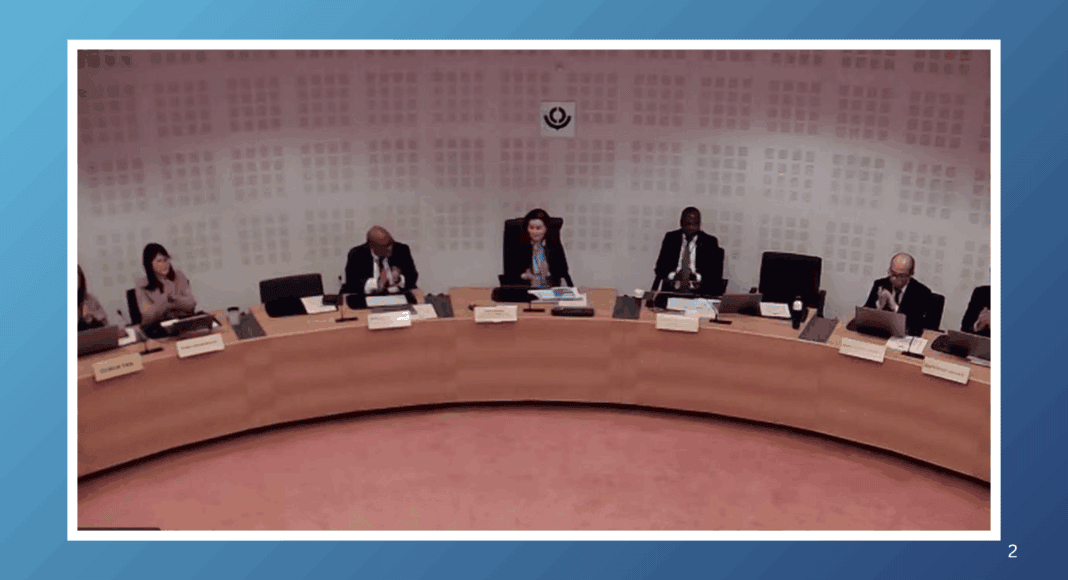
This approach was highlighted on April 30th, during the launch ofthe first WCO webinar aimed at the general community, which brought together more than 250 participantsThe initiative launched a series of meetings aimed at strengthening global dialogue and highlighting the role of customs in the face of emerging threats, with a special focus —in this first edition— on the disruption of fentanyl supply chains.
Fentanyl: a threat that reinforces the role of customs
Data from the WCO's 2024 illicit drugs report illustrates the scale of the problem. Cannabis was the most frequently detected substance (48%), followed by psychotropic substances (27,5%). Cocaine, new psychoactive substances, and opiates accounted for 13%, 16%, and 4% of seizures, respectively.
At regional level, South America continues to be a central node in global traffic. In 2024, cannabis became the most frequently seized drug in the region (64% of the total volume), while cocaine continues to play a significant role. The main trafficking routes remain oriented towards Western Europe and North America, confirming the region's predominantly export-oriented nature and the high profitability of these markets for criminal organizations. This pattern reinforces the region's role as a key link in global drug trafficking chains.
In this context, the rise of synthetic opioids—particularly fentanyl and its analogues—marks a turning point. These substances are characterized by their extremely high potency, low production cost, and ease of concealment and transport, making them a particularly complex threat to law enforcement. Even minute quantities can be lethal, which explains their devastating impact on public health.
Furthermore, unlike traditional drugs, fentanyl can be produced in clandestine laboratories and transported through legal logistical channels, such as e-commerce, postal mail, or express courier services. This dynamic demands a transformation in customs operations, shifting from an approach focused on physical inspection to models based on risk analysis and intelligence.
In response to this situation, the WCO is promoting several initiatives aimed at strengthening the capacity of customs administrations. Among these is the synthetic drug detection project, active since 2020, which seeks to improve identification, analysis, and information sharing capabilities at a global level.
The goal is to reduce trafficking through intensive data use, international cooperation, and operational coordination to disrupt criminal networks. Within this framework, special attention is paid to vulnerable channels such as general aviation, postal mail, and express courier services, complemented by the use of specialized canine units. It is worth noting that Argentine Customs has a Canine Training Center in Boulogne, certified by the World Customs Organization as a Regional Canine Training Center. There are only 18 such centers accredited by the WCO worldwide, and the one in Buenos Aires is the only Spanish-speaking center.
Despite these efforts, it was noted at the event that the challenge continues to expand. Criminal organizations are operating with increasing sophistication, adapting to controls, and leveraging global supply chains to conceal their activities.
In this context, international cooperation is key. INTERPOL (International Criminal Police Organization) works alongside customs administrations in the fight against drug trafficking and other transnational illicit activities.
This cooperation is based on the fact that customs agencies are central players in controlling cross-border trade in goods. Therefore, coordination between customs and law enforcement, both nationally and internationally, is essential to improve the detection, prevention, and dismantling of criminal networks.
In closing, the message of the meeting is clear: in a context of dynamic and transnational threats, customs agencies are consolidating their position as key institutions for protecting society and public health, in a scenario that causes nearly 600.000 deaths annually from drug use. Their importance lies in contributing to safeguarding lives, preserving the integrity of supply chains, and promoting development.
The World Customs Organization's commitment to this is expressed in capacity building, the use of technology, joint operations, and international cooperation to improve detection and response to these challenges, as stated during the event.

Aduana News foi o primeiro jornal aduaneiro da Argentina a lançar sua versão digital. Com mais de 20 anos de trajetória, suas publicações e iniciativas têm como objetivo oferecer o conhecimento mais relevante sobre temas aduaneiros, contribuindo para a promoção do comércio seguro e da facilitação do comércio na região.