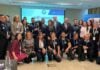
Brazilian Finance Minister Fernando Haddad said that “regional integration is absolutely necessary for the development of Latin American countries.”
He did so on Wednesday (18.01.2023) when participating in an event at the World Economic Forum in Davos, Switzerland, where he expressed that the integration process involves investment in infrastructure, trade agreements between countries and the strengthening of Mercosur, including the incorporation of new members.
Leaders from Latin American countries Ecuador, Costa Rica, Colombia and the Dominican Republic also participated in the panel.
Leaders from Latin American countries Ecuador, Costa Rica, Colombia and the Dominican Republic also participated in the event.
The minister stressed that relations between countries are important to consolidate the region as a Great market, with the strength to negotiate with large blocs, such as the United States, the European Union and China, in order to generate conditions to offer more quality jobs to the continent's workers and expand access to education.
What integration requires
According to Haddad, integration also requires progress in the trade agreements, infrastructure, and even in the area of the financial markets, with actions that enhance regional competitive advantages, especially the generation of clean energy.
In this regard, he valued that the continent's climate represents an extraordinary condition for the production of energy from renewable sources, such as hydroelectric, solar, wind and green hydrogen.
“This can be an attraction factor for industries that want to produce from clean energy, so that its entire production chain "is in tune with the environmental determinations that are unavoidable today," he said.
For Haddad, only with this integration will the countries of the continent be able to face the large economic blocs represented by the European Union and the United States.
What are the challenges?
“Regional challenges involve promoting the development of the industry 4.0, respecting the environment. In all Latin American countries there are opportunities that would be better and more beneficial with a greater integration"Haddad said, while defending MERCOSUR and even the entry of new members into the trading bloc.
The panel was chaired by the Director for Latin America of the World Economic Forum, Marisol Argueta de Barillas. Also present at the debate were the presidents of Costa Rica, Rodrigo Chaves Robles; of Colombia, Gustavo Francisco Petro Urrego; and of Ecuador, Guillermo Lasso Mendoza; as well as the Vice President of the Dominican Republic, Raquel Peña.
The discussion was promoted to disseminate the visions of leadership that are reconfiguring the internal politics of Latin America, in the social and economic aspects, its global role and the way in which the region can unite to fulfill a common agenda focused on the future. ('Leadership for Latin America' panel at the World Economic Forum in Davos, Switzerland)

Aduana News foi o primeiro jornal aduaneiro da Argentina a lançar sua versão digital. Com mais de 20 anos de trajetória, suas publicações e iniciativas têm como objetivo oferecer o conhecimento mais relevante sobre temas aduaneiros, contribuindo para a promoção do comércio seguro e da facilitação do comércio na região.