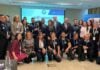
ECLAC Executive Secretary Alicia Bárcena reiterated the importance of having an open, transparent and non-discriminatory multilateral trading system during a meeting of experts held on Tuesday (07.08.2019) in Santiago, Chile.
"For Latin America and the Caribbean, having an open, transparent, non-discriminatory multilateral trading system based on universally accepted rules is essential to address the tensions that are currently shaking the global economy," Alicia Bárcena said, according to the organization's statement.
Bárcena inaugurated this Wednesday the workshop “The Pacific Alliance and MERCOSUR in the face of the reform of the multilateral trade system: seeking spaces for regional coordination”, which will run until Thursday, August 8, and will be attended by senior government officials and specialists from several countries in the region.
The meeting was attended by Rodrigo Yáñez, Undersecretary of International Economic Relations of the Ministry of Foreign Affairs of Chile, and Winfried Weck, Representative of the Konrad Adenauer Foundation in Panama and responsible for the Regional Program "Alliances for Democracy and Development with Latin America" (ADELA).
The highest authority of this regional commission of the United Nations explained that the uncertainty generated by the growing trade tensions has already negatively affected global trade and foreign direct investment flows, and with it, the growth prospects of the world economy. Last April, the WTO projected that the growth of the volume of world trade for 2019 would reach 2,6%, far from the 4,6% registered in 2017. However, between January and May of this year, the volume of world trade expanded by just 0,1%, and it is clear that the projection for the entire year will have to be substantially lowered, he said.
Bárcena said that in May the United Nations also lowered its projections for global economic growth in 2019 to 2,7%, with significant downside risks, while ECLAC announced last week that its growth estimate for Latin America and the Caribbean is only 0,5% for this year.
Added to all this is the trade war between China and the United States, which is added to a spiral of measures and countermeasures observed in other central players in the world economy in the last two years, many of them outside the rules of the WTO.
Barcena said that all aspects of the WTO's functioning are being subject to scrutiny at the same time. Proposals have proliferated not only on possible new negotiating topics, but also to improve the organization's effectiveness in its other functions, in particular the settlement of disputes and monitoring compliance with its members' obligations, he said.
For his part, Winfried Weck stressed the importance of analyzing global security, This is an issue that has been left behind in Latin America and the Caribbean in relation to other regions of the world, which affects their development possibilities. The ADELA cooperation programme, which is carried out with several countries in the region and ECLAC, is part of this context, and whose fundamental pillars are trade, multilateralism and the 2030 Agenda, he explained.
Meanwhile, Undersecretary Rodrigo Yáñez reaffirmed the need to seek points of convergence between the countries of the region.“As Alicia Bárcena has pointed out, it is crucial to identify common interests and move forward together within the framework of the WTO, in a context where multilateralism is in question,” she said.
In his presentation, the senior official of the Government of Chile presented a reflection on the three pillars around which the current discussion of the reform of the WTO revolves: the need to advance in the negotiations, and to update the multilateral trade rules in line with the challenges demanded by the 21st century, such as: the digital economy and sustainable development; strengthen the dispute settlement system and overcome the impasse of its Appellate Body; and improve transparency and oversight of the obligations arising from the WTO agreements, as well as improving the regular work of the Councils and Committees.
“The WTO is a public good that we must preserve. The proper functioning of a system based on common and transparent rules, as established by the WTO, has been and will continue to be an essential guarantee for international trade, since it provides predictability to exporters, importers and investors, a key element in promoting the growth and development of our economies,” said Yáñez.

Aduana News foi o primeiro jornal aduaneiro da Argentina a lançar sua versão digital. Com mais de 20 anos de trajetória, suas publicações e iniciativas têm como objetivo oferecer o conhecimento mais relevante sobre temas aduaneiros, contribuindo para a promoção do comércio seguro e da facilitação do comércio na região.