
We thank Dr. Héctor Juárez Allende and Fátima, the Argentine Customs guide, for their historical contributions that enriched the preparation of this article.
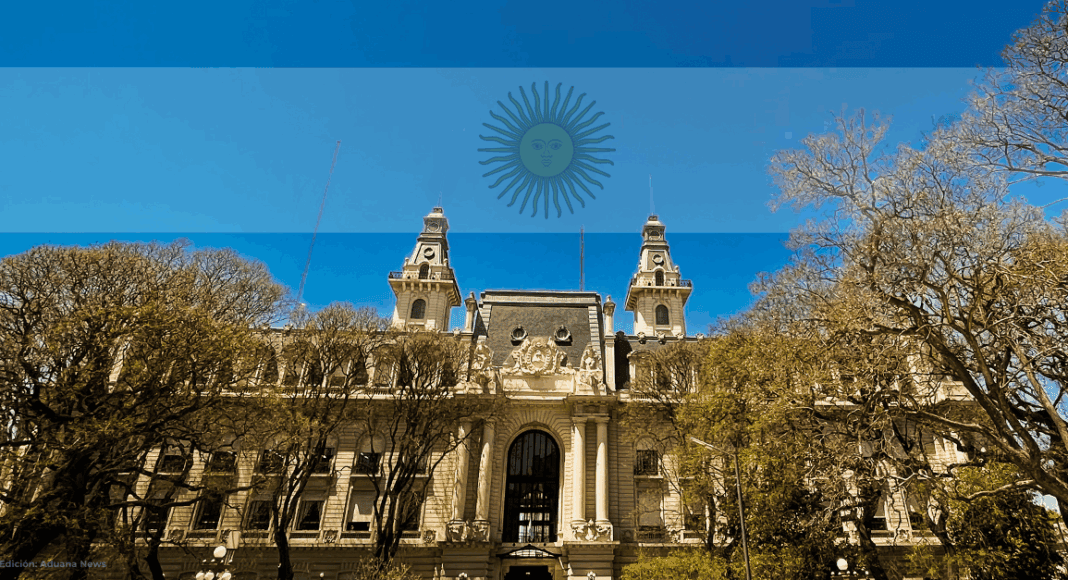
June 1st not only marks the beginning of the sixth month of the year, but also holds special significance for the Argentine Republic: it is Customs and Customs Workers' Day. This date represents a valuable opportunity to recognize this institution, whose work is fundamental to the control of foreign trade and the enforcement of legislation pertaining to imports and exports.
An origin that dates back to 1586
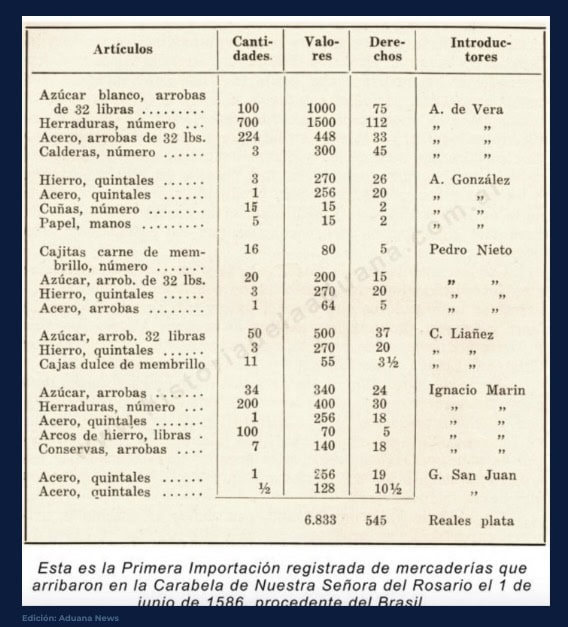
The commemoration of Customs Day has a historical origin dating back to 1586, when the first accounting record of import duties was kept in Buenos Aires. That year, a ship arrived from the coast of Brazil, specifically from the port of Santos, sent by Alonso de Vera y Aragón, authorized by a royal license. The operation was documented as a founding milestone in Argentine customs history.
According to historian Federico Gualberto Garrel, it was the official Diego de Olavarrieta who collected the corresponding tax—known as almojarifazgo—on behalf of the Spanish Crown. The original record appears in an official accounting book of the time, kept by treasurer Hernando de Montalvo, and marks the formal beginning of customs activity in the territory that would later become the Argentine Republic..
A heritage site: the Customs Museum
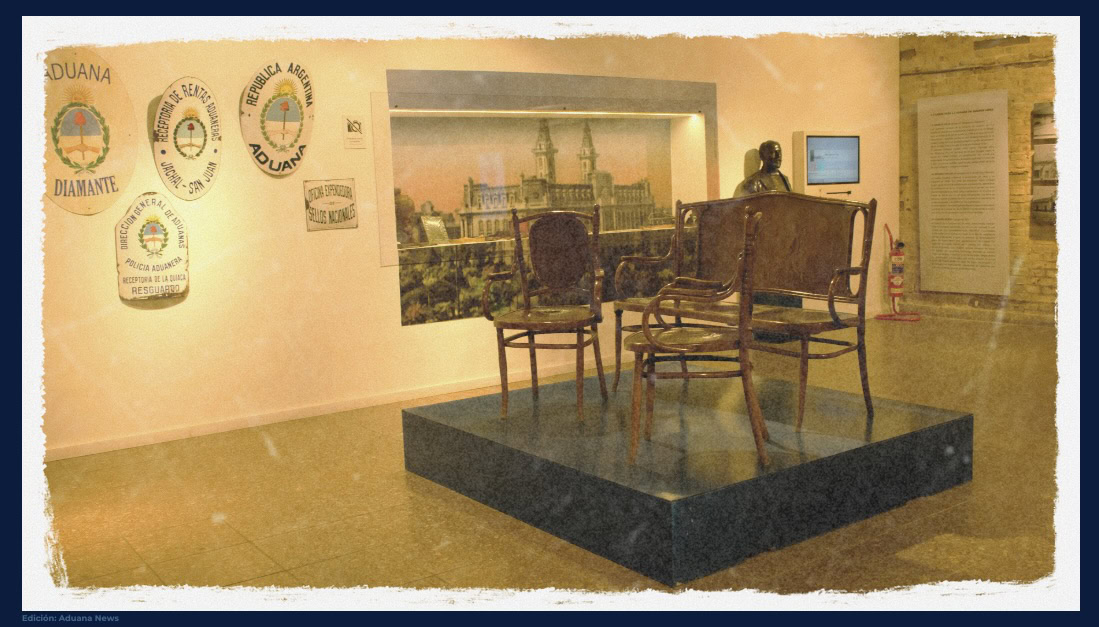
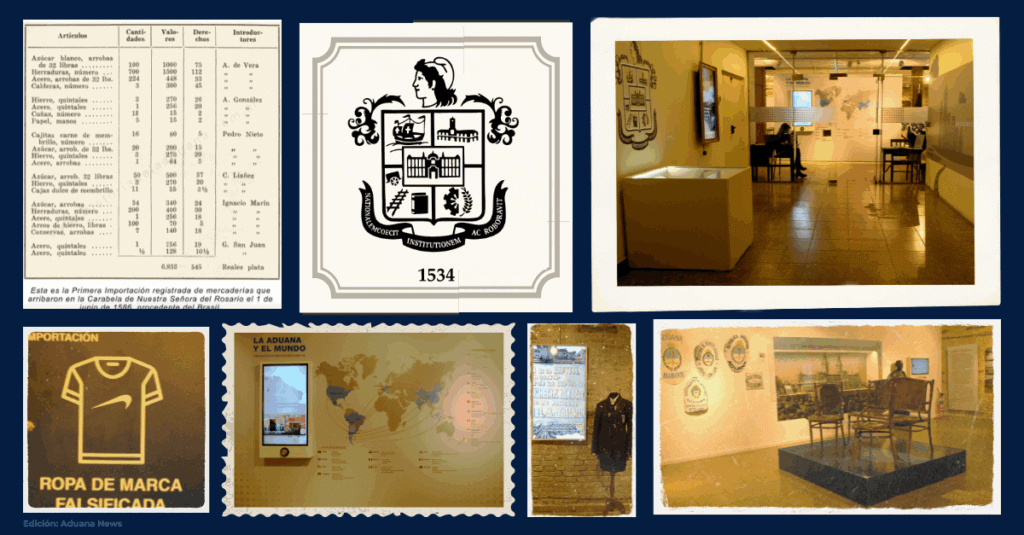
Since then, you can visit the "Gabino Sánchez" Historic Customs Hall, inaugurated on April 1, 2009, by the then Director General of Customs, Dr. Silvina Tirabassi. This space seeks to highlight the origins of customs activity in the country, highlighting that Customs is the oldest institution in the national territory, since its existence precedes the formation of the Argentine State and dates back to the times of the Viceroyalty.
The museum is located in the basement of the Customs Palace, located at Azopardo 350, Buenos Aires. According to the official guide, the space that now houses the museum was originally a well, specially refurbished for this purpose. Its doors opened to the public during the 2023 edition of the Night of Museums.
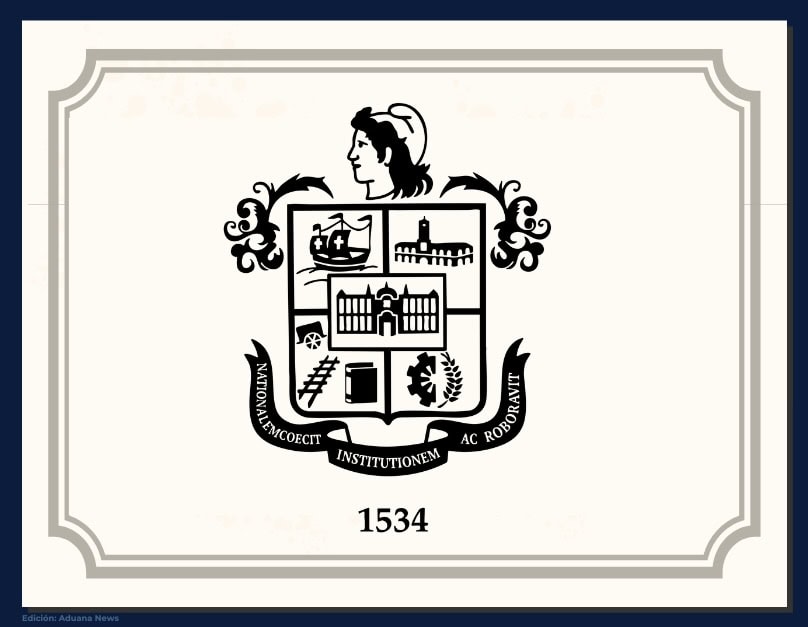
Upon entering, visitors will be greeted by the official Customs coat of arms, designed in 1964 by customs officers Federico Garrell and Luis Arce. The emblem embodies the national identity with the image of the Argentine Republic, symbols of agricultural production (wheat and cattle), and the Latin inscription "Consolidation and Ordination” (“Unification and organization”).
A tour through the past and present
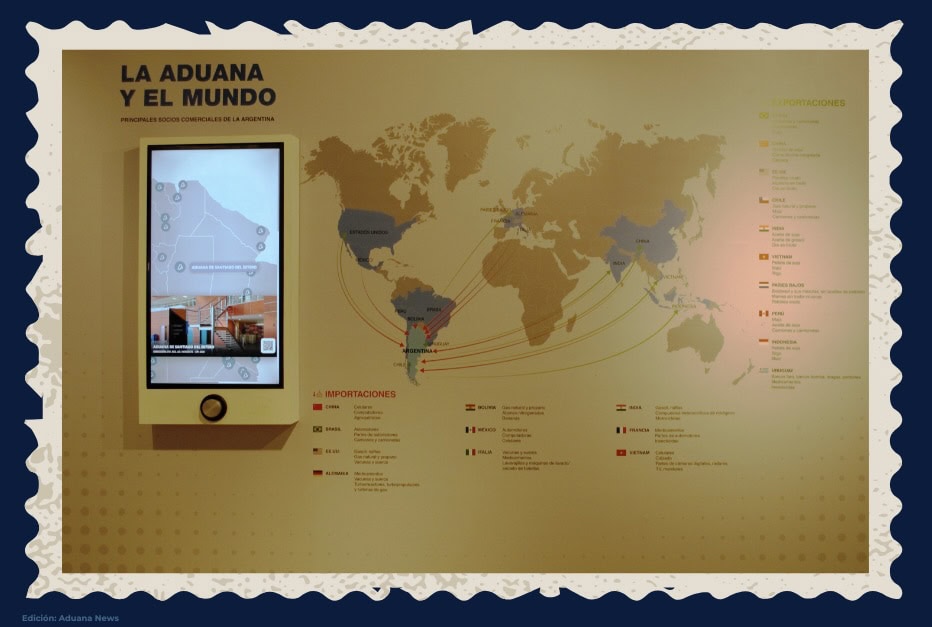
The museum offers a timeline highlighting milestones such as the creation of the first Buenos Aires customs office in 1784 and the nationalization of the customs system following the 1853 Constitution. It also displays a map showing Argentina's main current trading partners—Brazil, the United States, and China—along with an interactive children's area that explains the role of customs duties in economic development.
Among the valuable objects on display are old accounting records, Customs Police uniforms, colonial photographs, and documents reflecting the evolution of Buenos Aires's riverside environment. The bibliographic collection includes Customs Bulletins, Ordinances, Circulars, and a copybook, illustrating how new developments were recorded before modern copying methods.
Also noteworthy are tools of great historical value, such as a series of scales (a Roberval model from 1933, a precision scale from 1950 and a small compound scale), a density meter (a hydrometer from the 40s), a perfonumerator for marking documents without ink, an old fingerprint machine and a manual mimeograph, used to reproduce
Technology, control and protection
The museum undoubtedly dedicates a special space to modern customs control, displaying real-life examples of hazardous substance detection and the use of advanced technologies, such as scanners. A collection of radios used by agents in remote areas is also on display, along with real-time control screens installed at various Argentine borders.
One of the museum's most prominent sections pays tribute to dogs trained to detect drugs and counterfeit banknotes. These animals, tools for non-intrusive control, form specialized teams with their handlers. Our country is recognized by the World Customs Organization (WCO) for the effective use of this tool in customs control.
This valuable journey takes on special meaning every June 1st, when we celebrate Customs Day, an institution with nearly five centuries of commitment to serving the country. To all customs agents, we thank you for your daily dedication and wish you a very happy day.
Last but not least, we invite the public to visit the Customs Museum to discover this fascinating history firsthand and understand the strategic role of customs in the country's economy and security.
We also encourage you to read articles by renowned experts on the subject and explore dissemination spaces, such as Carlos Monetta's site, which provides valuable research contributions.
(I.e."The prestige of an institution and its relationship with the correctness and efficiency of those who comprise it”, by Enrique C. Barreira:
https://aduananews.com/el-prestigio-de-una-institucion-y-su-relacion-con-la-correccion-y-eficiencia-de-quienes-la-integran/
◾ Informative site on the History of Argentine Customs
https://www.historiadelaaduana.com.ar/
(*) All photos and interventions belong to Customs News.

Aduana News foi o primeiro jornal aduaneiro da Argentina a lançar sua versão digital. Com mais de 20 anos de trajetória, suas publicações e iniciativas têm como objetivo oferecer o conhecimento mais relevante sobre temas aduaneiros, contribuindo para a promoção do comércio seguro e da facilitação do comércio na região.