
The global landscape is marked by new tariffs, trade tensions, and profound technological transformations. The WTO has just announced that global merchandise trade exceeded expectations in the first half of 2025, driven by increased spending on AI-related products and anticipated imports in several regions.
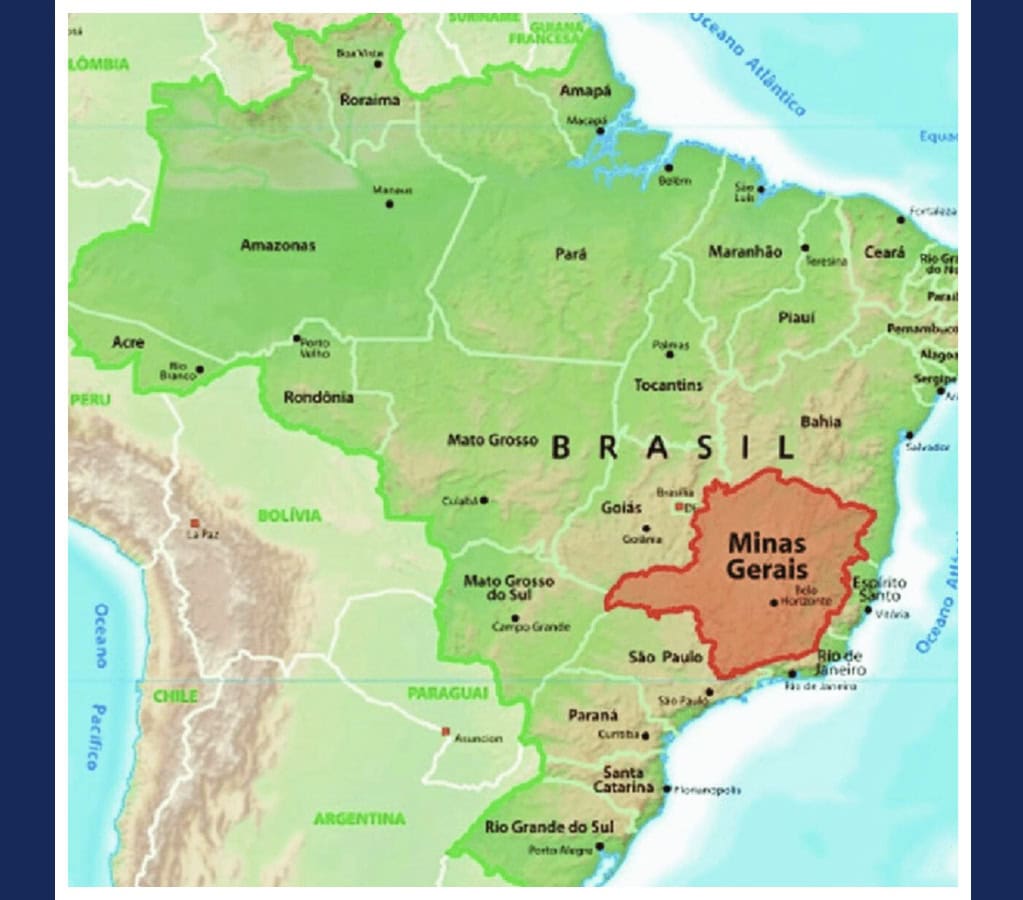
In this context, the XVII International Congress on Customs Studies of ABEAD is consolidating as a strategic space to discuss the new challenges of international trade. The event, which takes place from today until October 10 in Belo Horizonte—capital of the State of Minas Gerais, the first planned city in Brazil and known for its important agricultural and mining activities, as well as for being a relevant industrial hub—brings together specialists from all over the country and abroad. In dialogue with Aduana News (*), Fernando Pieri highlighted that the 2025 edition will be fundamental for the exchange of views between the public and private sectors, with a direct impact on strengthening international trade.
(I.e.ABEAD's mission and its relevance to the 2025 Congress
The Brazilian Association of Customs Studies (ABEAD) has been promoting the study and debate on foreign trade and customs law in Brazil for over 16 years.
—How is this mission reflected in the 2025 Congress, and how has ABEAD contributed to strengthening dialogue between the public and private sectors over the years?
The organization of the 2025 edition involved the participation of multiple stakeholders, with effective contributions from both the public and private sectors, both nationally and regionally. Various topics were addressed, including aspects of the day-to-day work of imports and exports, legislative issues under debate in Congress or about to come into force, some new ones, and others with the potential to generate administrative or judicial disputes.
ABEAD contributes to this strengthening by promoting conferences with speakers from both sectors and attracting participants from all areas. Only by listening to the concerns, difficulties, points of concern, threats, and demands of the other stakeholders is it possible to improve standards and practices, more efficiently addressing the interests of all sectors.
(I.e.New challenges for international trade
This year's Congress focuses on the “New challenges for international trade”, a highly topical issue. What aspects or discussions do you think will make this edition an essential event for those working in foreign trade and customs?
For several years now, the structure and relations of global trade have been changing. The 1947 GATT model, which gave rise to globalization, multilateralism, and regionalism, is undergoing transformation. Some refer to this new phase as Reglobalization, characterized by the relocation of production sources toward models such as nearshoring and friendlyshoring.
The WTO crisis and the apparent failure to adhere to the principles that have governed international trade for the past 70 years are current issues on which businesses and professionals seek to debate and reflect.
Furthermore, at the domestic level, various legislative and procedural reforms are underway. Topics relevant to Customs, such as "green customs," the use of artificial intelligence in tariff classification, and enforcement policies aimed at regulatory compliance, are still little known and deserve special attention.
Along with these, the Congress will address panels on logistics chain security and the Authorized Economic Operator (AEO), customs valuation and transfer pricing, as well as the legislation applicable to secondary customs zones.
Our expectation is that the congressmen will emerge from the meeting with new ideas, answers, and also new questions, so they can pursue their professional and academic activities with a renewed, richer, and stronger perspective.
(I.e.Congress Differential
—In a context of proliferating global trade meetings and forums, what distinguishes this ABEAD Congress and what unique contribution does it offer to professionals, academics, and authorities who decide to participate?
—The ABEAD Congress is recognized and attracts participants from across the country because it addresses practical and relevant aspects of international trade, with Customs Law as the central axis, regulating the possibilities and methods of importing and exporting products. It is impossible to promote international trade without studying customs regulations. These regulations include aspects such as customs taxation, facilitation of legitimate trade, customs risk management, the Authorized Economic Operator (AEO), the Single Foreign Trade Portal, and green customs.
In addition to all these topics, there will be a keynote address on the Evolution of Customs and the Future of Customs. These topics and debates will be truly unique within the Congress.
(I.e.Significance of the Congress venue and invited specialists
—The 17th Congress will be held at the Juscelino Kubitschek Auditorium, at the headquarters of the Minas Gerais government—a space named after the man who pioneered a vision of modernization and development for Brazil. What does it mean to hold this meeting there, and who will be the specialists who will frame the debates on the new challenges of international trade?
—Without a doubt, holding the Congress in a space like this reflects a synergy and demonstrates the vision of the Government of Minas Gerais to stimulate and strengthen foreign trade both in the state and throughout Brazil. The vision of trade facilitation, standardized in the Trade Facilitation Agreement (TFA/WTO)—already widely disseminated and promoted by the Revised Kyoto Convention (RKO/WCO)—is essential to boosting the growth of global trade, reducing the high bureaucratic and indirect costs of operations. Various measures are always necessary, as these are complex environments, but reducing regulatory compliance costs, reconciling necessary customs control with the trade facilitation agenda, is fundamental. Companies seek to reduce all undue or unnecessary costs to become more agile, efficient, and profitable… It is inconceivable that they suffer harm or additional costs due to delays in essential customs public services that are not an end in themselves, but rather serve a greater good for society. Their good performance is essential for the country. Congress promotes this debate, gives voice to the private sector, and allows the public sector, in a neutral environment, to listen and express its message.
This edition will also feature the participation of leading experts and experts in international trade and customs law, including Andrés Rohde Ponce, president of the International Academy of Customs Law (ICLA); Harry Schuring, professor of customs law from Argentina; Rosaldo Trevisan, counselor at the Brazilian Tax Court; Leonardo Macedo, counselor at the same court; Mario de Marco, tax auditor of the Brazilian Federal Revenue Service; Raquel Segalla, lawyer and professor; Daniela Lacerda, professor and lawyer; Daniela Floriano, professor and lawyer; Elisângela Oliveira, professor and lawyer; Fernanda Kotzias, professor and customs lawyer; Thalis Andrade, professor and member of SECEX/MIDC; Fabiano Pieri, consultant for the AEO Program; and Cláudio Gonçalves, professor and customs lawyer, among others. Their experience will provide a solid academic and practical basis for the discussions on the new challenges of international trade.
(I.e.ABEAD and customs cooperation in MERCOSUR
—Considering that Brazil currently holds the pro tempore presidency of MERCOSUR, how can ABEAD contribute to strengthening customs cooperation and knowledge exchange among the bloc's countries, especially in a context of new challenges for international trade?
By increasingly sharing customs knowledge and culture, as well as national practices, challenges, and solutions, partners can be encouraged to seek new solutions to the challenges they face. Furthermore, the more we evolve and promote the development of our trade and discussion forums, we are encouraging other members to do the same.
At a unique moment, as MERCOSUR is about to sign this historic agreement with the European Union, improving practices in Brazil and neighboring countries is essential to prepare for this promising new scenario that lies ahead.
(I.e.Closing: the ferment of foreign trade
In conclusion, the 17th International Congress on Customs Studies will be an opportunity to hear and learn about different perspectives; therefore, it is consolidated as "a ferment for foreign trade," says Fernando Pieri. This conversation is based on the premise that the major challenges we face can only be resolved by sharing experiences and ideas, encouraging all stakeholders to continue engaging in dialogue and collaborating to strengthen international trade.
(*) Interview by María Elsa Coronel

Aduana News foi o primeiro jornal aduaneiro da Argentina a lançar sua versão digital. Com mais de 20 anos de trajetória, suas publicações e iniciativas têm como objetivo oferecer o conhecimento mais relevante sobre temas aduaneiros, contribuindo para a promoção do comércio seguro e da facilitação do comércio na região.