The World Trade Organization (WTO) confirmed that the volume of global merchandise trade remained stable during the third quarter of 2025 (July-September), in a context marked by the expansion of trade in goods linked to artificial intelligence (AI), the anticipation of imports in the face of possible tariff increases and the depreciation of the US dollar.
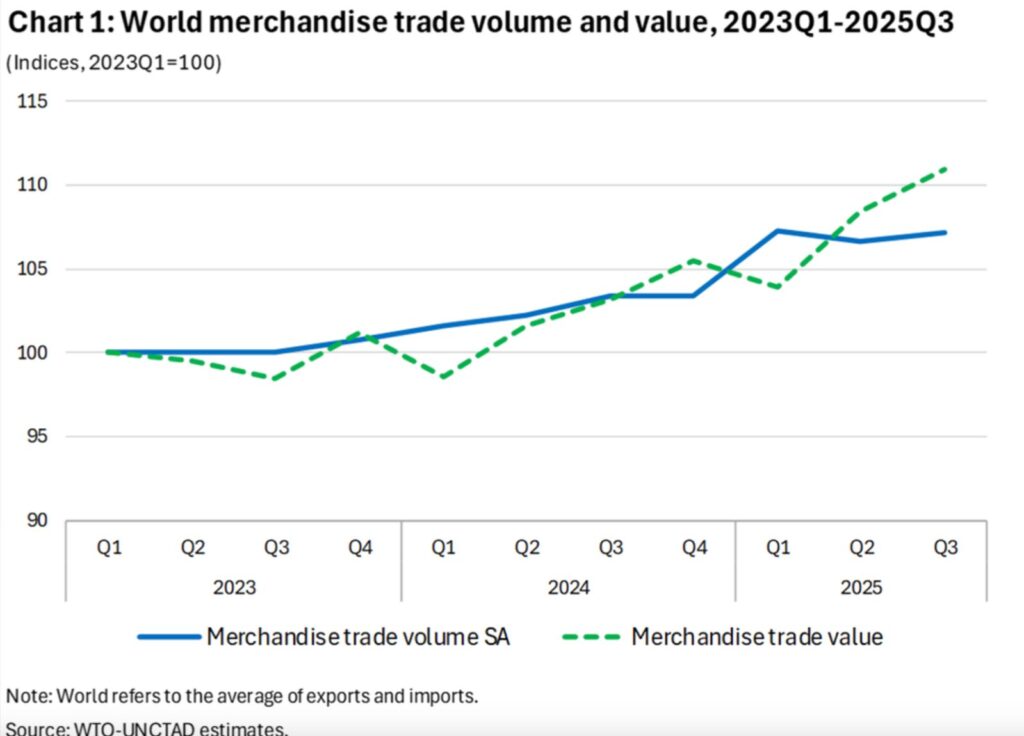
According to the latest data released on Wednesday (28.01.2026) by the organization, world merchandise trade grew by 0,5 % in quarterly terms and a 3,6% year-on-year in volume, measured on a seasonally adjusted basis. “The volume of world trade remained stable in the third quarter of 2025,” the WTO noted, while warning of a growing divergence between the results in volume and value.
Indeed, The value of trade measured in dollars increased by 7,5% year-on-year in the same period. For the WTO, this behavior “highlights a widening gap between trade growth in real and nominal terms.”
The WTO explained that the greater growth in trade value was partly due to the depreciation of the US dollar, which fell 1,9% year-on-year against a broad basket of currencies during the third quarter. “The depreciation of the dollar tends to inflate the dollar value of trade flows denominated in other currencies,” the organization stated, citing intra-European trade as an example.
However, the weakening dollar was not the only relevant factor. In the period from January to September 2025, the volume of global merchandise trade grew by 4,5% compared to the same period in 2024, significantly exceeding the 2,5% forecast included in the WTO Secretariat's latest projection. "The performance observed through September is stronger than anticipated," the organization noted.
Artificial intelligence, the driving force behind growth
One of the report's most striking findings is the strong growth in trade of AI-related goods, such as chips, semiconductors, and data transmission equipment. In the first three quarters of 2025, this segment grew by almost 20% year-on-year in value.
While AI-related goods accounted for around 15% of global merchandise trade, they explained the 42 % of total year-on-year trade growth during that period. “The weight of these products in trade growth is disproportionately high,” the WTO stressed, while noting that most of these goods are exempt from the new tariffs.
Other sectors and regional performance
Trade in non-AI-related goods also showed positive growth, with a 4,4% year-on-year increase in value, driven in part by the sharp rise in the price of gold, considered a safe-haven asset in times of economic uncertainty. medicines and pharmaceutical products —particularly obesity drugs and vaccine supplies— also contributed to the increase in trade, especially in North America.
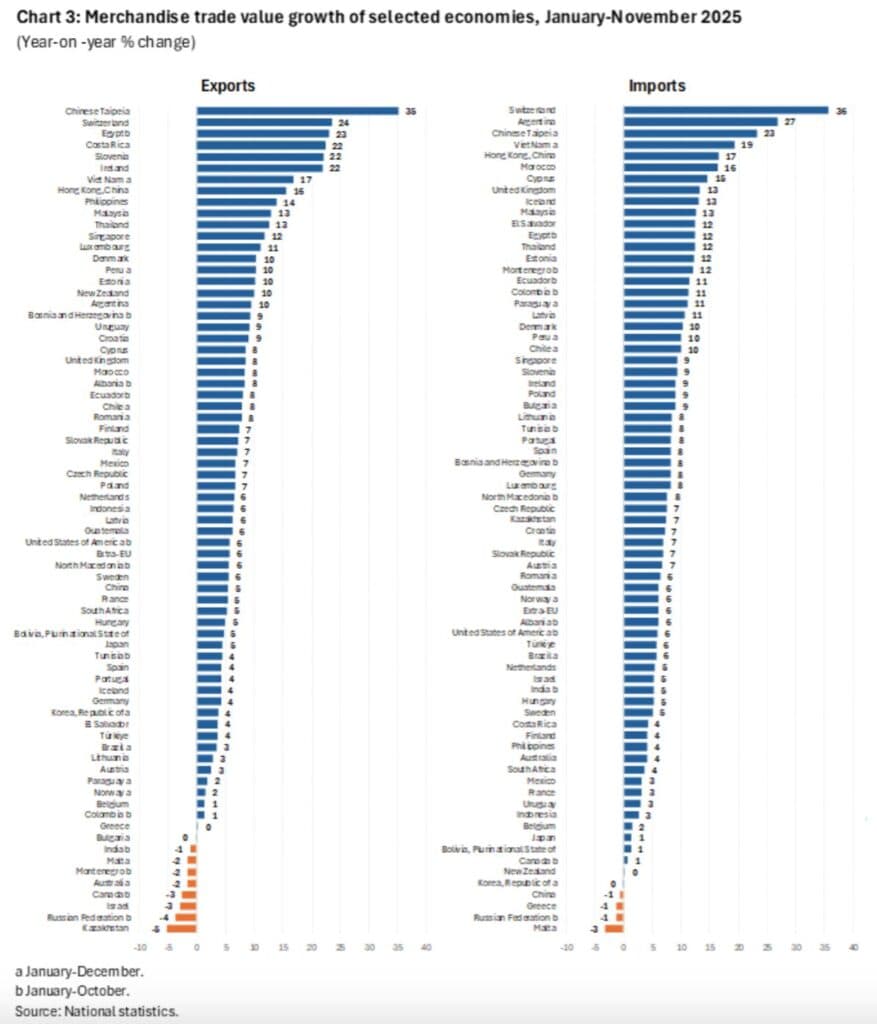
exports, The best performers were small, open economies, such as Chinese Taipei, Switzerland, Egypt, Costa Rica, Slovenia, Ireland, and Vietnam. Major economies—the United States, the European Union, China, and Japan—saw more moderate gains, while commodity-dependent economies experienced declines.
In terms of importsSwitzerland stood out, ArgentinaChinese Taipei, Vietnam, Hong Kong (China), and Morocco, reflecting a significant increase in investment and demand for imported inputs. Argentina's participation in this group demonstrates the growing dynamism of its external purchases within an active regional context.
A regional level, Asia It led export growth by volume during the first nine months of 2025, followed by Africa and South and Central America and the CaribbeanAnd, with a solid performance that confirms the region's relevance in global trade. Europe showed a slight contraction.
perspectives
Overall, the WTO concluded that global merchandise trade in 2025 is expected to be stronger than anticipated, although with notable differences between regions and sectors. “Future developments will depend on the trade policies of major economies, the tariff environment, and the continued pace of technological advancement,” the organization cautioned.

Aduana News foi o primeiro jornal aduaneiro da Argentina a lançar sua versão digital. Com mais de 20 anos de trajetória, suas publicações e iniciativas têm como objetivo oferecer o conhecimento mais relevante sobre temas aduaneiros, contribuindo para a promoção do comércio seguro e da facilitação do comércio na região.